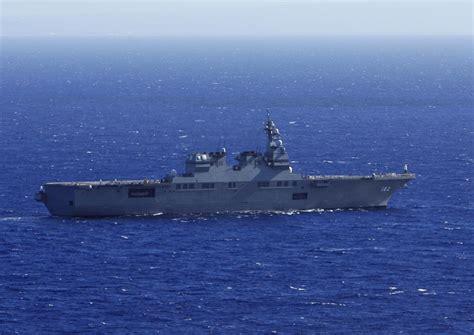
In a surprising move, China has issued a stark warning to Japan, urging the nation to reflect on its wartime past as tensions escalate over Japan’s potential transfer of its second-hand Abukuma-class destroyers to the Philippines. The heated exchange highlights the delicate balance of power in the Asia-Pacific region and the longstanding territorial disputes that continue to fuel regional unrest.
Japan’s Naval Transfer to the Philippines
Japan has been considering the transfer of its decommissioned Abukuma-class destroyers to the Philippines, marking a significant shift in its military policy. The potential export of these vessels has sparked concerns in China, which views any military strengthening in the region as a direct challenge to its territorial claims, particularly in the South China Sea.
The Philippine Navy confirmed that they are exploring the possibility of acquiring these ships, with naval personnel preparing to inspect the vessels. While discussions are still in their early stages, the move is seen as part of a broader strategy by Manila to counter China’s growing assertiveness in the region.
The Abukuma-class destroyers, which have been in service with Japan’s Maritime Self-Defense Force for over three decades, are set to be decommissioned by 2027. Their transfer to the Philippines would significantly enhance the latter’s naval capabilities, particularly in defending its contested territorial waters in the South China Sea.
China’s Fuming Response
China has vehemently opposed the proposed transfer, issuing a strong statement through its Defense Ministry urging Japan to reconsider its actions. A spokesperson from the Chinese Ministry of Defense warned Japan to reflect on its aggressive wartime history and exercise caution in its military dealings, especially when it concerns its neighbors.
Drawing a direct parallel to Japan’s militaristic past during World War II, the Chinese government reminded Japan of its wartime atrocities, particularly its colonial rule over several Asian nations, including China and the Philippines. This historical reference is seen as a clear message from Beijing, signaling that Japan’s military resurgence is being closely watched.
China’s warning comes just ahead of the 80th anniversary of the end of the Second World War, with Beijing preparing to commemorate its victory in the “Chinese People’s War of Resistance against Japanese Aggression.” The timing of the warning indicates that the Chinese government is keen on asserting its stance on historical grievances while defending its regional interests.
The criticism from Beijing reflects broader concerns within China about Japan’s increasing military activities. Japan has been gradually shifting away from its pacifist stance, allowing for greater military engagement under its revised defense policies. Critics argue that Japan’s growing military presence, including arms exports to other nations, could destabilize the region further.
The Strategic Implications for the Philippines
The potential acquisition of Japanese Abukuma-class destroyers is part of a broader strategy by the Philippines to modernize its military in response to China’s growing naval presence in the South China Sea. Manila has long struggled with a significant disparity in military capabilities compared to China, particularly when it comes to naval power. The addition of these destroyers would provide the Philippine Navy with more advanced platforms, including enhanced anti-submarine and anti-ship capabilities.
These aging vessels, while not cutting-edge, are still highly capable. The Abukuma-class destroyers are equipped with advanced sonar systems, anti-submarine torpedoes, and radar systems, which would greatly enhance the Philippines’ ability to patrol its waters and respond to Chinese provocations. The Philippines has previously acquired second-hand military assets from countries like South Korea, and the transfer of these Japanese destroyers would be in line with its ongoing efforts to build a more robust and modern military.
Japan’s Role as an Arms Exporter
Japan’s decision to transfer military assets like the Abukuma-class destroyers to the Philippines marks a significant shift in its defense policy. Historically, Japan has maintained a strict pacifist stance, enshrined in its post-WWII constitution, which limits its ability to engage in military actions or export arms. However, in recent years, Japan has loosened these restrictions, and the export of defense equipment is now part of its broader strategy to counter regional security threats.
Japan’s increased arms exports come at a time when the country faces growing security challenges from China, Russia, and North Korea. By providing second-hand naval assets to the Philippines, Japan is not only supporting its ally but also reinforcing its position as a key player in the Indo-Pacific security landscape.
The transfer of these destroyers also highlights Japan’s attempts to build stronger defense ties with Southeast Asian nations, including the Philippines, as part of a broader strategy to counter China’s growing influence. The move has been seen as a way for Japan to navigate its complex relationships in the region, balancing its historical baggage with the need to adapt to modern security challenges.
The Philippines’ Strategic Needs and Military Modernization
For the Philippines, the acquisition of these second-hand destroyers is an opportunity to bolster its naval capabilities at a fraction of the cost of procuring new ships. With the Philippines facing constant territorial disputes with China in the South China Sea, the need for a stronger military presence has never been more urgent.
The Abukuma-class destroyers would be a valuable addition to the Philippine Navy’s arsenal. With their modernized systems, including radar, sonar, and weapons platforms, the ships would provide a significant boost to the Philippines’ ability to patrol its Exclusive Economic Zone (EEZ) and protect its maritime interests.
However, the transfer comes with challenges. While the destroyers are capable, they are aging, and their maintenance and operational costs could pose a long-term burden on the Philippines. The country would need to invest in extensive training, spare parts, and system upgrades to keep the ships operational for years to come.
China’s Growing Influence in the South China Sea
The South China Sea remains one of the most contentious regions in global geopolitics, with China asserting control over almost the entire area, despite competing claims from several Southeast Asian nations, including the Philippines. China’s aggressive tactics, including the militarization of disputed islands, have drawn widespread international condemnation.
The Philippines, in particular, has been a vocal critic of China’s actions in the region, and its efforts to modernize its military are seen as part of a broader strategy to counter Chinese expansionism. By acquiring the Abukuma-class destroyers, the Philippines would gain a more capable naval force to assert its sovereignty in the face of Chinese encroachment.
Conclusion
The proposed transfer of Japanese Abukuma-class destroyers to the Philippines is a significant development in the ongoing geopolitical struggle in the South China Sea. While Japan’s decision to transfer these vessels is part of its broader strategy to strengthen ties with Southeast Asian nations and counter Chinese influence, the move has drawn sharp criticism from Beijing.
China’s warning to Japan is a reminder of the complex and often fraught history between the two nations, particularly in relation to Japan’s military past. As tensions continue to rise in the region, the potential transfer of these vessels highlights the shifting dynamics of the Asia-Pacific security landscape and the growing importance of military alliances in countering China’s rise.