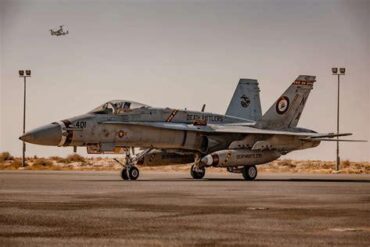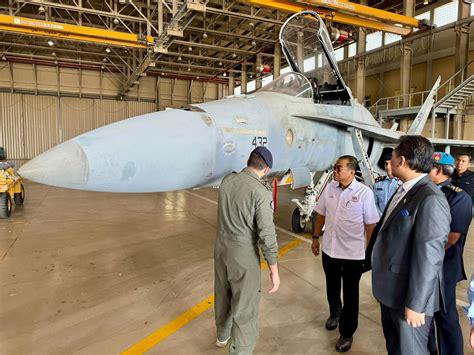
The delicate balance of power in the South China Sea (SCS) is witnessing a significant shift as Malaysia’s air defense capabilities receive a substantial boost. On June 17, 2025, the United States approved the transfer of up to 33 F/A-18C/D Hornets from Kuwait to the Royal Malaysian Air Force (RMAF), reinforcing Malaysia’s defense posture in a region marred by territorial disputes, primarily with China. This development not only strengthens Malaysia’s airpower but also highlights a subtle, calculated strategy by Washington to bolster regional deterrence without escalating tensions directly.
US Approval and Strategic Implications
The transfer of F/A-18C/D Hornets, which have served with Kuwait’s Air Force, marks a pivotal moment in Malaysia’s defense strategy. The US decision, made under the auspices of the US Arms Export Control Act, clears a significant hurdle in a process that had been stalled since 2017. The US Congress must still formally approve the deal, but the green light has already been granted, signaling the beginning of a stronger air defense capability for Malaysia.
While Malaysia initially shelved its interest in the F/A-18 Hornets due to fiscal constraints and the slow progression of its Multi-Role Combat Aircraft (MRCA) program, shifting regional dynamics and heightened security concerns have revived the need for a stopgap solution. The incoming Hornets are expected to fill gaps left by retired MiG-29Ns and the phase-out of the BAE Hawk light attack fleet, ensuring that Malaysia maintains a credible air defense posture.
Aircraft Details and Combat Readiness
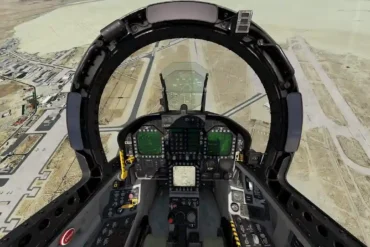
The F/A-18C (single-seat) and F/A-18D (two-seat) variants being transferred to Malaysia are combat-proven, with decades of service in various military operations. Despite their age, the Hornets have been continuously upgraded with modern radar systems, avionics, and electronic warfare equipment, ensuring they remain effective and relevant in current combat scenarios. Their integration into the RMAF’s existing infrastructure will be relatively seamless, given Malaysia’s prior experience with the F/A-18D model, which has been operational at Butterworth Air Base.
The Hornets will bolster Malaysia’s fighter fleet, which has faced increasing strain due to recent retirements and a stretched air defense network. The new addition, combined with other recent acquisitions such as the FA-50M light combat aircraft, represents a multifaceted approach to rebuilding Malaysia’s air combat capabilities.
Enhancing Air Surveillance: Radar and Ground-Based Air Defense
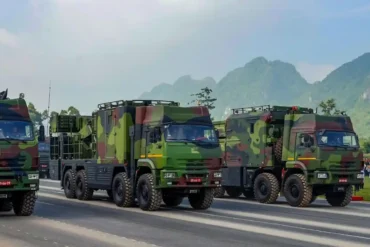
In addition to the fighter jets, Malaysia is also acquiring two additional Ground Master 400 Alpha (GM400α) radars from France, enhancing its ability to detect fast-moving and low-flying aerial threats. The acquisition of these advanced radar systems underscores Malaysia’s long-standing concerns regarding its limited air domain awareness and the need for a robust Ground-Based Air Defense (GBAD) system. While the F/A-18 Hornets cannot resolve all of these challenges, they significantly enhance Malaysia’s immediate response capabilities to airspace violations and territorial encroachments.
Timing and Strategic Cooperation with Kuwait
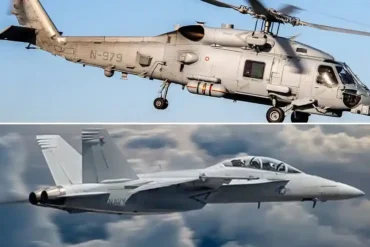
The decision to acquire the F/A-18 Hornets from Kuwait aligns perfectly with Kuwait’s own defense modernization plan. Kuwait is in the process of replacing its older F/A-18C/D fleet with the more advanced F/A-18E/F Super Hornets and Eurofighter Typhoons. This strategic transition provides an opportunity for Malaysia to acquire still-viable aircraft that are well-maintained and combat-ready.
This acquisition also strengthens US-Malaysia defense relations, signaling a deeper level of cooperation between the two nations. The United States has long provided defense support to Malaysia through training programs, military exercises, and arms transfers. These efforts have been critical in modernizing Malaysia’s military capabilities without pushing the nation into an overtly anti-China stance.
The China Factor: Navigating Regional Tensions
While Malaysia’s acquisition of the Hornets represents a significant boost to its air defense, it is also a subtle maneuver to address mounting tensions in the South China Sea, an area where China’s territorial ambitions continue to challenge regional security. China’s assertion of its nine-dash line claim, which overlaps with Malaysia’s exclusive economic zone (EEZ), has led to recurring confrontations, especially in areas where Malaysia’s state-run oil company, Petronas, conducts offshore drilling activities.
The decision to bolster Malaysia’s air defense comes after several high-profile incidents, such as the 2021 Chinese military aircraft approaching Malaysian airspace, which exposed Malaysia’s limited ability to protect its vast territorial waters and airspace. These events have catalyzed a reevaluation of Malaysia’s defense readiness, with the F/A-18 Hornets representing an immediate and practical solution.
Despite this, Malaysia continues to maintain a delicate diplomatic balance with China. While it has sought to enhance its defense capabilities, Malaysia’s government has emphasized a policy of engagement with China through behind-the-scenes diplomacy. Defense Minister Khaled Nordin’s engagement with Chinese officials in early 2025, focusing on defense industry collaboration, highlights Malaysia’s ongoing efforts to avoid overtly antagonizing Beijing.
Conclusion: A Pragmatic Strategy in a Contested Region
The transfer of F/A-18C/D Hornets to Malaysia is a testament to the growing strategic cooperation between Kuala Lumpur and Washington. It underscores a broader regional strategy to counter Chinese assertiveness without provoking open confrontation. Malaysia’s approach, combining military upgrades with quiet diplomacy, allows it to strengthen its sovereignty and defense capabilities while navigating the complex geopolitical realities of the Indo-Pacific region.
As the South China Sea remains a flashpoint for tensions, Malaysia’s dual-track approach—investing in defense while preserving diplomatic engagement—could become a model for other middle powers seeking to balance their defense needs with the imperatives of regional stability. In the face of a rising China, Malaysia’s strategic response emphasizes the importance of readiness, resilience, and restraint, as it seeks to safeguard its national interests without aligning explicitly with either great power.