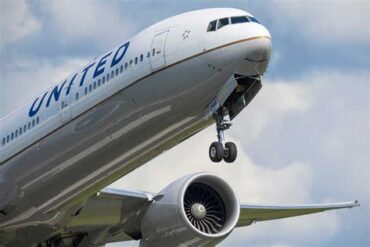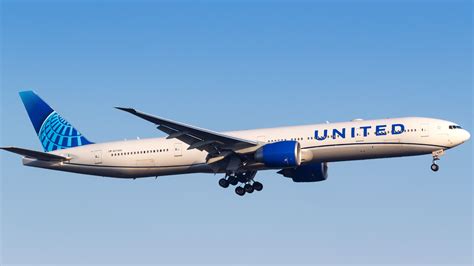
The Boeing 777-300ER is one of the most capable long-range commercial jets ever built, designed to connect cities separated by enormous oceans with nonstop service. However, even an aircraft celebrated for its range, efficiency, and reliability has physical limits. On some of the world’s most demanding routes, a single unexpected weather pattern can transform a routine journey into a complex fuel management challenge.
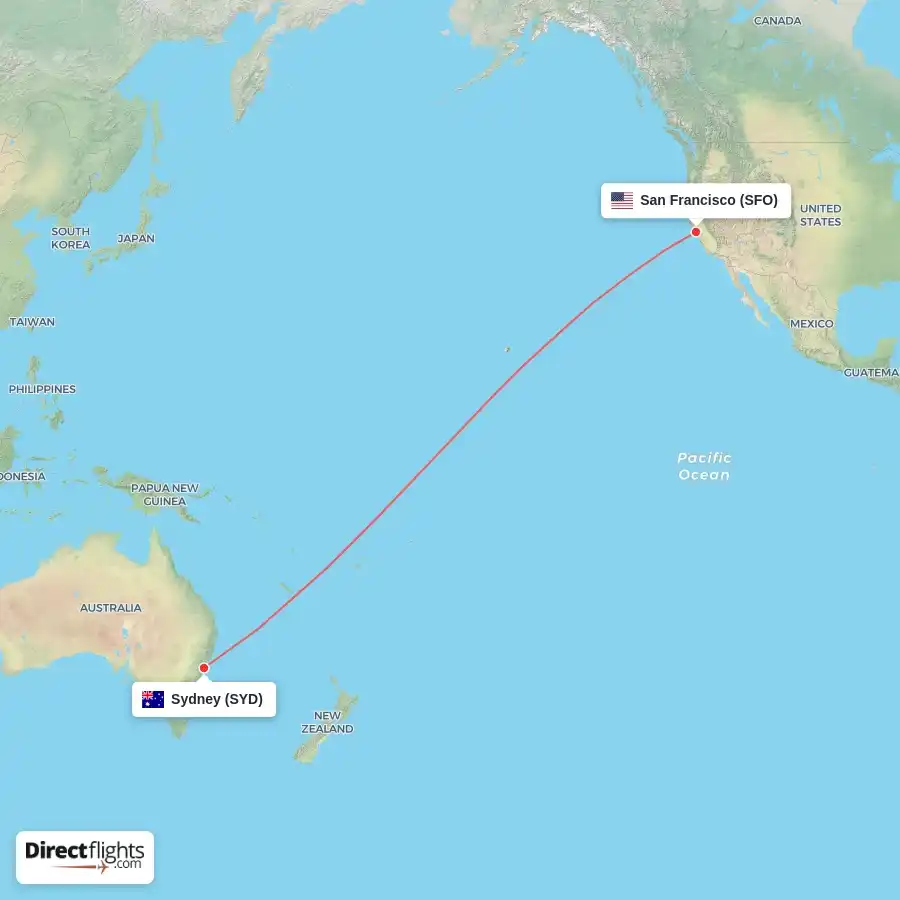
Among these extreme missions is United Airlines’ San Francisco to Sydney route, a transpacific flight stretching approximately 7,417 miles (11,936 kilometers). Operated by the high-capacity Boeing 777-300ER, the route sits close to the aircraft’s practical operating boundaries. Under normal conditions, the aircraft completes the journey without difficulty, but powerful headwinds, shifting jet streams, and operational constraints can dramatically change the equation.
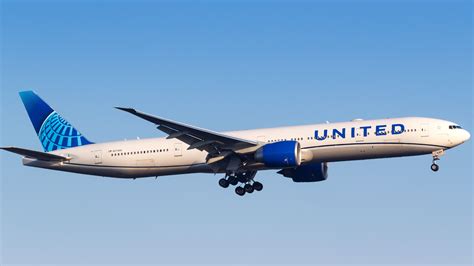
The challenge is not simply whether the Boeing 777 can physically fly the distance. The aircraft has the fuel capacity and performance capability required for such missions. The real issue is the delicate balance between fuel, passengers, cargo, weather conditions, and regulatory safety reserves. When an aircraft operates near the edge of its payload-range capability, even a relatively small change in atmospheric conditions can have major consequences.
Recent long-haul disruptions have highlighted this reality. A Qantas Boeing 787-9 operating between London Heathrow and Perth encountered severe winter headwinds over the Indian Ocean, forcing the aircraft to divert to Karratha Airport for an unexpected refueling stop. Although the aircraft type and route were different, the event demonstrated a fundamental truth of ultra-long-haul aviation: weather remains one of the most powerful factors controlling nonstop flight capability.
The Boeing 777-300ER and the Limits of Ultra-Long-Haul Operations
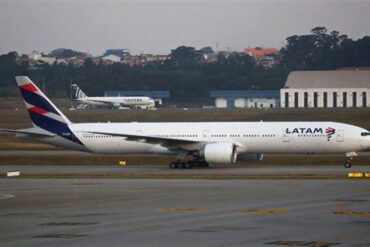
The Boeing 777-300ER was developed as a high-capacity evolution of the successful 777 family. Introduced as a replacement for large four-engine aircraft on long-distance routes, it combined exceptional range with lower operating costs compared with older aircraft such as the Boeing 747.
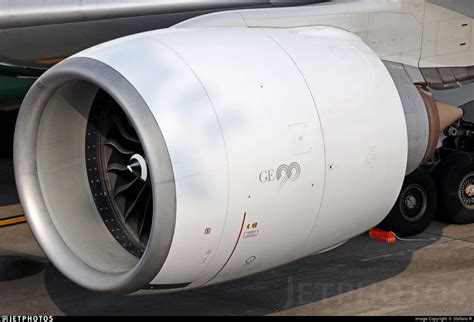
Powered by two enormous General Electric GE90-115B engines, the 777-300ER delivers the thrust required to carry hundreds of passengers across oceans. Each engine is among the largest and most powerful commercial aircraft engines ever produced, providing the efficiency and reliability needed for extended missions.
However, range figures published for aircraft are based on ideal conditions. The officially quoted maximum range of the Boeing 777-300ER is approximately 7,370 nautical miles (13,649 kilometers). This figure represents a carefully optimized scenario with favorable assumptions, including ideal cruising altitude, efficient routing, appropriate payload distribution, and predictable weather.
Real airline operations are far more complicated.
A commercial flight cannot simply fill every available space with fuel and fly as far as possible. Aircraft operate under strict maximum takeoff weight limitations. For the Boeing 777-300ER, the maximum takeoff weight is approximately 775,000 pounds (351,534 kilograms). Every kilogram added as fuel reduces the available weight for passengers, baggage, and cargo.
This creates the famous aviation challenge known as the payload-range tradeoff. Airlines are constantly balancing how much fuel they need against how much revenue-producing payload they can carry.
A flight carrying maximum fuel may have to leave seats empty or reduce cargo loads. Meanwhile, reducing fuel to carry more passengers creates vulnerability when unexpected weather increases fuel consumption.
Why Strong Headwinds Threaten Boeing 777 Long-Distance Routes
The biggest enemy of ultra-long-haul flights is often not distance itself but the invisible force of atmospheric movement. High-altitude winds, especially powerful jet streams, can dramatically alter flight performance.
The Earth’s upper atmosphere contains fast-moving air currents that commercial aircraft must either use or fight against. Eastbound flights often benefit from strong tailwinds, reducing travel time and fuel consumption. Westbound flights, however, can face the opposite effect.
For routes crossing the Pacific Ocean, airlines must carefully monitor seasonal wind patterns. During certain periods, powerful jet streams can create headwind components exceeding 130 knots (241 kilometers per hour). For an aircraft traveling thousands of miles over open water, this resistance can significantly reduce groundspeed.
A Boeing 777-300ER cruising at approximately 550 miles per hour through calm conditions may experience a major reduction in progress when facing strong headwinds. The aircraft may still maintain the same airspeed, but its movement relative to the ground slows dramatically.
The result is simple but expensive: the aircraft spends more time in the air.
Every additional hour increases fuel consumption. The engines continue burning thousands of pounds of fuel while the aircraft becomes increasingly dependent on its remaining reserves. A flight originally planned with comfortable margins can become much tighter after several hours of fighting atmospheric resistance.
Modern airline dispatch systems constantly analyze these factors before departure. Flight planners use sophisticated weather models, satellite information, and aircraft performance calculations to determine whether a route can safely operate with the planned passenger and cargo load.
When conditions appear unfavorable, airlines may make difficult decisions before the aircraft leaves the gate.
The Hidden Fuel Challenge Behind a Boeing 777 Transpacific Flight
Fuel is one of the most carefully managed resources in aviation. A long-distance flight does not simply carry enough fuel to reach its destination. Regulations require additional reserves to handle unexpected circumstances.
These reserves cover situations such as weather delays, airport closures, holding patterns, diversions, and emergencies. For a transpacific Boeing 777 flight, these additional fuel requirements are essential because suitable diversion airports are limited across thousands of miles of ocean.
The Boeing 777-300ER can carry approximately 48,533 gallons (183,717 liters) of fuel. While this enormous capacity enables intercontinental operations, carrying fuel itself creates a challenge because fuel adds significant weight.
A heavier aircraft requires more energy to climb and maintain cruise speed. This creates what aviation planners call the fuel to carry fuel penalty. The aircraft burns additional fuel simply because it is carrying more fuel.
During cruise, the Boeing 777-300ER’s GE90 engines can consume approximately 17,000 pounds (7,711 kilograms) of fuel per hour during certain flight phases. Over a flight lasting more than 14 hours, small increases in fuel consumption can quickly become significant.
This is why airlines carefully calculate every aspect of a long-range flight. A few knots of additional headwind may appear insignificant on a weather map, but over thousands of miles, the effect can become substantial.
Why United Airlines Uses the Boeing 777-300ER on San Francisco–Sydney
United Airlines’ San Francisco–Sydney service represents one of the airline’s most important international routes. The city pair connects two major economic centers and attracts strong demand from both business and leisure travelers.
The Boeing 777-300ER is particularly suitable because of its combination of range and passenger capacity. Unlike smaller long-range aircraft, the 777-300ER can carry a large number of travelers while also accommodating substantial cargo revenue.
However, that capacity comes with operational complexity.
A smaller aircraft may have better fuel efficiency per passenger but offer fewer seats and less cargo space. A larger aircraft improves revenue potential but must carry more weight. Airlines therefore select aircraft based on a careful balance between demand, economics, and operational reliability.
On routes near the aircraft’s range limits, airlines may need to adjust operations depending on weather forecasts. If strong headwinds are expected, planners may reduce cargo loads or limit passenger capacity to maintain sufficient fuel flexibility.
What Happens When a Boeing 777 Runs Short of Range Margin
If weather conditions deteriorate after departure, pilots and airline operations teams continuously monitor fuel status. Modern aircraft provide detailed information about expected fuel remaining at destination, alternate airports, and possible diversion options.
A fuel stop is not the first choice. Airlines design long-haul routes to avoid unnecessary interruptions because technical stops create significant operational problems.
A diversion involving a Boeing 777 requires coordination between multiple organizations. The crew must identify a suitable airport with adequate runway length, fuel availability, ground handling capability, and passenger support facilities.
For oceanic flights, diversion options are limited. Airports such as Honolulu International Airport or other strategically located facilities may serve as alternatives depending on the aircraft’s position and circumstances.
Once on the ground, the aircraft must be refueled and prepared for continuation. A delay that appears simple from the outside can involve customs procedures, crew duty limitations, passenger assistance, and aircraft scheduling complications.
The financial impact can be considerable. A single unscheduled fuel stop may add several hours to the journey, increase operating costs, disrupt connecting flights, and require additional crew arrangements.
How Newer Aircraft Improve Long-Range Reliability
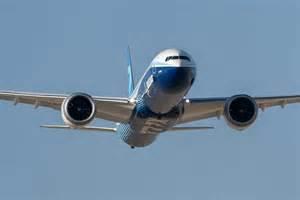
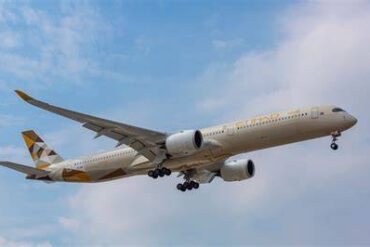
The future of ultra-long-haul aviation increasingly depends on aircraft efficiency. New-generation aircraft such as the Boeing 787 Dreamliner and Airbus A350 family have changed expectations for long-distance operations by reducing fuel consumption and improving range flexibility.
These aircraft use extensive composite materials, advanced aerodynamics, and highly efficient engines. Compared with older designs, they can achieve significant fuel savings while maintaining long-range capability.
The Boeing 787, for example, uses lightweight carbon-composite structures that reduce empty weight and improve efficiency. Its advanced wing design and modern engines allow airlines to operate routes that previously required larger aircraft.
For ultra-long-haul missions, efficiency creates flexibility. A more efficient aircraft can carry additional fuel reserves without sacrificing as much passenger or cargo capacity. This makes it better prepared for unexpected headwinds or changing weather patterns.
As airlines continue expanding nonstop routes between distant cities, aircraft efficiency will become even more important. The difference between a profitable nonstop flight and an expensive disruption may come down to a few percentage points of fuel efficiency.
The Future of Extreme Range Flights
The Boeing 777-300ER remains one of the most impressive long-range aircraft ever produced. Its ability to connect continents with hundreds of passengers demonstrates how far commercial aviation technology has advanced.
Yet even the most capable aircraft cannot ignore physics. Distance, wind, weight, and fuel consumption remain fundamental limitations that every airline must respect.
The growth of ultra-long-haul routes has created a new era where aircraft regularly operate close to their maximum capabilities. Flights such as San Francisco–Sydney show what modern aviation can achieve, but they also reveal the careful planning required behind every nonstop journey.
Future improvements in weather prediction, satellite communication, and aircraft technology will continue expanding the possibilities of global travel. However, the basic challenge will remain unchanged: airlines must always balance ambition with reality.
The Boeing 777-300ER can cross enormous oceans, carry hundreds of passengers, and operate some of the world’s longest commercial routes. But when a powerful headwind appears thousands of miles from the nearest airport, even this legendary aircraft must respect the limits of fuel, distance, and the atmosphere itself.