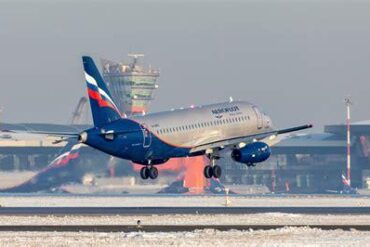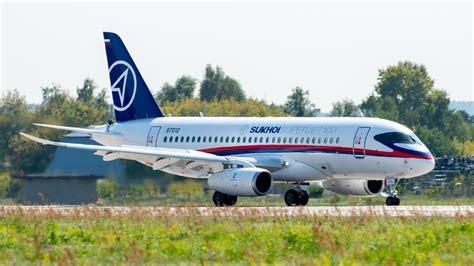
The Sukhoi Superjet 100 (SSJ-100), now officially designated as the Yakovlev SJ-100, represents one of Russia’s most ambitious efforts to compete in the global regional jet market. As a twin-engine aircraft seating between 87 and 98 passengers, this regional jet was designed to bridge a critical gap in Russia’s civil aviation manufacturing capabilities. Although it achieved considerable domestic milestones, the program’s trajectory has been deeply shaped by technical complexities, shifting partnerships, and global geopolitics.
From its first flight on 19 May 2008, the SSJ-100 was heralded as a modern, competitive airliner aimed at replacing older regional jets and even challenging established Western designs such as the Embraer E-Jet family and Bombardier’s CRJ series.
Its development, however, was never purely a technical exercise—it was also a geopolitical endeavor. Backed by state funding, global partnerships, and Russian aerospace ambitions, the aircraft’s journey reveals both its technological promise and the recurring challenges of high-complexity manufacturing in a politically volatile context.
Origins of the Superjet: A Bold New Vision for Russian Aviation
The SSJ-100 originated from the Russian Regional Jet (RRJ) program initiated by Sukhoi Civil Aircraft Company (SCAC) in May 2000. Early concepts explored three variants—RRJ60, RRJ75, and RRJ95—with the latter, a 98-seat configuration, becoming the cornerstone of the Superjet 100 line. Renamed officially in July 2005, the program quickly attracted international interest.
To enhance credibility and performance, Russia partnered with Boeing for engineering and program management assistance, while major Western suppliers such as Thales (avionics) and Honeywell (auxiliary power unit) brought in technological expertise. A joint venture with Italy’s Alenia Aeronautica—SuperJet International—was established to oversee Western sales, training, and support. The jet’s cosmopolitan development underscored its ambition to appeal to both domestic and global markets.
Flight Testing and Certification: A Promising Start
Ground tests began in early 2007, with the first SSJ-100 prototype taking to the skies in May 2008. By the end of 2009, three prototypes had logged more than 2,300 flight hours, a testament to the program’s momentum.
In February 2011, the aircraft received its Interstate Aviation Committee (IAC) certification. A year later, the European Union Aviation Safety Agency (EASA) also granted its Type Certificate—a vital endorsement for entering the international market. However, this recognition was revoked in March 2022, due to EU sanctions following Russia’s invasion of Ukraine, effectively closing European doors for the aircraft.
Design Philosophy and Operational Capabilities
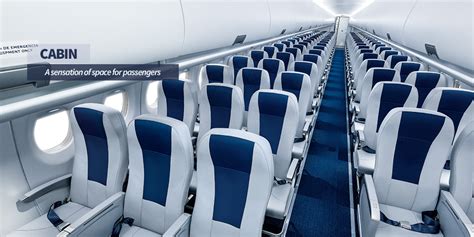
The Superjet 100 features a five-abreast cabin layout, optimized for 70 to 120 seats. This cabin configuration allowed it to offer a competitive and comfortable alternative to older regional jets, aligning closely with FAR-25 and Chapter 4 noise compliance standards.
Sukhoi claimed 8–10% lower operating costs compared to its Western competitors, owing to efficient design, modern systems integration, and favorable performance metrics. The aircraft’s maximum takeoff weight (MTOW) ranges from 45.88 to 49.45 tons, with the long-range LR variant offering up to 4,578 km of range—enough for many regional missions across Russia and Eurasia.
Production, Sales, and Initial Operators
Final assembly for the SSJ-100 is conducted at Komsomolsk-on-Amur, with key components manufactured in Novosibirsk. While the initial unit cost hovered between $31–35 million in 2012, by 2018 it had risen to around $50 million, reflecting both inflation and system upgrades.
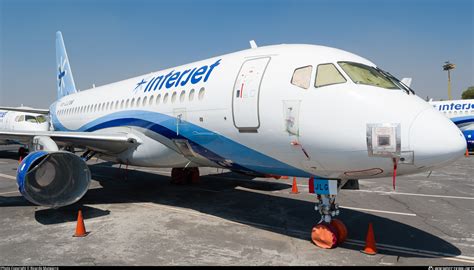
The aircraft entered service in April 2011 with Armenian carrier Armavia, though both of its SSJ-100s were retired by 2012 due to reliability concerns. The aircraft’s most prominent international customer, Interjet of Mexico, placed multiple orders and achieved a 99.7% dispatch reliability rate by 2014. However, in later years, fleet maintenance proved challenging; grounded aircraft were cannibalized for parts, and operational efficiency declined.
European carriers such as CityJet and Brussels Airlines attempted to integrate the Superjet into their fleets but faced persistent reliability and parts availability issues, eventually ceasing operations by 2020.
Technical Challenges and Mid-Life Upgrades
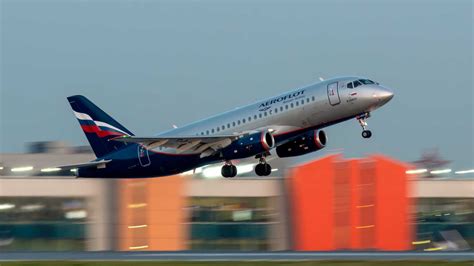
Despite promising initial metrics, the Superjet faced persistent teething problems. Russian carriers grounded the aircraft in 2016–2017 for inspections that revealed structural and systems inconsistencies. By mid-2017, these issues had been addressed sufficiently to improve dispatch reliability to 97.85%.
In 2017, Sukhoi tested and later certified “sabrelet” winglets, which improved aerodynamic efficiency and reduced fuel consumption by up to 5%. Meanwhile, the business jet variant saw its operational range increase to 6,000 km, catering to high-end charter and government clients.
The Impact of Sanctions and the Pivot to Russification
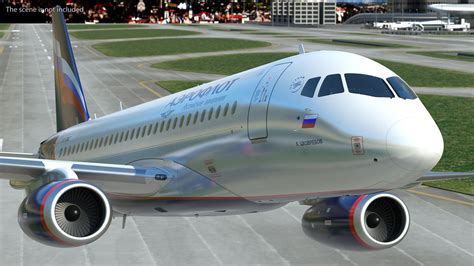
Following the imposition of Western sanctions in 2022, access to critical PowerJet SaM146 engine parts—including igniter plugs and fuel filters—became severely restricted. With up to 60% of SSJ-100s grounded at times, Russian operators resorted to cleaning and reusing older components, prompting urgent calls for self-sufficiency.
This necessity birthed the Russified SJ-100 initiative, anchored by the development of the Aviadvigatel PD-8 engine, which first flew on 17 March 2025. The new variant, SJ-100 NEW, includes composite winglets, Russian-made avionics, and targets 80% domestic content by the end of the decade.
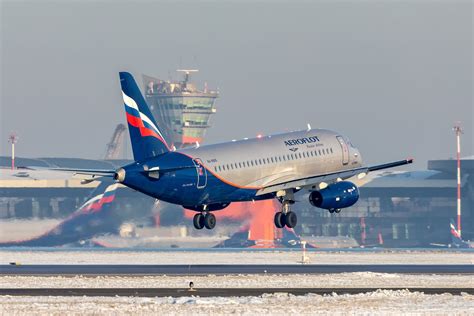
A major breakthrough came when Aeroflot placed an order for 89 aircraft in 2022, affirming state support and providing much-needed production stability. Serial production of the SJ-100 NEW is expected to begin in 2026.
Corporate Shifts and Rebranding
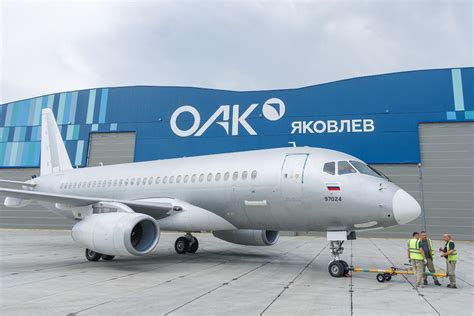
The Superjet’s corporate identity has evolved as frequently as its engineering design. In November 2018, SCAC was reorganized under the umbrella of Irkut Corporation, with the Sukhoi name gradually phased out. By August 2023, Irkut had rebranded as Yakovlev, bringing with it a new name for the aircraft—SJ-100.
This rebranding serves both practical and symbolic purposes: distinguishing the new, domestically equipped SJ-100 from the sanction-affected Superjet, and aligning the aircraft with the venerable Yakovlev design bureau, which holds strong historical recognition within Russia.
Market Positioning and Competitive Outlook
The Yakovlev SJ-100 continues to compete in a space dominated by long-established players like Embraer and Mitsubishi’s SpaceJet (formerly MRJ). While Russia’s domestic market ensures some demand—particularly under the banner of import substitution—international traction remains constrained by lingering concerns over reliability and ongoing geopolitical frictions.
As of April 2025, more than 235 Superjet units have been delivered, with 385 total orders placed across the program’s life. Annual production has rarely exceeded 30 units, far below the break-even scale expected of modern jetliners. However, with the shift to indigenous systems, the SJ-100 NEW could revitalize production pipelines by eliminating reliance on volatile foreign suppliers.
Variants and Specifications at a Glance
- SSJ-95B (Baseline): 98-seat, MTOW of 45.88 t, EASA certified in 2012
- SSJ-95LR (Long Range): Extended range of 4,578 km, MTOW of 49.45 t
- SJ-100 NEW: Russified version with PD-8 engine, up to 103 seats, range 4,320 km, full domestic systems
Other derivative concepts, including a 75-seat shrink (SSJ75) and 120–130-seat stretch variants, were evaluated but never moved into full development.
Conclusion: A High-Stakes Bet on Domestic Capability
The Yakovlev SJ-100 stands as both a product and symbol of modern Russian aerospace strategy—technically bold, internationally aspirational, and politically reactive. While the original Superjet 100 faced numerous growing pains, the Russified SJ-100 represents a renewed attempt at sovereignty in aerospace manufacturing.
Its success will depend not only on meeting reliability and performance benchmarks, but also on achieving sustainable production, securing domestic airline confidence, and navigating an increasingly fragmented global aviation landscape.