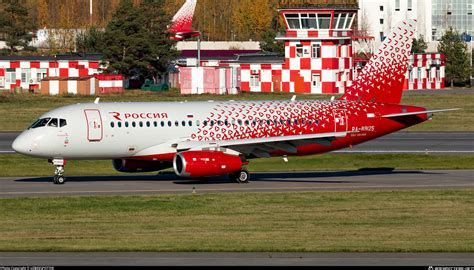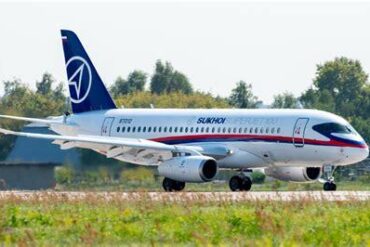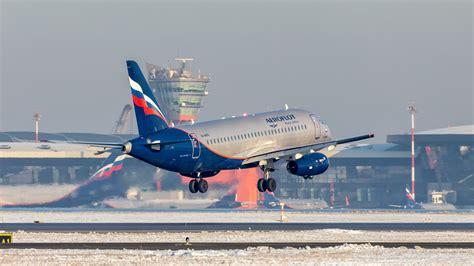
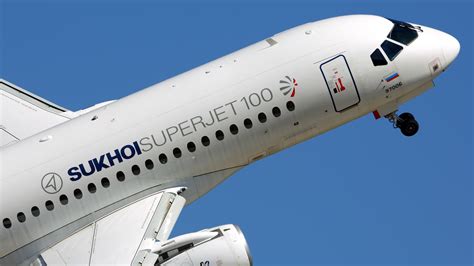
The Sukhoi Superjet 100 (SSJ100), launched in 2011, marked a major milestone in modern Russian aviation. Designed to replace aging Soviet-era regional jets, the SSJ100 brought a fresh face to short-haul domestic and regional operations. Despite enduring an uncertain global reception and significant geopolitical headwinds, the aircraft has carved out a lasting presence within Russia’s aviation ecosystem. More than 220 aircraft have been built, and while international appeal has faded, the jet continues to dominate skies above Russia.
Rossiya Airlines: The Global Leader in SSJ100 Operations
As of mid-2024, Rossiya Airlines, a subsidiary of the Aeroflot Group, operates the world’s largest SSJ100 fleet. With 76 aircraft (eight listed as inactive), Rossiya has transformed itself into the linchpin of Russia’s regional air service, utilizing the jet to service high-density domestic routes where infrastructure is limited but passenger demand is resilient.
These aircraft form the backbone of Rossiya’s operations, covering destinations as diverse as Murmansk, Sochi, Kaliningrad, and Novosibirsk. This extensive network underscores the SSJ100’s versatility across a country with vast distances and challenging climates. With an average fleet age of 6.8 years, Rossiya maintains a relatively young and consistent subfleet, supporting simplified maintenance and crew training.
Interestingly, despite Aeroflot holding orders for 89 more ‘Russified’ SSJ100s, the flagship carrier is reconsidering its position. The airline has voiced intentions to shift its investment toward the MC-21, citing reliability and production stability concerns. Nonetheless, Rossiya remains central to keeping the SSJ100 alive in daily service.
Red Wings Airlines: Expanding the Domestic Frontier
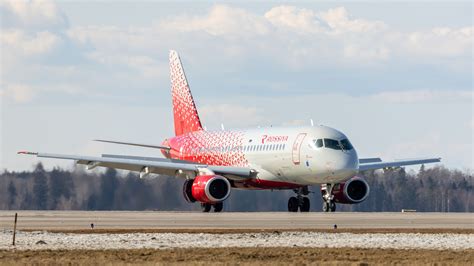
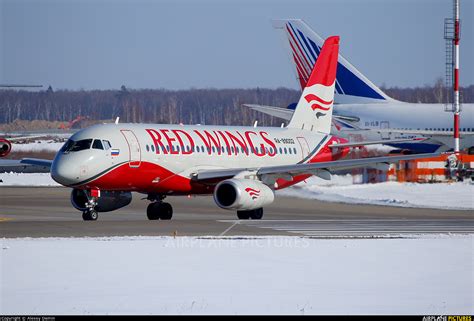
Moscow-based Red Wings Airlines holds a bold strategy to position itself as a champion of Russian aerospace. With 20 SSJ100s currently in service and plans to add 15 more, the airline is clearly placing a large bet on domestically produced aircraft. General Director Evgeniy Klyucharev has publicly stated the airline’s goal to reach the “elite league” of Russian carriers—a move closely tied to the SSJ100’s expansion.
The SSJ100’s introduction into Red Wings’ operations has allowed the airline to build out new regional hubs beyond the traditional Moscow-centric network. The shift toward domestic aircraft also includes 16 MC-21 aircraft on order, showing the company’s dedication to local manufacturing, even amid production and certification challenges.
Beyond its Sukhoi fleet, Red Wings operates a blend of Airbus A320 family aircraft, Tupolevs, and long-haul capable Boeing 777-200ERs. However, its commitment to the SSJ100 is a clear strategic move to both reduce dependence on Western OEMs and champion Russian innovation.
Yamal Airlines: Serving Russia’s Arctic Gateway
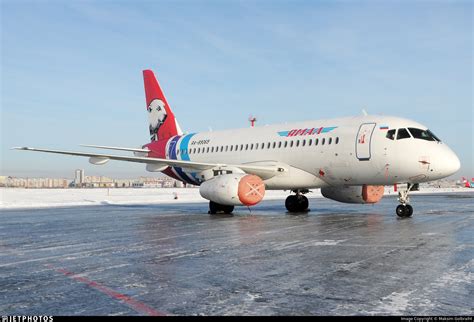
Yamal Airlines, headquartered in Salekhard, occupies a unique position within the Russian aviation landscape. Focused on the country’s remote Arctic region, Yamal leverages its 14 SSJ100s to provide essential connectivity in harsh, isolated environments.
With an average age of 7.3 years, Yamal’s fleet supports critical passenger movements between northern oil towns, resource hubs, and administrative centers. These routes are often economically marginal, but essential to regional cohesion and industrial operation. In addition to the SSJ100s, the airline operates eight Airbus A320s, one Challenger 850, and a CRJ200LR, though the SSJ remains dominant in terms of both fleet share and route frequency.
Yamal’s SSJ100 operations underscore the jet’s utility in environments where short field performance, operational ruggedness, and fuel economy are paramount.
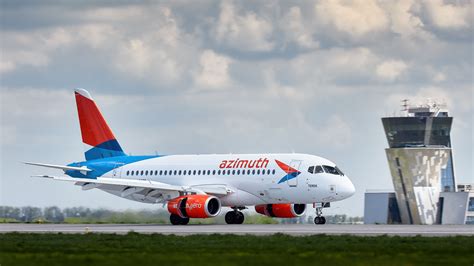
Azimuth Airlines: The All-Sukhoi Pioneer
Azimuth Airlines, based in Rostov-on-Don, is perhaps the most emblematic of the SSJ100’s original mission. It is the only major airline to exclusively operate the SSJ100 as its core fleet (until the recent inclusion of the Airbus A220). With 20 SSJ100s, including 18 long-range variants, Azimuth has built a dense regional network with efficient jet service.
Azimuth’s long-range SSJ100s allow it to serve medium-haul destinations such as Simferopol, Krasnoyarsk, and Novy Urengoy with jet comfort and speed, replacing older turboprop routes. The average fleet age of just over six years ensures modern cabins and up-to-date maintenance standards.
In 2023, the airline announced the introduction of Airbus A220s into its fleet—marking a potential pivot toward Western aircraft despite geopolitical friction. This move could signal operational flexibility or hedging against uncertain SSJ supply chains.
Gazpromavia: Supporting Russia’s Energy Arteries
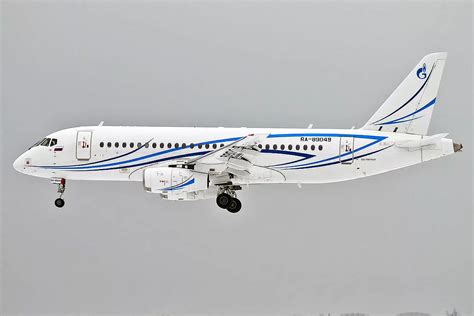
Gazpromavia, an aviation division of Russian energy giant Gazprom, operates nine SSJ100LR aircraft in support of oil and gas logistics. These aircraft fly on 19 dedicated routes, many of which link remote drilling stations, mining outposts, and regional control centers across Siberia and the Arctic.
The SSJ100LR is uniquely suited for this mission, offering extended range and robust payload capability with low operating costs. The airline’s fleet also includes three Boeing 737s, but the SSJ100 is clearly central to its day-to-day operations. These missions are not visible on standard commercial platforms but are critical to sustaining Russia’s resource economy.
Yakutia Airlines: Bridging the Far East
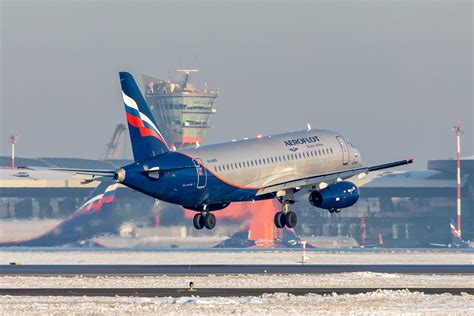
From its base in Yakutsk, Yakutia Airlines deploys three SSJ100LRs to operate lifeline routes across the Sakha Republic and beyond. Its network includes international forays into China and Korea, though sanctions have reshaped those ambitions. Alongside the SSJ100s, Yakutia operates four Boeing 737s, split between -700 and -800 variants.
One of Yakutia’s most unique operations includes a St. Petersburg–Yakutsk route using the 737-700—among the longest such routes globally for that model. The SSJ100 supports similar missions, particularly when winter weather or payload restrictions complicate narrowbody operations.
Secondary Commercial Operators: IrAero and Severstal Air
Two smaller Russian carriers—IrAero and Severstal Air—continue to utilize the SSJ100 in niche commercial operations.
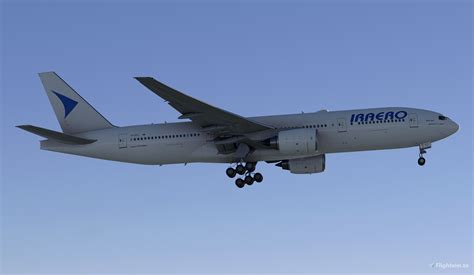
- IrAero currently operates seven SSJ100s, supporting a network in Eastern Russia and the Far East, including service to cities like Khabarovsk, Irkutsk, and Chita.
- Severstal Air flies four aircraft, based mainly in Cherepovets, providing service to Moscow, St. Petersburg, and various Ural destinations.
These carriers reinforce the SSJ100’s continued viability among regionally focused, point-to-point operators.
Non-Commercial Operators: State and Military Applications
Though commercial traction outside Russia has waned, the SSJ100 remains in use by several non-commercial entities.
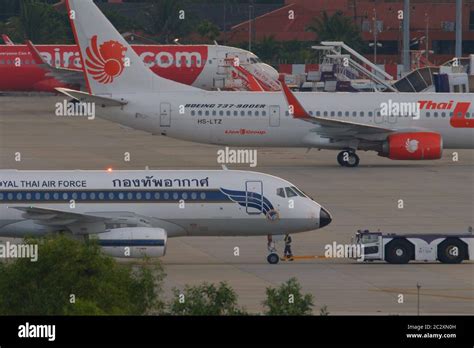
- The Royal Thai Air Force uses three SSJ100s for VIP and government transport missions.
- Various Russian governmental agencies deploy the aircraft in regional administrative capacities.
- The Kazakh Border Patrol maintains a single SSJ100 for state service.
These specialized roles affirm the type’s reliability, economy, and adaptability for executive and surveillance missions.
The Future of the SSJ100: Russification and Uncertainty
The SSJ100 faces an evolving future. The Russification project, intended to replace Western components with domestically produced alternatives, aims to create the SJ-100—a version of the aircraft free from import dependencies.
Yet this transition introduces a host of engineering, production, and certification challenges. PowerJet SaM146 engines, originally developed through a joint venture with France’s Safran, are being replaced with the new PD-8 engine, but these are still undergoing trials. The move may eliminate foreign restrictions but risks undermining supply chain predictability and performance consistency.
With international sales essentially frozen and EASA certification revoked, the aircraft’s future lies almost entirely within Russian borders. However, given Russia’s political climate and the urgent demand for domestically made jets, the SSJ100—rebranded or otherwise—may still prove vital.
Conclusion: The SSJ100’s Second Life in a Changing Sky
While the Sukhoi Superjet 100 never achieved the global acclaim its designers envisioned, it has undeniably succeeded in shaping the Russian regional aviation landscape. It remains a central component of multiple airline strategies, particularly as international options dwindle amid sanctions.
As we move deeper into 2025, the jet finds itself at a crossroads—one part workhorse, one part political symbol. Whether through technical reinvention or sheer necessity, the SSJ100 is poised to remain a fixture in Russian skies for years to come.