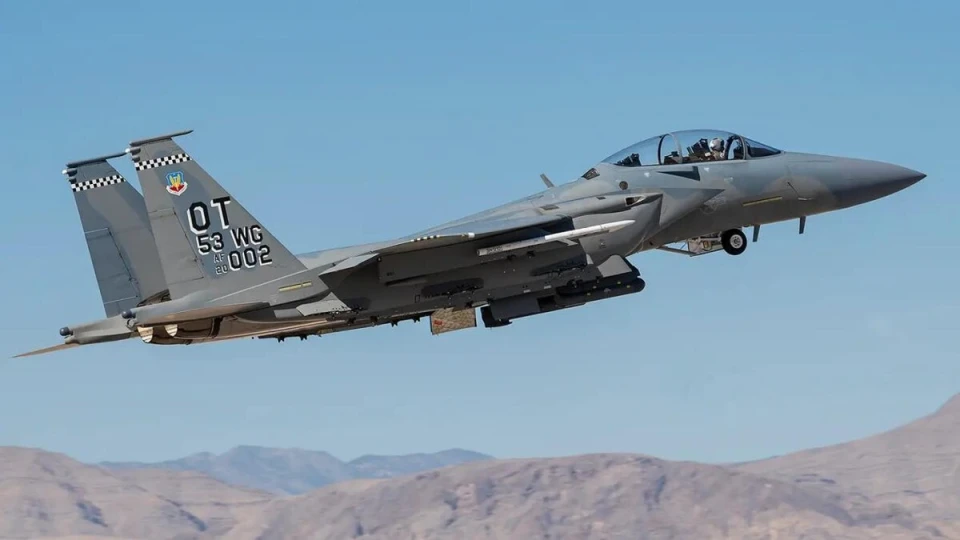
The McDonnell Douglas F-15 Eagle, one of the most formidable air superiority fighters ever designed, remains a cornerstone of modern aerial warfare. Introduced in the 1970s, its continued relevance is a testament to its adaptability, with operators worldwide upgrading and modifying their fleets to meet evolving combat requirements. This article provides an in-depth analysis of F-15 Eagle operators, detailing their variants, operational history, and strategic significance.
United States: The Primary Operator
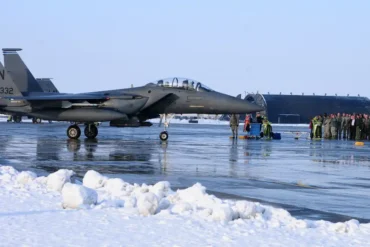
The United States Air Force (USAF) remains the largest and most advanced operator of the F-15 Eagle family. Over the decades, it has fielded several variants, each progressively enhanced with cutting-edge avionics and weapons systems.
Variants in Service
- F-15A/B/C/D – Early air superiority models, some of which have undergone extensive modernization.
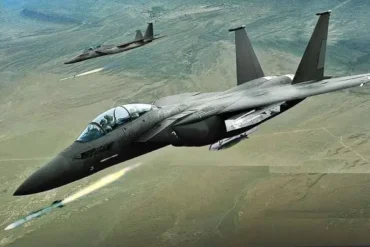
- F-15E Strike Eagle – A multi-role fighter with ground attack capabilities.
- F-15EX Eagle II – The latest and most advanced variant, derived from the Qatari F-15QA, featuring enhanced payload capacity, a modern cockpit, and AN/APG-82 AESA radar.
Strategic Importance
- F-15EX Enhancements: The ability to carry up to 22 air-to-air missiles makes the F-15EX a formidable platform for future combat scenarios.
- Longevity: The USAF intends to operate the F-15C/D models into the 2030s while transitioning to the F-15EX.
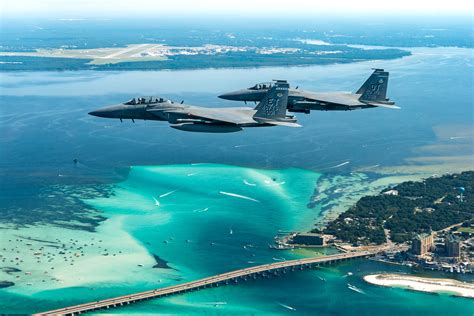
Israel: A Dominant Force in the Middle East
The Israeli Air Force (IAF) was among the first foreign operators of the F-15 Eagle, acquiring the aircraft under the “Peace Fox” program in 1976. Israeli F-15s have played a pivotal role in regional conflicts, achieving over 50 confirmed air-to-air victories.
Variants in Service
- F-15A/B/C/D – Standard air superiority models.
- F-15I Ra’am – A heavily customized Strike Eagle, optimized for long-range precision strikes.
Operational Milestones
- First combat use: The IAF’s F-15A scored its first aerial victory in 1979.
- Modernization efforts: Israel has expressed interest in acquiring the F-15EX to replace aging platforms.
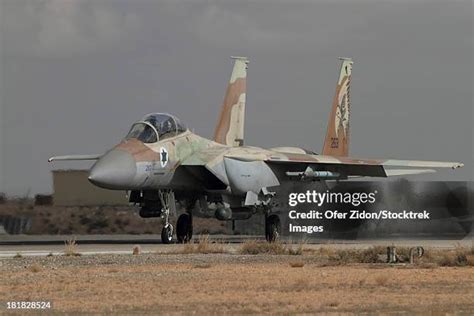
Japan: Homegrown F-15 Production
Japan’s Air Self-Defense Force (JASDF) operates the F-15J and F-15DJ, built domestically under license by Mitsubishi Heavy Industries. As of 2025, Japan maintains over 200 active F-15J/DJ units, emphasizing air defense.
Key Features
- J-MSIP Upgrades: Includes AESA radars and EPAWSS electronic warfare systems.
- Domestic production: 213 units were delivered by 1999.
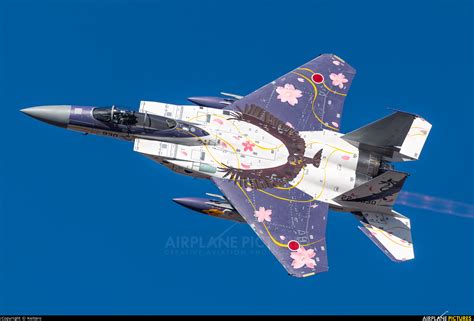
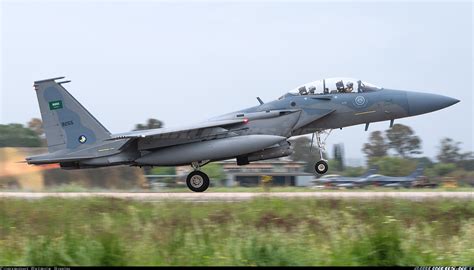
Saudi Arabia: The Advanced F-15SA
Saudi Arabia operates an extensive fleet of F-15C/D, F-15S, and the state-of-the-art F-15SA (Saudi Advanced).
Modernization and Expansion
- F-15S to F-15SR Upgrade: Brings older aircraft up to F-15SA standards.
- Potential Acquisition of F-15EX: Saudi Arabia is evaluating this platform to replace legacy F-15C/D models.
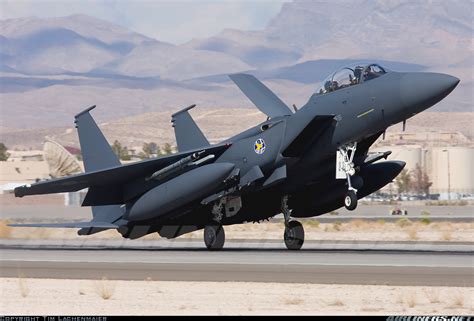
South Korea: The “Slam Eagle”
South Korea’s F-15K “Slam Eagle” is optimized for deep-strike missions, equipped with General Electric F110 engines and enhanced fuel capacity.
Strategic Role
- Operates 59 units as part of its “Kill Chain” strategy against North Korean threats.
- Integrated with advanced sensors for preemptive strikes.
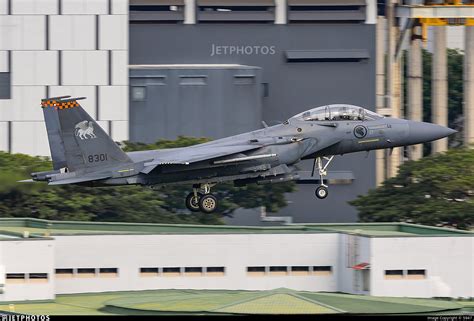
Singapore: The F-15SG Powerhouse
Singapore’s F-15SG is an enhanced version of the F-15E, equipped with cutting-edge avionics and radar systems.
Key Capabilities
- AN/APG-63(V)3 AESA radar for superior situational awareness.
- Compatibility with Israeli weapon systems, enhancing multi-role operations.
Emerging and Potential Operators
- Qatar: Operates the F-15QA, the most advanced Eagle before the F-15EX.
- Indonesia and Poland: Have shown interest in acquiring the F-15EX.
Strategic Evolution of the F-15 Eagle
The longevity of the F-15 Eagle is attributed to continuous modernization efforts, including:
- BAE Systems’ EPAWSS V2: An advanced electronic warfare suite enhancing threat detection and cognitive warfare capabilities.
- Multi-role Adaptability: From air superiority to counter-drone operations, exemplified by Saudi Arabia’s F-15SA and Japan’s F-15J.
Frequently Asked Questions (FAQ)
1. How does the F-15EX compare to previous F-15 models?
The F-15EX introduces increased payload capacity, modern avionics, improved survivability, and a digital fly-by-wire system compared to older F-15C/D and F-15E variants.
2. Why do some countries prefer the F-15 over stealth fighters like the F-35?
While the F-35 excels in stealth and multi-role capabilities, the F-15 offers superior speed, payload capacity, and proven reliability, making it ideal for certain air superiority and strike missions.
3. What is the future of the F-15 Eagle?
With continued upgrades such as AESA radars, advanced weaponry, and electronic warfare systems, the F-15 is expected to remain in service beyond 2040, ensuring its place in modern aerial combat.