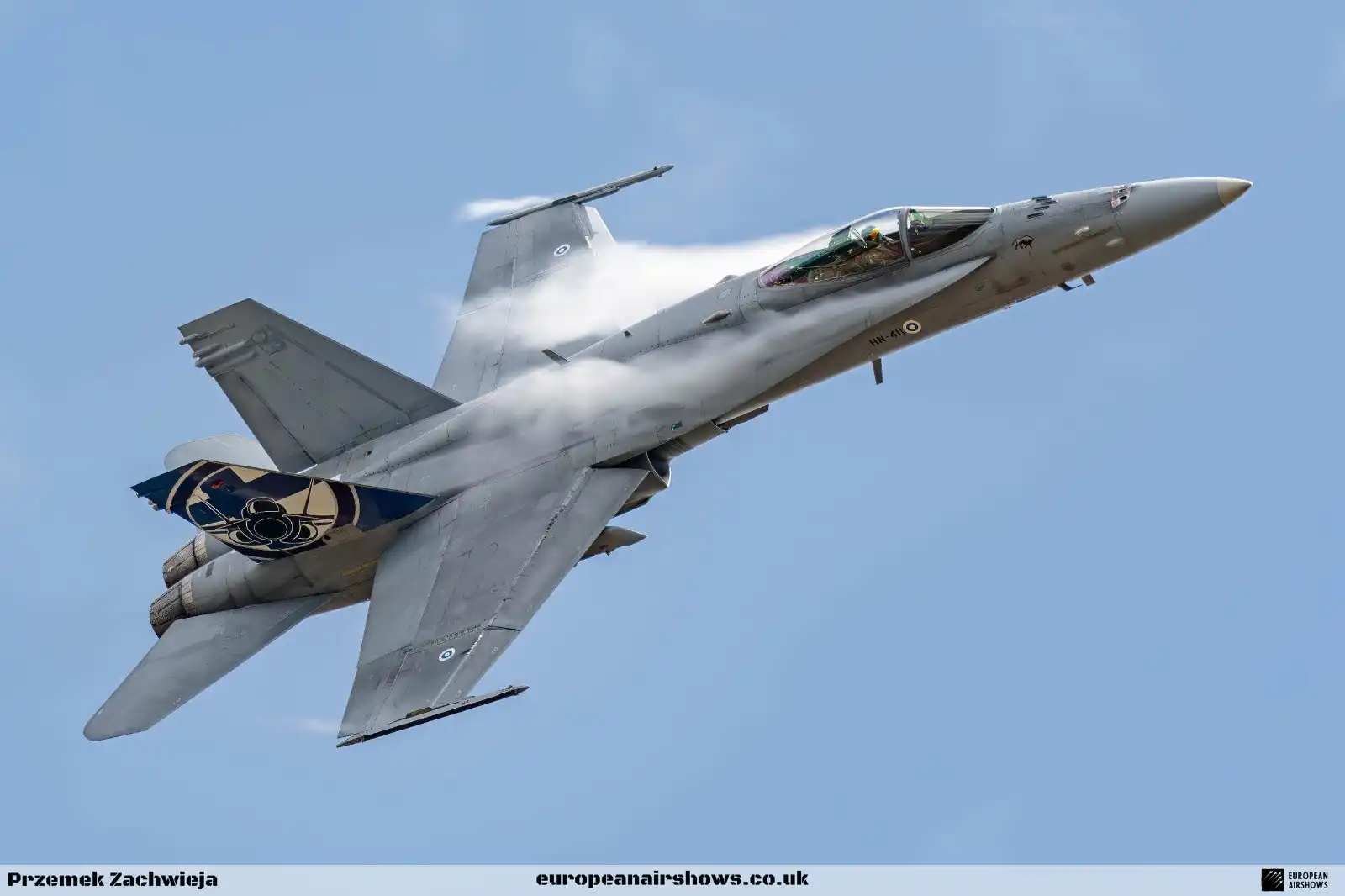
The F/A-18 Hornet and its advanced variant, the F/A-18E/F Super Hornet, have become critical components of modern air forces worldwide. Known for their versatility, these aircraft are used for air superiority, ground attack, and reconnaissance missions. Since its introduction in 1983, the F-18 has served in numerous conflicts and remains a key asset in naval and air force operations. This article provides an in-depth examination of current F-18 operators, highlighting their fleet composition, operational history, and future outlook.
Overview of F-18 Operators
The F/A-18 Hornet and Super Hornet are used by multiple nations across different continents. The United States is the primary operator, with both the U.S. Navy and Marine Corps employing various versions. Additionally, countries like Australia, Canada, Finland, Kuwait, Malaysia, Spain, and Switzerland have incorporated these jets into their air forces. While some nations use the original F/A-18A-D Hornet, others operate the F/A-18E/F Super Hornet, demonstrating the aircraft’s adaptability to different military needs.
F/A-18 Hornet (A-D) Operators
1. United States Marine Corps (USMC)
The United States Marine Corps (USMC) continues to operate the F/A-18A/B/C/D variants despite gradual replacements with the F-35B Lightning II. The USMC’s F/A-18C/D models have undergone avionics upgrades, including the AN/APG-79(V)4 AESA radar, extending their service life into the early 2030s.
2. Canada: Royal Canadian Air Force (RCAF)
The Royal Canadian Air Force (RCAF) operates CF-188A and CF-188B variants, locally designated versions of the F/A-18A/B. The fleet includes 62 CF-18A and 18 CF-18B jets. In 2019, Canada acquired 25 retired Australian F/A-18A/B Hornets, integrating 18 into service while using the remainder for spare parts. Canadian F-18s have undergone multiple Incremental Modernization Projects (IMP) to enhance their combat effectiveness.
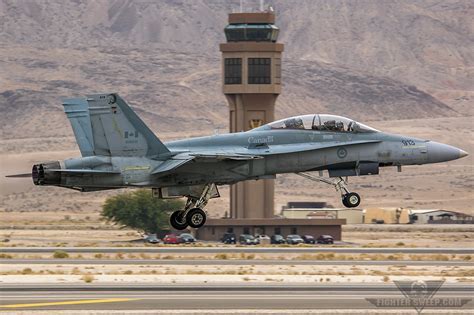
3. Finland: Finnish Air Force
Finland operates F/A-18C and F/A-18D models, with 62 aircraft upgraded under Mid-Life Upgrade (MLU) programs. These upgrades improved air-to-ground capabilities and extended operational service until 2025–2030, after which the fleet will be replaced by the F-35A Lightning II.
4. Kuwait: Kuwait Air Force
Kuwait has a mixed fleet of F/A-18C and F/A-18D aircraft, delivered between 1991 and 1993. The country has deployed its Hornets in major operations, including Operation Southern Watch and the Yemeni Civil War.
5. Malaysia: Royal Malaysian Air Force (RMAF)
Malaysia operates eight F/A-18D Hornets, delivered between March and August 1997. These aircraft played a crucial role in Operation Daulat (2013) against insurgents in Sabah.
6. Spain: Spanish Air and Space Force
Spain uses 84 EF-18A+/B+ Hornets, locally designated as C.15M and CE.15M. These aircraft underwent extensive modernization programs, including avionics, radar, and weapons system upgrades.
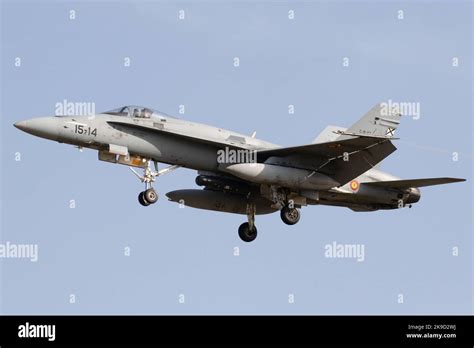
7. Switzerland: Swiss Air Force
Switzerland has operated F/A-18C/D Hornets since 1996–1999. These aircraft received upgrades under Upgrade 25 programs. The Swiss Air Force plans to retire its Hornets in favor of the F-35A Lightning II.
F/A-18E/F Super Hornet Operators
1. United States Navy (USN)
The U.S. Navy is the largest operator of the F/A-18E/F Super Hornet, deploying these jets across the Pacific and Atlantic fleets. These aircraft are used for strike missions, fleet defense, and electronic warfare, and also serve in the Blue Angels demonstration team. Recent operations include air strikes in the Red Sea and against Houthi targets in Yemen.
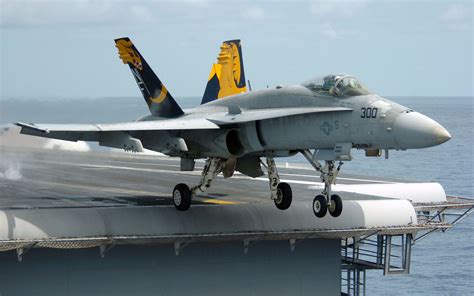
2. Australia: Royal Australian Air Force (RAAF)
Australia operates 24 F/A-18F Super Hornets, ordered in 2007 and operational by December 2010. The RAAF considered an additional 24 units in 2012, later opting to order 12 EA-18G Growlers in 2013 for electronic warfare missions.
3. Kuwait: Kuwait Air Force
Kuwait ordered 28 F/A-18E/F Super Hornets in 2018, consisting of 22 F/A-18Es and 6 F/A-18Fs, delivered by 2021. These aircraft provide advanced multirole capabilities, complementing Kuwait’s existing fleet of F/A-18C/D Hornets.
Former Operators and Transition Plans
Some countries have phased out their older F-18 fleets:
- Australia retired its F/A-18A/B fleet in December 2021, replacing them with F-35A Lightning IIs.
- The U.S. Navy retired its F/A-18C/D models in 2019, though reserve squadrons continued operations until October 2019.
- Finland and Switzerland plan to retire their Hornets by 2025–2030 in favor of the F-35A.
Comparative Insights and Future Trends
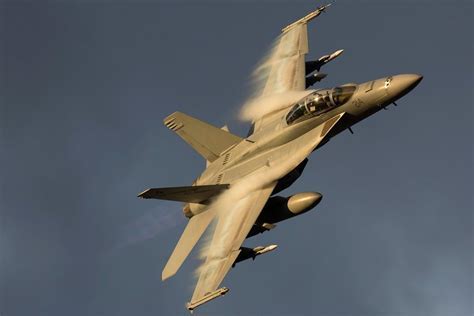
An interesting operational detail is Kuwait’s dual-use strategy, maintaining both F/A-18C/D and F/A-18E/F aircraft—an approach rarely seen among operators. In contrast, most countries transition entirely to newer variants or replace them with fifth-generation fighters.
The trend toward fifth-generation aircraft such as the F-35 suggests that the F-18, while still highly effective, may face gradual phase-outs over the next decade. However, countries like Canada and Spain are continuing modernization programs to keep their Hornets operational into the 2030s.
Conclusion
The F/A-18 Hornet and Super Hornet continue to serve as multirole fighters for numerous air forces worldwide. While newer aircraft are entering service, the F-18 remains a combat-proven platform, providing versatility, reliability, and advanced strike capabilities. With many operators actively upgrading their fleets, the F-18 is likely to remain relevant well into the next decade.
Frequently Asked Questions (FAQ)
1. Which country operates the largest F-18 fleet?
The United States is the largest operator, with the U.S. Navy flying the F/A-18E/F Super Hornet and the U.S. Marine Corps maintaining F/A-18C/D Hornets.
2. Are F-18 Hornets still in production?
The original F/A-18A-D Hornet production ended in 2000, but the F/A-18E/F Super Hornet remains in production for the U.S. Navy and export customers.
3. Why do some countries use both F/A-18C/D and F/A-18E/F models?
Countries like Kuwait maintain both variants to balance modernization with operational continuity. The older F/A-18C/Ds remain useful for certain roles, while the F/A-18E/Fs provide enhanced capabilities.
By maintaining a comprehensive and well-equipped fleet, F-18 operators continue to leverage the aircraft’s combat-proven effectiveness, ensuring air superiority across multiple theaters of operation.