Why the McDonnell Douglas MD-11 Still Matters in Modern Cargo Aviation
The McDonnell Douglas MD-11 occupies a strange, almost mythological position in aviation history. It was born at the tail end of the Cold War aerospace boom, designed as a long-range, high-capacity evolution of the DC-10, and then quietly transformed into one of the most important cargo aircraft of the early globalized economy. By 2026, the MD-11 is no longer a symbol of future flight. Instead, it is a living relic still performing economically useful work in narrow logistical niches where payload flexibility, range, and cargo volume intersect in ways that modern twin-engine aircraft sometimes cannot perfectly replicate.
The aircraft’s three-engine configuration once offered operational advantages when extended twin-engine operations (ETOPS) rules were more restrictive. While ETOPS regulations evolved and made large twin-engine aircraft dominant, the MD-11 found new life as a freighter. Passenger variants disappeared entirely by the mid-2010s, leaving cargo operators as the final custodians of the design. Today, every remaining operational MD-11 is a freighter, and nearly all are concentrated in just a few corporate fleets.
The significance of the MD-11’s survival into 2026 is less about nostalgia and more about industrial inertia. Global logistics networks require redundancy, surge capacity, and predictable maintenance ecosystems. Even an aging aircraft can remain economically viable when spare parts are available and internal maintenance capabilities are strong. That reality explains why the MD-11 has lasted longer in cargo service than many analysts predicted during the early 2010s.
The world of aviation is ruthless about efficiency, but logistics is ruthless about reliability. The MD-11 exists precisely at the intersection of those two forces, surviving not because it is perfect, but because it is understood.
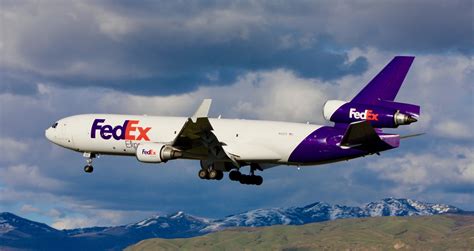
The Reality in 2026: Only Two Primary MD-11 Operators Remain
By 2026, the list of MD-11 operators has collapsed to an extraordinarily small number. Historically, three major cargo airlines operated the aircraft: UPS Airlines, FedEx Express, and Western Global Airlines. Following the fatal Louisville accident in November 2025 and subsequent regulatory actions, the operational landscape changed dramatically.
UPS permanently retired its MD-11 fleet after the accident, accelerating modernization plans and writing off the aircraft entirely. This decision removed one of the largest MD-11 fleets from service overnight and permanently reshaped the global supply of spare parts and maintenance expertise.
As a result, two airlines now represent the remaining active MD-11 ecosystem:
- FedEx Express remains the dominant operator by fleet size and infrastructure capability.
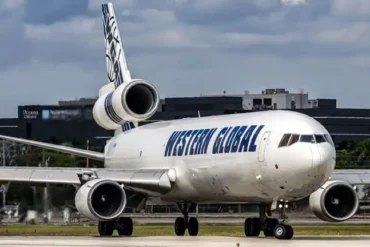
- Western Global Airlines continues to rely heavily on the type as a core business platform, though with far fewer aircraft and fewer resources to absorb prolonged groundings or regulatory shifts.
Historically, FedEx operated roughly 28 MD-11 fre FedEx freighters in active rotation prior to the 2025 grounding, with a larger total inventory available in storage or maintenance rotation.
Western Global operated a much smaller fleet, roughly in the mid-teens range, but relied on the aircraft much more heavily as a percentage of total fleet capacity.
FedEx Express: The Final Industrial-Scale MD-11 Operator
FedEx is the last true large-scale MD-11 operator left in the world. The company’s strategy toward the aircraft is pragmatic rather than sentimental. The MD-11 offers payload and volume characteristics that still fit certain long-haul cargo profiles, especially where fleet flexibility matters more than pure fuel efficiency.
Before the 2025 safety grounding, FedEx had approximately 25 MD-11 freighters actively operating, out of a larger owned fleet exceeding thirty airframes. The company’s leadership has emphasized that returning these aircraft safely to service is financially and operationally preferable to outsourcing lift capacity during peak seasons.
The grounding created immediate financial pressure. FedEx estimated impacts in the hundreds of millions of dollars due to replacement transport arrangements, highlighting how deeply integrated the MD-11 still was in its global logistics network.
What separates FedEx from other operators is vertical integration. The company maintains extensive in-house maintenance infrastructure, experienced MD-11 technicians, and access to large spare parts inventories sourced from retired fleets. These advantages make long-term operation economically viable even as global parts production declines.
Industry projections still suggest the type could remain in limited FedEx service into the early 2030s, making the company effectively the final institutional steward of the MD-11.
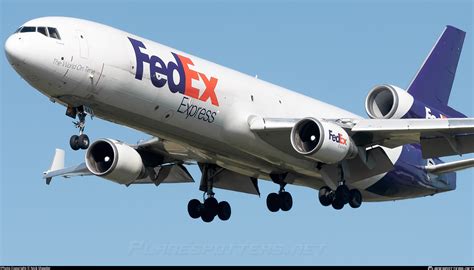
Western Global Airlines: The MD-11 as a Survival Platform
Western Global Airlines represents a very different story. While FedEx operates MD-11s as part of a diversified fleet, Western Global built its business model around them. That difference creates both opportunity and existential risk.
The airline historically operated around 14 to 15 MD-11 freighters, with average airframe ages exceeding 30 years. When the 2025 grounding occurred, the impact was immediate and severe, including pilot furloughs and operational contraction. (LinkedIn)
For Western Global, the MD-11 is not just an aircraft type. It is the backbone of the company’s cargo capacity, training pipeline, and route economics. Losing access to MD-11 operations, even temporarily, threatens the entire company structure in ways that diversified carriers can avoid.
The airline’s long-term survival depends on regulatory outcomes, parts availability, and the economic feasibility of maintaining aging tri-jet airframes in a world increasingly optimized around twin-engine widebody freighters.
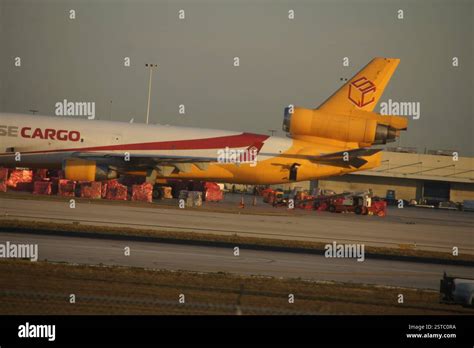
The 2025 Crash That Changed Everything
The single biggest turning point for the MD-11 in modern history came in November 2025, when a UPS MD-11 crashed shortly after takeoff from Louisville. Investigators found evidence of engine mount structural failure, triggering immediate regulatory responses.
The crash resulted in multiple fatalities and triggered emergency groundings across the MD-11 global fleet. Boeing recommended suspension of operations while engineering analysis and inspection protocols were developed.
For UPS, the crash became the catalyst for permanent retirement. The company moved quickly to replace MD-11 capacity with newer aircraft like Boeing 767 freighters.
For FedEx and Western Global, the crash created a regulatory and engineering challenge rather than an immediate retirement trigger. Their long-term planning shifted toward deeper inspection regimes, structural testing, and selective return-to-service strategies.
The crash fundamentally reframed the MD-11 from “aging but functional” to “aging and structurally high-risk unless aggressively monitored.”
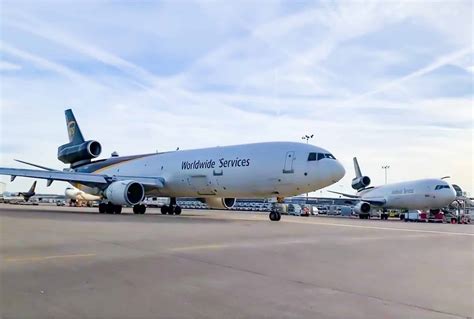
Why So Many MD-11s Still Exist on Paper
One confusing aspect of MD-11 tracking is registry numbers. Even though only a tiny number are operational, dozens remain technically listed as active airframes.
These aircraft fall into several categories:
- Stored airframes waiting inspection or potential reactivation
- Parts donor aircraft used to sustain remaining flying units
- Retired aircraft awaiting formal deregistration and scrapping
Because MD-11 parts production has largely ended, stored aircraft effectively function as mobile spare-parts warehouses. This creates a shrinking but self-sustaining ecosystem that allows a small number of aircraft to keep flying.
The result is an illusion of scale. Registries may show over one hundred aircraft globally, but only a fraction will ever fly again.
The Maintenance Reality: Flying a 1990s Widebody in the 2030s
Maintaining the MD-11 in 2026 is closer to running a historical industrial machine than operating a modern aircraft. Inspections have grown increasingly invasive, requiring non-destructive testing methods to detect internal fatigue not visible during traditional inspections.
Engine pylon structures have become a major inspection focus following the 2025 crash investigation. Fatigue cracking can originate internally and propagate outward without external visual warning, forcing operators to adopt advanced inspection regimes and longer maintenance downtime cycles.
The maintenance cost curve is steep but predictable. As long as spare parts exist and skilled technicians remain available, small fleets can continue flying. Once either supply chain collapses, the aircraft disappears rapidly from active service.
The Economics That Keep the MD-11 Alive
Despite fuel inefficiency relative to modern twins, the MD-11 retains certain economic advantages in specific scenarios. Cargo logistics does not always reward pure fuel efficiency. Sometimes payload volume, cargo door size, and structural payload tolerance matter more.
For certain long-haul freight profiles, the MD-11 can still produce competitive cost-per-ton outcomes, especially if acquisition cost is fully depreciated and maintenance is performed internally.
This is why companies like FedEx continue investing in safety compliance rather than immediate retirement.
The Final Timeline: How Long the MD-11 Will Likely Survive
Current projections suggest the final MD-11 retirements will likely occur around the early 2030s. Some planning scenarios place final operational retirement near 2032, depending on regulatory environment and parts supply sustainability.
Several variables could accelerate that timeline:
- Insurance availability
- Parts exhaustion
- Regulatory tightening
- Technician workforce attrition
But absent sudden regulatory prohibition, small numbers could continue flying for several more years.
The Cultural Legacy of the MD-11
The MD-11 represents the last major evolution of the three-engine widebody era. Once it disappears, the tri-jet era in large commercial aviation effectively ends.
The aircraft symbolizes a transitional design philosophy — built during a time when airlines were balancing redundancy, range, and regulatory uncertainty. Modern aviation favors twin engines, digital monitoring, and predictive maintenance ecosystems instead.
Still, for aviation professionals and enthusiasts alike, the MD-11 remains unforgettable. Its silhouette, engine layout, and distinctive performance profile make it one of the most recognizable aircraft ever built.
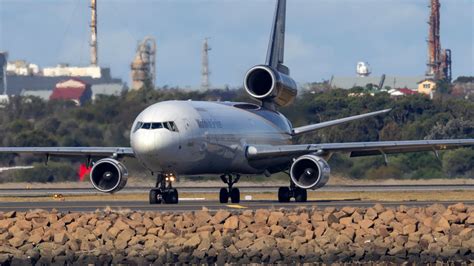
The End of the Trijet Era Is Already Underway
The MD-11’s remaining years are not about expansion. They are about controlled descent — economically, technologically, and operationally. Every stored airframe cannibalized for parts is another step toward extinction.
Yet the aircraft’s long service life demonstrates a deep truth about industrial technology: tools survive when they remain useful, not when they remain fashionable.
The MD-11 is no longer the future. But it is still, in carefully controlled and economically precise ways, part of the present.
And for a machine designed at the dawn of the digital age, surviving into the 2030s would already be a small mechanical miracle wrapped in aluminum, rivets, and three stubborn engines.