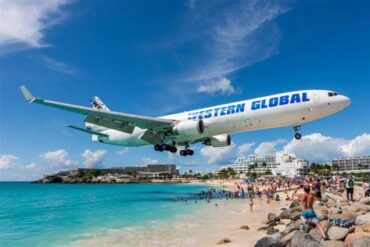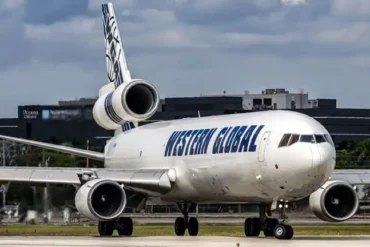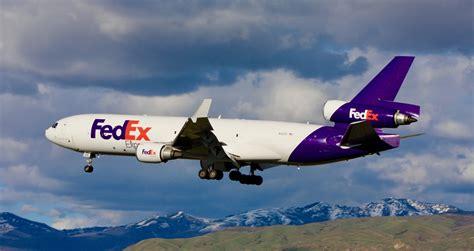
The McDonnell Douglas MD-11 has been declared obsolete more times than almost any widebody freighter still flying. In an era dominated by ultra-efficient twin-engine aircraft, the tri-jet layout feels like a mechanical fossil. Yet at FedEx Express, the MD-11 remains not a sentimental holdover, but a deliberately chosen asset. While rivals close the chapter on three-engine freighters, FedEx has chosen to reread it—carefully, analytically, and with spreadsheets open.
The reason is not nostalgia. It is trust. Trust in a platform whose operational behavior is deeply understood, whose weaknesses are already paid for, and whose economic role inside FedEx’s network cannot be cleanly replaced without creating new costs elsewhere. The MD-11 is not pretending to be a Boeing 777F, nor is it trying to compete with the latest generation of fuel-sipping twins. Instead, it occupies a carefully calculated middle ground where payload, range, availability, and capital cost intersect in a way no modern aircraft quite replicates.
FedEx’s refusal to retire the MD-11 is therefore not contrarian bravado. It is a case study in how air cargo economics rewards reliability, predictability, and sunk-cost efficiency over headline-grabbing modernization.
A Freighter the Industry Keeps Declaring Dead
After UPS formally exited MD-11 operations, much of the industry treated the aircraft as effectively finished. The assumption was simple: if one of the world’s largest express carriers walked away, the type must have crossed an irreversible economic threshold. That assumption underestimated one crucial variable—fleet philosophy.
UPS operates with a different tolerance for downtime, modification cost, and fleet standardization. FedEx, by contrast, has spent decades integrating the MD-11 into the core of its global operation. When the aircraft was grounded following the Louisville crash, the financial consequences were immediate and measurable. Outsourced lift filled the gap, but at a cost of $175 million in eroded profit. That figure did more than justify a return to service; it reframed the MD-11 as a revenue protector rather than a liability.
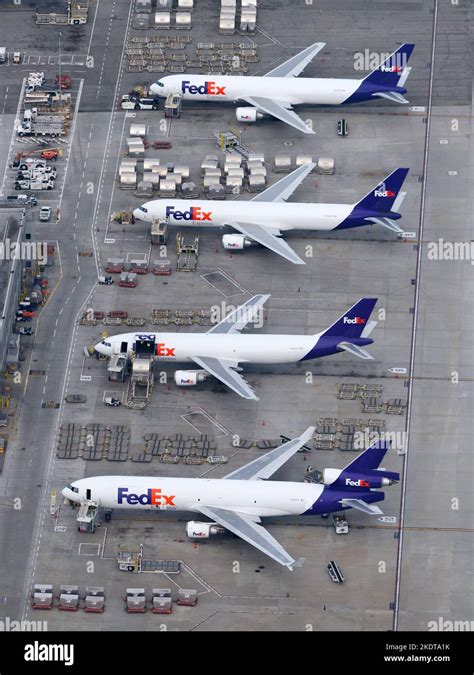
Rather than accelerating retirement, FedEx chose to restore the fleet. Working with Boeing and the FAA, the company committed to extensive inspections, structural reinforcements, and advanced testing designed to extend the aircraft’s usable life by 10,000 to 15,000 flight cycles. This was not a stopgap measure. It was a statement that the MD-11 still earns its place on the flight schedule.
The Economics No New Aircraft Can Quite Replace
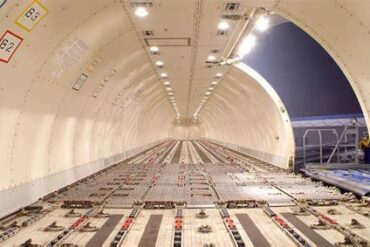
At the heart of FedEx’s decision lies a problem that looks deceptively simple but resists elegant solutions: capacity matching. The MD-11 lifts roughly 92 metric tonnes of cargo. The Boeing 767-300F carries far less. The Boeing 777F carries more—but at a higher acquisition cost, higher fuel burn per flight, and with less flexibility on thinner long-haul routes.
The MD-11 functions as a high-payload bridge aircraft, perfectly sized for routes that do not consistently justify a 777F but overwhelm a 767F. Removing it forces FedEx into operational compromises—either flying under-utilized widebodies or over-scheduling smaller freighters. Both options dilute margins.
This is where the MD-11’s age becomes an advantage. The aircraft is fully amortized. Its ownership cost is effectively zero. Every additional year of service converts maintenance expense into pure revenue leverage. In a business where margins are measured in basis points, that matters.
Structural Confidence Built on Years of Quiet Investment
One of FedEx’s lesser-known advantages lies in decisions made long before the current debate. In 2011, Boeing issued Service Bulletin MD-11-SL-54-104-A, addressing failures in spherical bearing assemblies within engine pylons. The issue was not deemed an immediate safety risk, and compliance was optional.
FedEx chose to act anyway. While other operators deferred, FedEx reinforced its pylons, effectively future-proofing the fleet against exactly the kind of regulatory scrutiny now emerging. The result is an MD-11 fleet that is structurally better prepared for extended service than many of the aircraft already retired elsewhere.
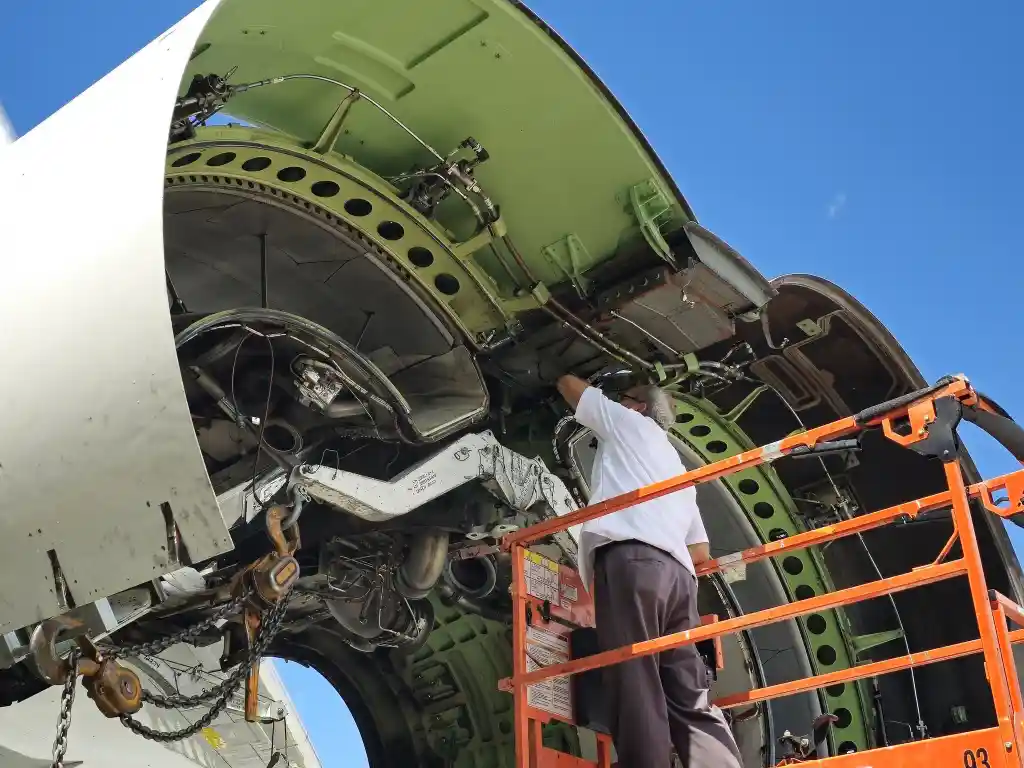
This foresight changes today’s cost equation. If additional FAA mandates emerge, FedEx has already absorbed much of the expense. Returning the aircraft to service becomes a matter of execution, not reinvention.
Maintenance Scale That No Other Operator Can Match
FedEx operates the world’s largest and most experienced MD-11 maintenance ecosystem, centered in Memphis. This is not just a hangar full of tools. It is institutional knowledge—engineers who have spent careers diagnosing the same airframe behaviors, technicians who know where fatigue hides before sensors detect it.
Advanced Non-Destructive Testing, including high-frequency eddy current scans, allows FedEx to identify microscopic stress fractures invisible to conventional inspection. The reinforcement of the center wing-box area is not merely reactive maintenance; it is structural life extension by design.
This depth of expertise compresses timelines. What would take another operator months to relearn, FedEx executes as routine.
The Hidden Gift of Rivals’ Retirements
Irony plays a quiet role in the MD-11’s survival. As competitors retire their fleets, the spare parts market expands. FedEx has already retired more than 30 MD-11s into controlled storage, creating a self-contained supply chain of components. With UPS exiting entirely, availability improves further, reducing costs and eliminating scarcity risk.
In effect, every MD-11 retirement elsewhere strengthens the economics of keeping FedEx’s aircraft airborne. The fleet becomes rarer, but paradoxically easier to sustain.
The MD-11 and FedEx’s International Reorientation
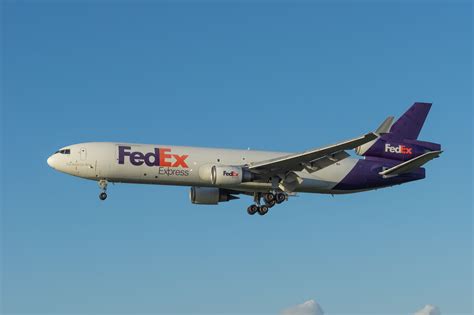
FedEx’s strategic pivot toward international cargo flows has only increased the MD-11’s relevance. After losing its USPS air cargo contract, the company doubled down on cross-border trade, particularly in Asia-Europe and intra-Asia lanes. These markets demand aircraft that balance range and payload without overshooting demand.
The MD-11 excels here. It offers near-777F payload capability with lower trip cost, making it ideal for secondary hubs and emerging trade corridors.
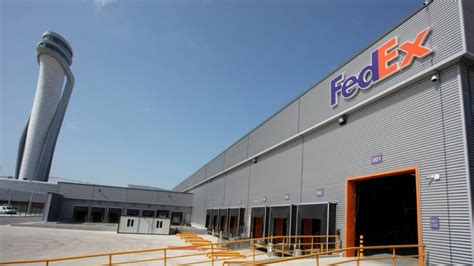
This strategy is visible in FedEx’s expansion through Istanbul Airport, a geographic hinge connecting Europe, Asia, and Africa. While Boeing 777Fs anchor the heaviest routes, the MD-11 quietly fills the gaps—absorbing volume surges, stabilizing schedules, and preventing overcapacity.
Why Retirement Is a Luxury, Not a Necessity
Fleet modernization is often framed as inevitability. In reality, it is a choice constrained by timing, capital, and network geometry. FedEx will eventually retire the MD-11. That much is certain. What is equally certain is that doing so prematurely would create inefficiencies larger than the aircraft’s perceived shortcomings.
The MD-11 burns more fuel than modern twins. It requires more maintenance. None of this is disputed. What matters is whether those costs exceed the opportunity cost of losing its capacity. For FedEx, the answer remains no.
This is not stubbornness. It is disciplined resistance to fashionable thinking.
The Trijet as a Case Study in Industrial Pragmatism
The MD-11 survives not because it is perfect, but because it is known. In complex systems, the known often outperforms the theoretically superior. FedEx understands exactly how the MD-11 behaves in heat, cold, turbulence, and high-cycle operations. It knows the margins, the failure modes, and the maintenance curves.
That knowledge has value. Enough value to justify another decade of service.
In a sky increasingly filled with twins, the trijet endures—not as a relic, but as a reminder that trust, once earned, can outlast technology cycles.