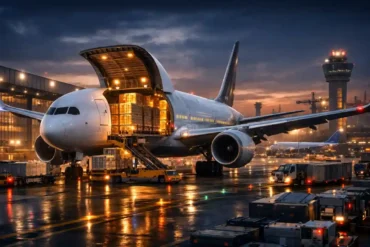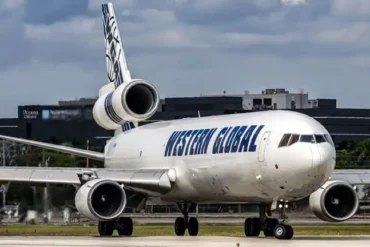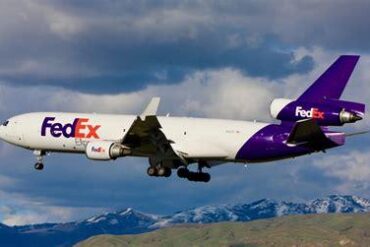
The Boeing 767 may be quietly exiting center stage as a passenger aircraft, but in the cargo world, it is doing the opposite—doubling down on relevance. Long after its cabin lights dim for airline travelers, the Boeing 767 Freighter has emerged as one of the most strategically important aircraft in global air cargo. This is not a sentimental afterlife. It is a hard-nosed commercial success built on physics, economics, and decades of operational proof.
In an era dominated by composite airframes and next-generation engines, the 767’s continued dominance might seem counterintuitive. Yet air cargo does not chase novelty for its own sake. It chases reliability, flexibility, payload efficiency, and cost control, and the 767 delivers all four with unusual balance. Sitting neatly between narrowbody freighters and heavy widebody giants, it occupies a niche so useful that no true replacement has yet displaced it.
The result is an aircraft that has become the backbone of express logistics networks, e-commerce supply chains, and military operations alike. The 767 Freighter is not glamorous. It is indispensable.
From Passenger Pioneer to Purpose-Built Freighter
The Boeing 767 began life as a technological trailblazer. When it entered service in the early 1980s, it introduced the first two-pilot glass cockpit on a widebody aircraft, eliminating the need for a flight engineer and permanently reshaping airline economics. It was also central to the rise of ETOPS, the regulatory change that allowed twin-engine aircraft to safely cross oceans, turning the 767 into a transatlantic workhorse by the mid-1990s.
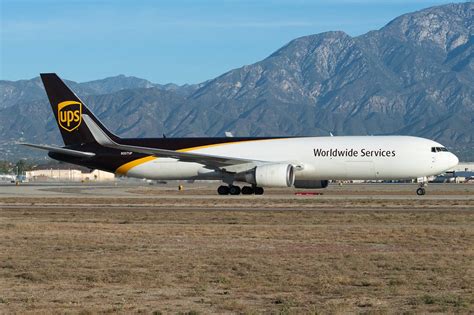
That same design DNA now underpins its cargo success. Unlike many freighters that exist only as conversions, Boeing continues to build the 767-300F as a factory-produced, purpose-built freighter. This distinction matters. A clean-sheet cargo configuration eliminates unnecessary structure, reduces maintenance complexity, and maximizes usable volume from day one.
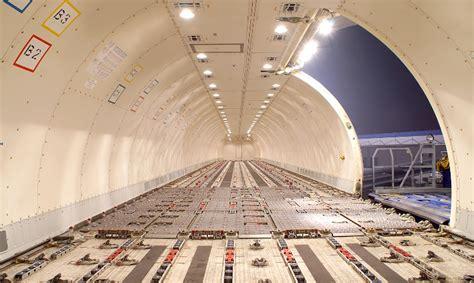
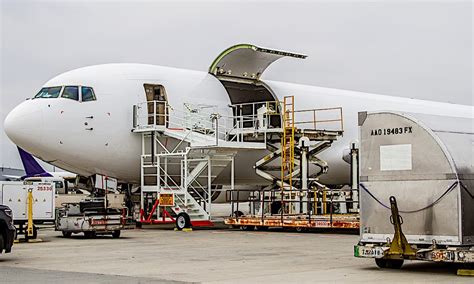
The freighter variant dispenses with passenger windows, incorporates a reinforced cargo floor, and features a massive forward main deck cargo door. The result is an aircraft engineered not to accommodate people, but to move payloads efficiently, repeatedly, and profitably.
Why the 767 Is the Perfect Middleweight Freighter
The cargo market has long suffered from a gap between aircraft classes. Narrowbody freighters such as the 737 are efficient but limited in volume. Large widebodies like the 747 or 777 offer immense capacity but come with higher acquisition costs, longer runway requirements, and reduced airport flexibility.
The Boeing 767 Freighter bridges that gap with surgical precision.
With a maximum payload exceeding 52 tons and a range of approximately 3,255 nautical miles at full load, the aircraft is ideal for hub-to-hub operations, overnight express routes, and transcontinental logistics. It can operate from secondary airports that are inaccessible to larger widebodies, yet it carries enough freight to generate serious revenue per flight.
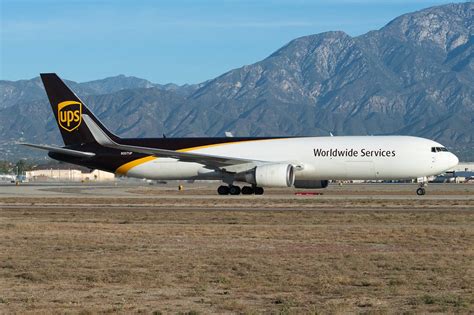
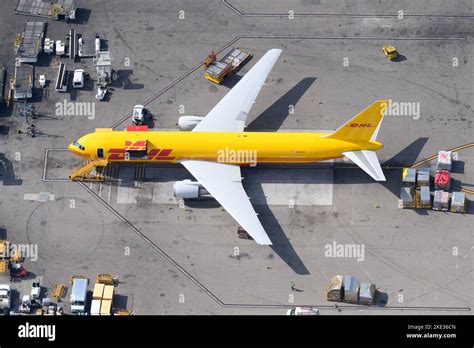
This balance is precisely why carriers like FedEx, UPS, and Amazon Air have built entire networks around the type. High-frequency operations demand an aircraft that can fly multiple sectors per day, tolerate heavy utilization, and return to service quickly after maintenance. The 767 excels in all three.
Engines Built for Endurance, Not Fashion
The 767 Freighter is typically powered by either the General Electric CF6-80C2 or the Pratt & Whitney PW4000 series engines. These are not the most fuel-efficient turbofans ever produced, but they are among the most mature and reliable.
In cargo operations, dispatch reliability outweighs marginal fuel savings. These engines benefit from decades of operational data, an enormous global support network, and readily available spare parts. Maintenance crews know them intimately. Unscheduled downtime is rare. Predictability is high.
For operators running tight overnight schedules where delays cascade instantly through logistics networks, this matters more than cutting-edge efficiency metrics. The engines may lack the glamour of newer designs, but they deliver something cargo carriers prize above all else: consistency.
Cargo Deck Engineering That Does the Heavy Lifting
The 767’s main deck is engineered to handle high-density and heavy freight without compromise. Its reinforced floor structure supports industrial pallets and oversized items that would strain lighter airframes. The forward cargo door, measuring 134 by 103 inches, allows for efficient loading of bulky shipments, reducing ground time and labor costs.
Inside, the aircraft can accommodate 24 standard 88-by-125-inch pallets on the main deck, complemented by over 11,000 cubic feet of lower-deck volume for containers and bulk cargo. This layout is particularly effective for modern e-commerce, where volume often matters more than raw weight.
The geometry is forgiving, the systems are robust, and the aircraft is designed to be worked hard. It shows.
The Conversion Market: Extending the 767’s Life
One of the most powerful forces sustaining the 767 Freighter ecosystem is the passenger-to-freighter conversion market. As airlines retire aging 767-300ERs from passenger service—driven by fuel costs and competition from the 787—these aircraft find a second life in cargo.
Converted freighters offer a compelling economic proposition. Acquisition costs are significantly lower than new-build aircraft, and conversion programs are well understood, with established facilities across North America, Europe, and Asia. For carriers focused on regional and medium-haul routes, the converted 767 is often the optimal solution.
The surge in global e-commerce demand throughout the 2020s has accelerated this trend. Volume-heavy, time-sensitive shipments align perfectly with the 767’s capabilities. Conversion slots are booked years in advance, a clear signal that the market sees long-term value in the platform.
Operational Commonality: The 757 Connection
Few aircraft families benefit from the level of fleet commonality enjoyed by the 767. Its tandem development with the Boeing 757 created an unusually high degree of systems overlap, from avionics to line-replaceable units.
Most importantly, the two aircraft share a common type rating. Pilots can transition between the 757 and 767 with minimal additional training. For cargo giants operating both types, this flexibility is operational gold. Crews can be reassigned dynamically, minimizing delays caused by staffing constraints.
Maintenance benefits follow the same logic. Technicians trained on one platform already understand much of the other. Spare parts inventories are streamlined. Downtime is reduced. Costs fall quietly but persistently.
Passenger Service Sunset, Cargo Ascendancy
The decline of the 767 as a passenger aircraft is not a failure of design. It is the natural outcome of technological progress. Composite materials, next-generation engines, and improved aerodynamics have allowed aircraft like the Boeing 787 Dreamliner to surpass the 767 in fuel efficiency and range.
Airlines have responded accordingly. Major operators such as Delta Air Lines and United Airlines have announced firm retirement timelines, with the last passenger 767s expected to leave frontline service by the late 2020s.
Yet this sunset has only strengthened the aircraft’s cargo role. As passenger fleets shrink, feedstock for freighter conversions grows. The same attributes that now disadvantage the 767 in passenger economics—older engines, heavier structure—matter far less in cargo operations, where utilization patterns and revenue models differ fundamentally.
Regulatory Pressure and the End of New Builds
The most significant threat to the 767 Freighter’s future is not market demand, but regulation. New ICAO emissions and noise standards coming into force in 2028 will render newly manufactured 767 freighters non-compliant for international operations.
As a result, Boeing is expected to end production of the commercial 767-300F by 2027. The FAA has granted limited exemptions for domestic U.S. operations, but globally, the window is closing.
This does not mean the aircraft is disappearing. Far from it. Existing freighters and converted aircraft will remain operational for decades. Industry forecasts suggest the global 767 freighter fleet could remain active into the 2060s, particularly in secondary markets and regional networks.
The Military Factor: KC-46 Pegasus
One reason the 767 production line will not fall silent anytime soon is the KC-46 Pegasus, the U.S. Air Force’s next-generation aerial refueling tanker. Based on the 767 airframe, the KC-46 is exempt from commercial environmental standards and continues to attract orders.
With nearly 200 aircraft planned and additional international customers including Japan and Israel, the military variant ensures ongoing industrial support for the platform. This has indirect benefits for the civilian freighter fleet, sustaining parts availability, engineering expertise, and long-term maintenance infrastructure.
While the KC-46 faced early challenges, it has matured into a versatile, multi-mission aircraft, reinforcing the adaptability of the underlying 767 design.
A Cargo Aircraft Defined by Longevity
The Boeing 767 Freighter is not the future of air cargo. That role will eventually pass to aircraft like the 777-8F and a potential 787 Freighter. But it is the present, and it remains extraordinarily effective at what it does.
Its enduring success is not accidental. It is the product of thoughtful design, operational pragmatism, and a cargo market that values dependable performance over novelty. In warehouses, on ramps, and across night skies worldwide, the 767 continues to move the global economy—quietly, efficiently, and without drama.
That may be the highest compliment a cargo aircraft can earn.