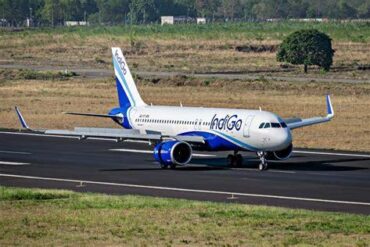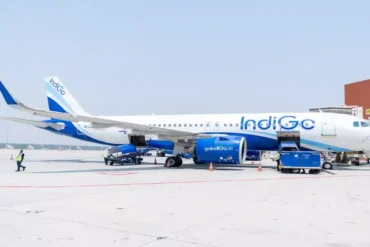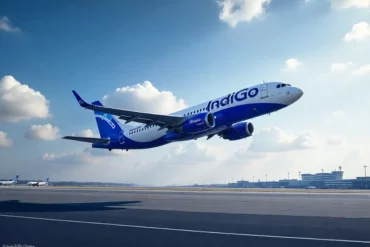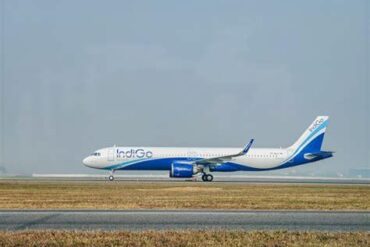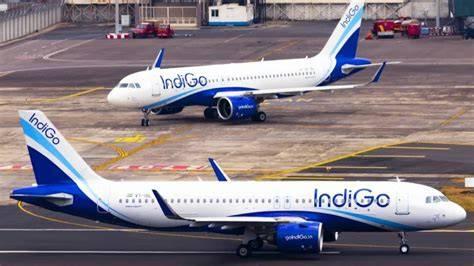
IndiGo is preparing to operate one of the most ambitious narrowbody long-haul flights in commercial aviation history, with its Airbus A321XLR scheduled to connect Mumbai and Amsterdam on a route lasting up to 11 hours nonstop. The unusual deployment comes as India’s largest airline manages the transition from temporary widebody aircraft toward its own future fleet of Airbus A350-900 aircraft.
The move highlights the growing importance of the A321XLR in expanding long-distance networks. Designed to offer long-range capability with single-aisle economics, the aircraft allows airlines to open routes that previously required larger widebody jets. However, IndiGo’s upcoming Amsterdam operation will also test the limits of what the aircraft can achieve in real-world conditions.
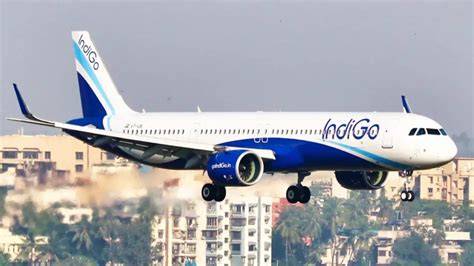
IndiGo Uses Airbus A321XLR to Protect Valuable Amsterdam Airport Slots
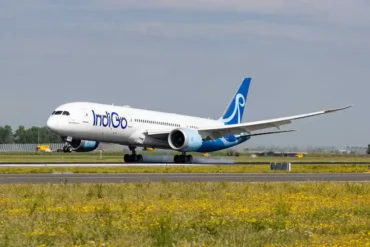
IndiGo’s decision to introduce the A321XLR on the Mumbai-Amsterdam route is closely linked to its European expansion strategy. The airline previously relied on leased Boeing 787-9 aircraft from Norse Atlantic Airways to establish long-haul operations and secure important airport access. Those aircraft are scheduled to leave IndiGo’s fleet at the end of October, forcing the airline to temporarily adjust its international network.
While some European routes will be reduced or suspended, Amsterdam represents a special case. IndiGo obtained valuable slots at Amsterdam Schiphol Airport, one of Europe’s most congested aviation hubs. Because new entrants must maintain a high level of slot usage or risk losing access, the airline needs to continue operating the service even before its dedicated widebody fleet arrives.
The Airbus A321XLR therefore becomes a strategic bridge aircraft. Instead of abandoning the route until the arrival of its Airbus A350-900 fleet, IndiGo will maintain its presence with a smaller but highly capable aircraft. Once its widebody aircraft begin arriving, the airline is expected to upgrade the service again.
The Mumbai-Amsterdam route will become one of the longest Airbus A321XLR operations anywhere in the world. The aircraft is expected to operate daily, with the outbound flight from Chhatrapati Shivaji Maharaj International Airport (BOM) scheduled to take approximately 11 hours, while the return journey from Amsterdam to Mumbai is planned at around 9 hours and 40 minutes.
A321XLR Long-Haul Configuration Pushes Single-Aisle Limits
IndiGo’s Airbus A321XLR will feature a high-density configuration designed around the airline’s low-cost business model. The aircraft will offer 195 seats, including 12 Stretch seats with a 44-inch pitch and 183 economy seats with a 31-inch pitch.
Unlike many long-haul aircraft, IndiGo’s A321XLR will not feature seat-back entertainment systems. Instead, passengers will be able to stream entertainment content directly to their personal devices. For an 11-hour journey, the lack of traditional inflight entertainment could become a noticeable difference compared with widebody competitors.
The aircraft’s efficiency is the main reason airlines are interested in the A321XLR. Compared with larger twin-aisle aircraft, the narrowbody burns less fuel and allows carriers to operate lower-demand routes profitably. However, ultra-long flights introduce challenges involving passenger comfort, cargo capacity, and operational flexibility.
The aircraft’s advertised maximum range is approximately 4,700 nautical miles (8,704 kilometers), but actual airline operations rarely match manufacturer brochure figures. Range calculations depend on factors such as passenger load, cargo weight, weather conditions, fuel reserves, and aircraft configuration.
For IndiGo, these limitations are particularly important because its A321XLR will carry more seats than some other operators. For example, Iberia’s A321XLR fleet has fewer seats, allowing it to achieve better range performance with lower weight.
Airspace Restrictions Make Mumbai-Amsterdam Route Even More Challenging
The planned Mumbai-Amsterdam flight faces another major obstacle: routing restrictions. The shortest geographic path between India and Europe would normally cross areas including Pakistan, Iran, Russia, and Ukraine. Due to current airspace limitations and security considerations, IndiGo cannot use the most direct route.
Instead, the aircraft will need to follow a longer path, typically flying westward through areas such as Saudi Arabia and Egypt before continuing toward Europe. This detour increases the total distance, fuel consumption, flight time, and operational complexity.
The shortest theoretical distance between Mumbai and Amsterdam is around 3,707 nautical miles (6,865 kilometers). However, the actual operational routing is expected to reach approximately 4,200 nautical miles (7,779 kilometers). This creates a significant challenge because the additional distance reduces available payload margins.
During periods of strong headwinds, especially on westbound flights, IndiGo may need to limit passenger loads, cargo, or fuel planning to maintain operational reliability. While the airline’s A321XLR can technically fly the distance, the route will demonstrate the difference between theoretical aircraft capability and everyday airline operations.
Why Amsterdam Became a Key Market for IndiGo’s International Expansion
IndiGo launched its Mumbai-Amsterdam service in July 2025, initially operating three flights per week before increasing frequency to daily operations. The airline selected Amsterdam partly because it offered an opportunity to compete in a less crowded market compared with Delhi-Europe routes.
Amsterdam was historically dominated by carriers such as KLM, while Delhi already had strong competition from multiple airlines. By focusing on Mumbai, IndiGo created a new connection between India’s financial capital and the Netherlands while avoiding direct competition on some larger international routes.
The strategy appears to have generated strong demand. Passenger data following IndiGo’s market entry showed significant growth between Mumbai and Amsterdam compared with the previous year. A large share of travelers used the service for direct travel rather than connecting through another airport, demonstrating strong local demand.
The partnership structure also strengthens the route’s value. Through cooperation with KLM, IndiGo passengers can connect onward through Amsterdam, while KLM customers gain additional access through Mumbai. This creates a broader network without requiring IndiGo to immediately operate flights across dozens of European destinations.
A Temporary Solution Before IndiGo’s Airbus A350 Era Begins
The Airbus A321XLR operation to Amsterdam is ultimately a temporary measure. IndiGo’s long-term international ambitions depend heavily on its upcoming Airbus A350-900 fleet, which will provide greater capacity, improved passenger comfort, and stronger long-haul performance.
However, the A321XLR deployment demonstrates IndiGo’s willingness to use creative fleet strategies during its expansion phase. Maintaining Amsterdam access is strategically important, and operating a smaller aircraft is preferable to losing valuable airport slots.
The Mumbai-Amsterdam service will become a fascinating test case for the future of single-aisle long-haul flying. If IndiGo can successfully operate an 11-hour A321XLR route under challenging conditions, it could prove that narrowbody aircraft are capable of reshaping international aviation networks.
As airlines continue searching for efficient ways to connect secondary cities and emerging markets, aircraft like the Airbus A321XLR may become increasingly important. IndiGo’s bold move shows that the future of long-haul travel may not belong exclusively to large widebody aircraft.