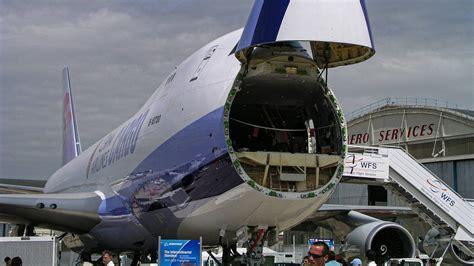
The Boeing 747-400F remains one of the most extraordinary cargo aircraft ever created, not simply because of its size, range, or payload capacity, but because of one feature that modern freighters cannot replicate: its forward-opening nose cargo door. As the global air freight industry prepares for the retirement of aging 747 freighters, operators are discovering that replacing capacity is much easier than replacing capability.
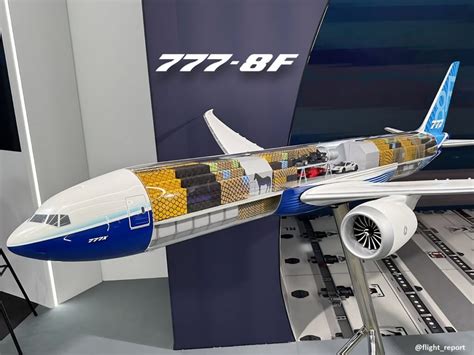
New-generation aircraft such as the Boeing 777-8F and Airbus A350F promise remarkable improvements in fuel efficiency, emissions reduction, and operating economics. They are designed around the future needs of global logistics, where most cargo consists of standardized pallets and containers. However, they lack the one feature that makes the 747-400F uniquely valuable: the ability to load extremely large, rigid, and heavy cargo directly through the front of the aircraft.
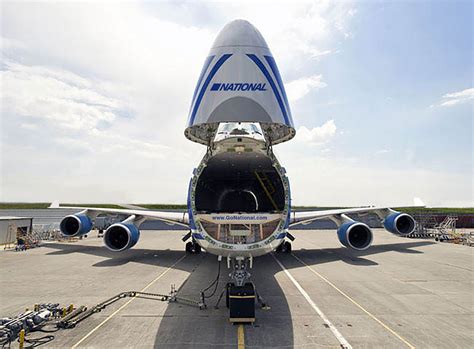
The reason this capability exists goes back to the original design philosophy of the Boeing 747. When engineers created the first 747 during the late 1960s, they did not simply design a passenger aircraft and later adapt it for freight operations. The aircraft was planned with freighter operations in mind from the beginning. The famous upper-deck cockpit was partly a strategic decision that would allow the entire forward fuselage to become a massive loading entrance.
At the time, Boeing engineers believed that supersonic passenger aircraft could eventually dominate long-distance travel. The company expected the 747 to have a major second life as a cargo aircraft. That prediction created one of aviation’s most valuable design decisions: placing the flight deck above the main cargo deck and leaving the nose section available for a giant hinged door.
More than five decades later, that unusual configuration has become almost impossible to reproduce. Modern aircraft manufacturers have optimized their designs around lightweight structures, aerodynamic efficiency, and twin-engine economics. The same engineering choice that gave the 747-400F its unmatched cargo flexibility would now conflict with nearly every priority of modern commercial aircraft development.
The Boeing 747-400F Nose Door Created An Unmatched Cargo Advantage
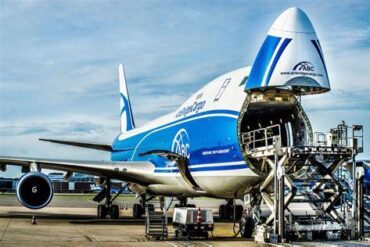
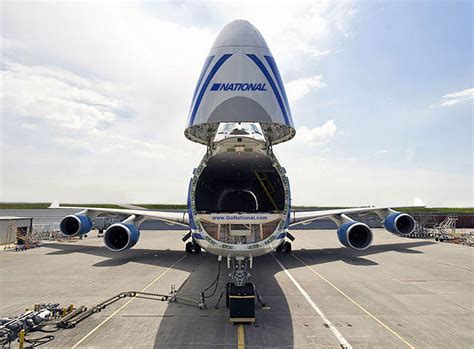
The defining feature of the 747-400F nose door is not merely its size. The real advantage is the straight loading path it creates. Because the cockpit sits on the upper deck, cargo can move directly from the airport ramp into the aircraft without navigating around a flight deck structure or making complicated turns.
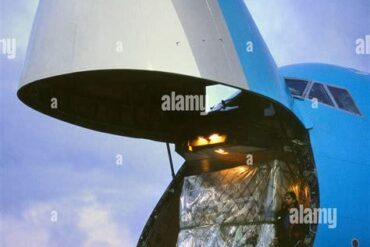
The nose section opens upward through a powerful mechanical system that combines heavy locking mechanisms, powered actuators, and structural reinforcement. When activated, multiple locking pins release around the door frame before the entire forward fuselage section rises on a top-mounted hinge.
Once open, the aircraft effectively becomes an extension of the airport loading system. Cargo handlers can drive specialized vehicles directly into the aircraft, moving oversized equipment along a straight path into the main deck.
This design allows the 747-400F to transport items that are impossible or extremely difficult to load on conventional side-door freighters. Examples include:
- Extremely long oil and gas drilling equipment
- Large industrial machinery components
- Helicopter fuselages
- Aerospace manufacturing tools
- Power-generation equipment
- Oversized military hardware
The difference is not simply about carrying more cargo. It is about carrying cargo with a shape and geometry that cannot be adapted to ordinary freight systems.
A standard cargo pallet can fit inside almost any modern widebody freighter. However, a massive industrial component with a rigid structure and limited flexibility creates a completely different challenge. For these shipments, the 747-400F’s nose door is not a luxury feature. It is the entire reason air transport remains possible.
Why Modern Boeing And Airbus Freighters Use Side Cargo Doors Instead
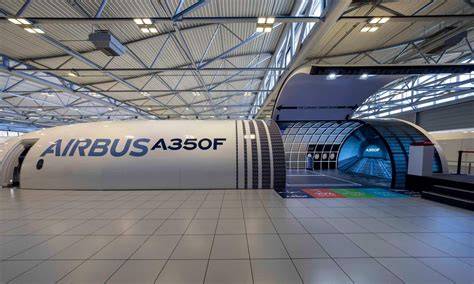
Nearly every modern widebody freighter relies on large side cargo doors. Aircraft such as the Boeing 777F, Boeing 777-8F, and Airbus A350F are designed around this approach because it provides the best balance between structural efficiency, weight reduction, and operating costs.
Side cargo doors work extremely well for normal freight operations. Most international cargo consists of standardized containers and pallets that can be moved efficiently through large openings on the side of the fuselage.
However, side loading introduces a fundamental geometric limitation.
When cargo enters through a side door, it must usually rotate approximately 90 degrees before reaching its final position inside the aircraft. The object must first clear the door opening, then turn within the limited width of the fuselage.
For flexible cargo, this is not a problem. For long, rigid objects, it can become impossible.
Even a very large side door cannot overcome basic geometry. A cargo item may technically fit within the length of the aircraft’s cargo compartment but still be unable to enter because it cannot complete the required turning movement.
The upcoming Airbus A350F demonstrates this challenge clearly. Airbus has developed an exceptionally wide cargo door measuring approximately 175 inches (4.45 meters), specifically improving its ability to handle larger freight. Yet the aircraft still depends on side-entry loading, meaning certain oversized cargo will remain incompatible.
The issue is not only door width. It is the internal movement required after the cargo enters.
Why Boeing 777-8F And Airbus A350F Cannot Simply Add A Nose Door
A natural question is why Boeing or Airbus cannot simply copy the 747 design and add a nose door to a modern aircraft.
The answer involves enormous structural compromises.
On the 747, the cockpit is already positioned above the cargo deck. This creates a natural separation between the flight deck and the loading area. On modern twin-engine aircraft, including the Boeing 777X family and Airbus A350, the cockpit is located within the main fuselage structure.
Creating a front-opening cargo door would require completely redesigning the aircraft’s forward section.
Engineers would need to solve several difficult problems:
- Moving or restructuring the flight deck area
- Reinforcing the fuselage around a large opening
- Designing a massive hinge mechanism
- Creating reliable pressure seals
- Protecting critical electrical and hydraulic systems
- Maintaining structural strength during flight
Every additional component adds weight. In aviation, weight is one of the most expensive penalties an aircraft can carry.
A nose door system requires heavy reinforcement because the forward fuselage is normally one continuous pressure structure. Cutting away that section introduces stress concentrations that must be compensated with stronger materials and additional support structures.
For a modern twin-engine aircraft designed to maximize fuel efficiency, this added weight would create a major disadvantage on the majority of missions.
The Economic Problem: A Rare Capability With A Heavy Cost
The aviation industry has made a clear economic calculation. Most cargo airlines do not need a nose door every day.
The overwhelming majority of global air freight consists of standardized shipments. Electronics, consumer goods, pharmaceuticals, and manufactured products are transported efficiently using palletized cargo systems.
The market for extreme oversized cargo represents a much smaller segment.
Adding a nose door to every new freighter would mean carrying thousands of kilograms of additional structure on every flight, even when transporting ordinary cargo. Airlines would pay the fuel penalty on every route to preserve a capability needed only occasionally.
Modern freighter design therefore prioritizes efficiency over maximum flexibility.
The Boeing 777-8F and Airbus A350F are expected to deliver significant improvements compared with older four-engine aircraft. Their twin-engine configurations reduce fuel consumption, simplify maintenance, and lower operating costs.
For most cargo operators, those advantages are more valuable than a specialized loading capability.
The problem is that a small group of industries genuinely depends on nose-door access.
The 747-400F Remains An Essential Tool For Specialized Logistics
The value of the 747-400F nose door extends beyond cargo dimensions. It also improves airport operations.
A traditional freighter typically uses one main cargo loading area. The 747-400F can support a dual-stream operation, where crews load standard pallets through the side door while simultaneously moving oversized cargo through the nose.
This capability reduces turnaround times and increases aircraft utilization. At major freight hubs such as Frankfurt, Seoul Incheon, and Anchorage, every minute saved on the ground can have significant economic value.
For specialized charter operators, the ability to quickly load unique cargo can determine whether a mission is commercially viable.
Energy companies, aerospace manufacturers, and defense organizations often cannot simply redesign their equipment to fit standard cargo aircraft. A large turbine component or aircraft structure may have been engineered as a single piece because separating it would create additional risks or reduce performance.
For these customers, the 747-400F is not just an old aircraft. It is a specialized transportation system.
The Future Without A 747 Replacement
As more 747-400Fs and 747-8Fs eventually leave service, the aviation industry will face a difficult transition.
Manufacturers will likely redesign large industrial equipment into smaller modular sections that can fit through side doors. Instead of transporting one massive component, companies may ship multiple pieces and assemble them after arrival.
For some industries, that solution will work. For others, it will introduce higher costs, longer schedules, and additional engineering challenges.
Some operators are already extending the lives of their 747 freighters through expensive maintenance programs. Heavy structural inspections, upgraded avionics, and life-extension projects allow these aircraft to continue providing a capability that no new production aircraft currently offers.
The financial reality is challenging. Older four-engine aircraft consume more fuel and require more maintenance than modern twinjets. However, when a customer needs a nose door, there is currently no true replacement available.
Why The 747-400F Nose Door May Never Return
The disappearance of the 747-400F nose door represents more than the retirement of a unique aircraft feature. It represents a shift in aviation philosophy.
The industry has moved toward efficiency, lower emissions, and standardized logistics. Those goals have produced remarkable aircraft like the 777-8F and A350F, which will transform global cargo operations.
Yet progress sometimes comes with compromises.
The 747-400F was created during a period when engineers prioritized maximum flexibility and imagined an aircraft capable of handling almost anything the world could build. Its nose door was a product of that ambition.
Today, no Boeing or Airbus freighter in production offers the same capability because recreating it would require sacrificing the very efficiency modern aviation demands.
The Queen of the Skies may eventually disappear from regular cargo service, but its legendary nose door will remain one of the most remarkable examples of aviation engineering: a feature designed decades ago that even today’s most advanced aircraft cannot fully replace.