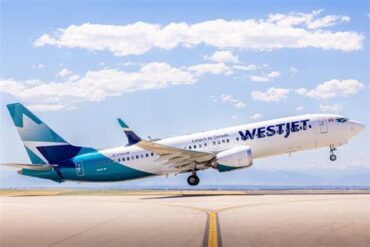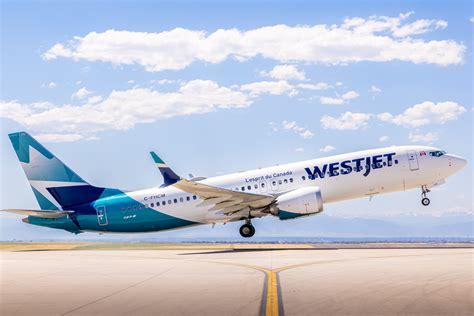
WestJet flight attendants have officially walked off the job after last-minute contract negotiations failed, forcing the airline to cancel all scheduled Boeing 737 and Boeing 787 operations. The strike began on Sunday, August 2, during one of Canada’s busiest summer travel periods, creating immediate disruption for thousands of passengers traveling on domestic and international routes.
The labor dispute involves approximately 4,400 cabin crew members represented by the Canadian Union of Public Employees (CUPE) Local 8125. While WestJet’s mainline aircraft operations have been heavily affected, the airline confirmed that WestJet Encore De Havilland Dash 8 Q400 flights and services operated by partner airlines continue as normal.

More Than 600 Flights Cancelled as WestJet Operations Shut Down
WestJet began cancelling flights before the official strike deadline in an effort to reduce operational risks and prevent aircraft, crews, and passengers from becoming stranded across its network. More than 300 flights were cancelled before the strike officially started, with the total number increasing to approximately 600 cancelled flights by Sunday.
The timing of the walkout has increased its impact significantly. The strike occurred during the peak summer vacation season, when demand for domestic travel, transborder flights, and international routes is typically at its highest. Thousands of passengers have been forced to search for alternative transportation options as available seats on other airlines become limited.
WestJet said affected customers would receive options including refunds or alternative travel arrangements where possible. However, the scale of the disruption means many travelers may experience extended delays while airlines work through the sudden reduction in capacity. The company has advised passengers to check their flight status before heading to airports.
Unpaid Ground Duties Become Central Issue in Contract Dispute
The main disagreement between WestJet and its flight attendants centers on compensation for duties performed before departure and after landing. Traditionally, many North American airlines have paid cabin crew primarily based on block time, which begins when an aircraft door closes before departure and ends when it reaches the destination gate.
Under this system, some essential responsibilities, including boarding assistance, safety preparation, passenger support, and certain pre-flight duties, have historically received limited or no direct compensation. Flight attendants argue that these tasks represent significant working hours and should be included in their paid time.
CUPE Local 8125 President Alia Hussain explained the union’s position, stating that flight attendants believe they deserve improved compensation and recognition for their work. The union has argued that the current proposal does not adequately address concerns about wages, working conditions, and unpaid responsibilities.
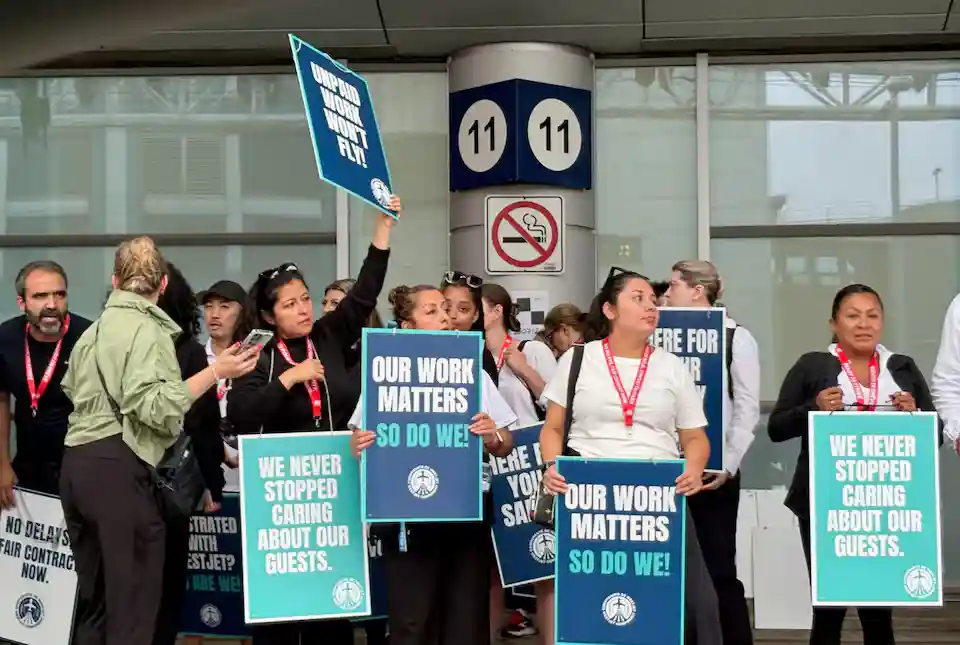
WestJet has stated that it presented what it considers an industry-leading contract proposal, including a new hourly compensation model covering all hours worked and a double-digit wage increase during the first year of the agreement. However, the union rejected the offer, saying it did not fully resolve key issues affecting cabin crew members.
Strike Highlights Wider North American Airline Labor Debate
The WestJet dispute reflects a broader labor movement across the aviation industry, where flight attendants have increasingly pushed airlines to change traditional pay structures. Compensation for boarding and ground duties has become one of the most debated issues in recent airline negotiations.
Similar concerns have appeared in other major airline labor disputes, with cabin crew members arguing that their responsibilities begin well before an aircraft leaves the gate. Unions across North America have emphasized that passenger safety procedures, cabin preparation, and customer assistance are essential parts of the job and should be compensated accordingly.
The dispute also arrives after nearly 11 months of negotiations between WestJet and its flight attendants. Although both sides continued discussions throughout the bargaining process, talks ultimately failed to produce a final agreement before the strike deadline.
WestJet and Union Continue Negotiation Efforts
Despite the strike, both WestJet and CUPE have indicated that they remain open to returning to negotiations. Federal mediators are continuing efforts to help both sides reach a settlement and restore normal airline operations.
WestJet Chief Executive Officer Alexis von Hoensbroech has said the airline remains committed to finding a negotiated solution while balancing employee compensation with long-term business sustainability. The company previously warned that a strike could create significant operational challenges across its network.
For travelers booked on WestJet 737 and 787 flights, uncertainty remains until an agreement is reached. The airline’s mainline fleet will likely remain disrupted until flight attendants return to work and operations can safely restart.
The strike represents one of the most significant labor disruptions in WestJet’s recent history, affecting passengers, employees, and Canada’s wider aviation network during a critical travel period. Until negotiations succeed, travelers should expect continued cancellations and monitor updates closely.