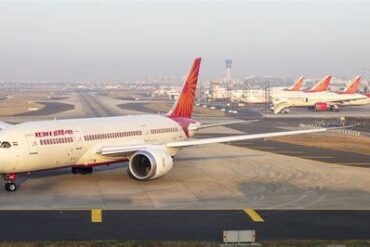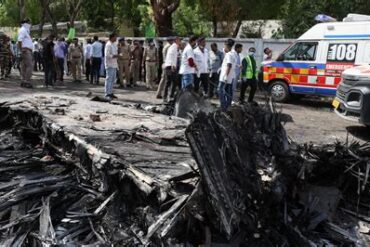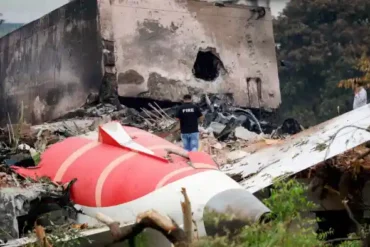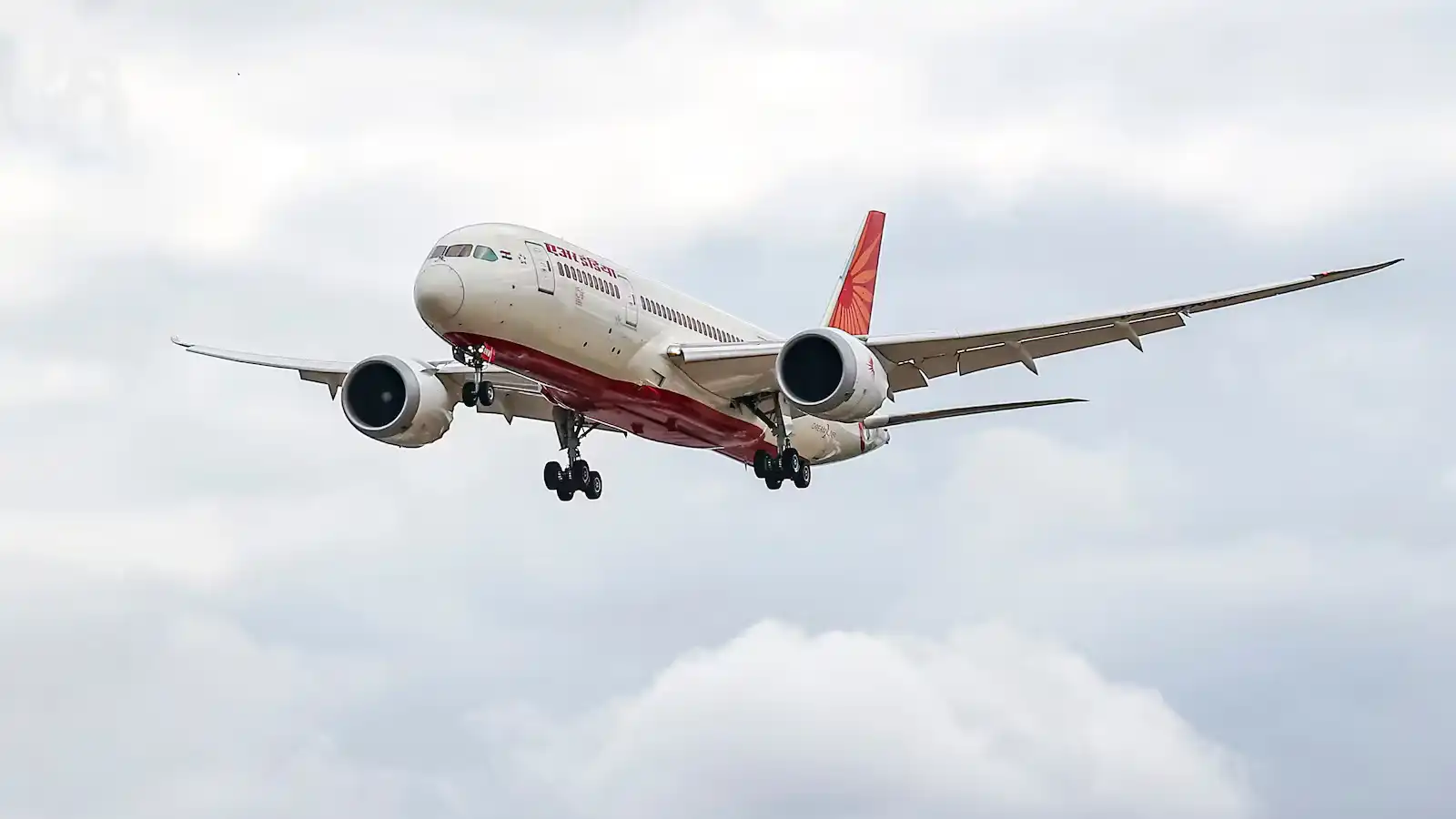
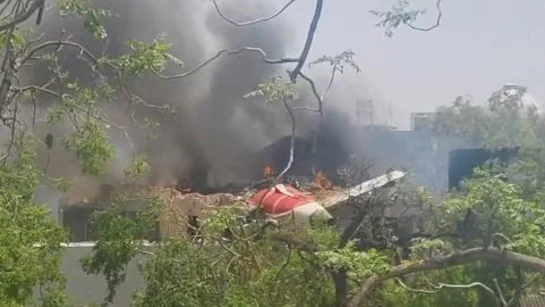
On June 17, 2025, tragedy struck Indian aviation when Air India Flight 171, a Boeing 787 Dreamliner, plunged shortly after takeoff from Sardar Vallabhbhai Patel International Airport in Ahmedabad. The crash claimed the lives of 241 passengers and crew, along with 38 civilians on the ground, after the aircraft collided with a crowded medical school canteen. The horrific event has not only devastated families but has also triggered a new wave of global scrutiny surrounding the Boeing 787’s safety standards, raising pressing calls for a fleet-wide grounding as investigations intensify.
FAA Under Intense Pressure Amid Crisis
The Federal Aviation Administration (FAA), now under heavy public and political scrutiny, has stated that any decision to ground the Boeing 787 will hinge on the results of the ongoing investigation, led in collaboration with Indian aviation authorities. Though the FAA has attempted to maintain composure and procedural transparency, criticism is mounting over its hesitancy to act decisively, especially given the aircraft’s unusual flight path and devastating outcome.
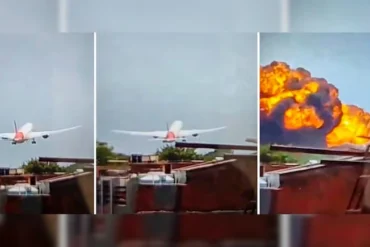
Public pressure has intensified with viral footage and eyewitness accounts depicting the aircraft’s sharp descent into the densely populated area. The FAA, however, has urged caution, warning against hasty conclusions drawn from unverified media content. Still, with the haunting image of a Dreamliner turned to rubble, the agency’s credibility hangs in the balance.
Possible Engine Failure: Spotlight on GE’s GEnx
As the investigation unfolds, speculation centers around a possible dual engine failure, an extraordinarily rare but catastrophic scenario. The GEnx engines, manufactured by General Electric, are under particular scrutiny. Aviation experts suggest that both engines may have failed shortly after takeoff, leaving the pilots with no time to execute an emergency return.
This theory gains traction due to the lack of distress signals from the flight crew and the plane’s sudden deviation from its normal climb trajectory. Though engine failures of this magnitude are statistically unlikely, prior technical service bulletins and maintenance advisories related to the GEnx engines are being reviewed to detect any overlooked anomalies or deferred maintenance issues.

Global Ripple Effects: Airlines Brace for Grounding
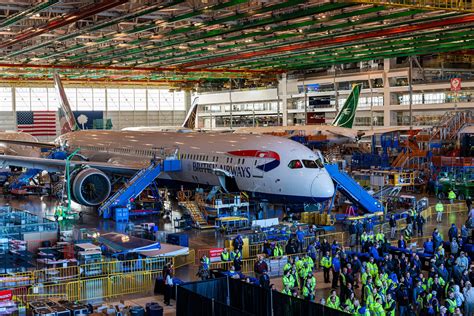
The potential grounding of the Boeing 787 Dreamliner fleet could deliver a severe blow to both domestic and international airlines. Globally, over 1,000 Dreamliners are in service, including 141 aircraft operated by American and United Airlines alone. These long-haul workhorses are crucial for intercontinental routes, prized for their fuel efficiency, carbon-fiber construction, and extended range.
Airlines relying heavily on the Dreamliner could face massive operational upheaval, including:
- Flight cancellations and rerouting of widebody operations
- Revenue loss from reduced capacity on high-yield international routes
- Reputational damage due to customer dissatisfaction and logistical chaos
In Asia, All Nippon Airways (ANA) operates the world’s largest 787 fleet, most of which is powered by Rolls-Royce Trent 1000 engines. While this technical difference may temporarily shield some carriers from sweeping bans, the psychological impact on global travelers and regulators cannot be underestimated.
Boeing’s Crisis Déjà Vu: Echoes of the 737 Max
The looming 787 grounding draws painful parallels to the Boeing 737 Max debacle, when two crashes in 2018 and 2019 led to a 20-month global grounding and over $80 billion in corporate losses. That disaster revealed deep flaws in Boeing’s internal safety culture, regulatory oversight failures, and lapses in pilot training protocols.
In response to the 737 Max crisis, Boeing underwent significant reforms, including the overhaul of its engineering processes, the introduction of transparency requirements, and regulatory compliance restructuring. But as Flight 171’s wreckage smolders, questions emerge about whether those reforms were sufficient—or merely surface-level attempts at redemption.
Political and Financial Stakes: FAA’s Balancing Act
The decision to ground the 787 is not just a matter of engineering diagnostics—it’s also steeped in geopolitical and financial ramifications. Boeing remains one of the United States’ most vital aerospace exporters, with extensive lobbying influence in Washington, D.C., and a track record of close dealings with federal agencies.
The crash comes just months after Boeing secured a record-setting $96 billion deal with Qatar Airways for 130 Dreamliners. This order, hailed as a symbol of Boeing’s resurgence post-737 Max, could be jeopardized if the fleet faces grounding or loses public trust. Any delay in delivery or operational uncertainty might force airlines to reconsider, or worse, cancel orders entirely.
Further complicating matters is Boeing’s non-prosecution agreement with the U.S. Department of Justice in early 2025, a deal that helped the manufacturer avoid criminal charges related to the 737 Max. That agreement included promises of enhanced internal oversight and safety compliance. If systemic flaws emerge in the 787’s certification or post-market maintenance regime, Boeing may not only face new lawsuits but potentially the unraveling of its legal reprieve.
Families Demand Justice: A Grief-Fueled Reckoning
As the wreckage is cleared and forensics teams work day and night, the families of the 279 deceased are beginning to organize. Support groups, legal teams, and international advocacy networks are demanding full transparency, government accountability, and independent audits of Boeing’s aircraft certification procedures.
Survivor advocates are calling for:
- Immediate release of flight data recorder (FDR) and cockpit voice recorder (CVR) results
- Internationally supervised forensic review of GEnx engine reliability metrics
- Congressional hearings into FAA oversight failures
- Creation of a global aviation safety task force beyond U.S. regulatory jurisdiction
A Pivotal Moment for Global Aviation Safety
The crash of Air India Flight 171 marks a critical juncture in aviation history. The Dreamliner, once celebrated as the future of widebody travel, now finds itself under existential threat. Every moment of delay, every withheld finding, and every softened regulatory response adds fuel to a rapidly expanding fire of doubt.
If systemic flaws are found in the aircraft design, engine performance, or flight control systems, the FAA may have no choice but to issue a mandatory grounding, triggering another chapter in the saga of Boeing’s corporate accountability. Meanwhile, rival aircraft manufacturers such as Airbus are watching closely, likely poised to absorb deflected orders should Boeing stumble.
Conclusion: What Comes Next for Boeing and the 787?
In the coming weeks, the aviation world will pivot around the findings of the Joint Aircraft Accident Investigation Bureau, which is working in tandem with the FAA, India’s Directorate General of Civil Aviation (DGCA), and General Electric’s technical support team. Until the black boxes are decoded, and investigators rule out or confirm mechanical failure, the Boeing 787’s fate hangs in limbo.
What’s certain, however, is that the human cost of this tragedy demands more than platitudes and press statements. It calls for reform, transparency, and accountability—before another city, another canteen, and another family suffers the same fate.