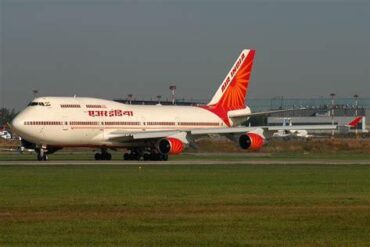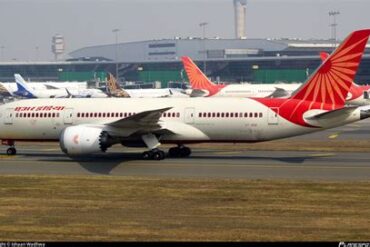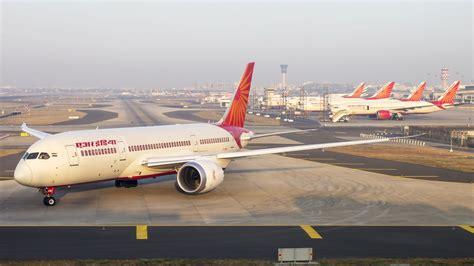
Air India has completed one-time safety checks on nine of its Boeing 787 Dreamliners, following a fatal accident involving Flight 171 that shocked the global aviation community. This compliance action follows a special directive from the Directorate General of Civil Aviation (DGCA), India’s top aviation regulator, in the wake of the first-ever hull loss of a Boeing 787. The tragedy has raised significant scrutiny over the aircraft’s GEnx engine systems and onboard safety protocols, pushing multiple international aviation bodies to initiate parallel inspection programs.
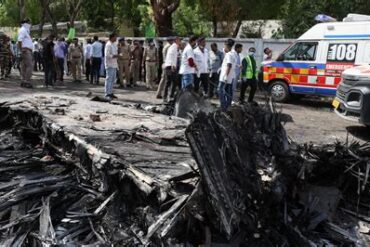
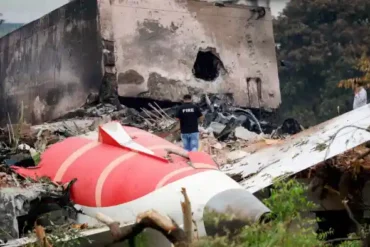
The fatal crash occurred on June 12, 2025, shortly after Air India Flight 171, a Boeing 787-8 Dreamliner, took off from Ahmedabad International Airport en route to London Gatwick. The aircraft, carrying 242 people, suffered a catastrophic systems failure, rapidly lost altitude, and crashed near the airport perimeter. Only one person is reported to have survived the crash, making it the deadliest incident involving the Dreamliner model to date.
DGCA Issues Mandatory Inspections Across Air India’s 787 Fleet
The day following the accident, the DGCA issued a one-time safety directive requiring Air India to perform urgent, deep-dive inspections of its entire GEnx-powered Boeing 787 fleet. This fleet includes 27 Boeing 787-8s and seven Boeing 787-9s. The scope of these inspections extended far beyond routine maintenance procedures and focused on several critical components and systems:
- Fuel system integrity and diagnostics
- Electronic Engine Control Unit (EECU) evaluation
- Flight control surface calibration
- Power assurance testing and engine performance data checks
- Take-off performance configuration auditing
The aim was to rule out any mechanical or software irregularities that could mirror the conditions which led to the Flight 171 disaster. While nine aircraft have now completed these checks, 24 aircraft remain under inspection, with timelines adjusted to match each airport’s operational constraints.
Flight Disruptions and Customer Impact
Due to the increased turnaround time for these in-depth inspections, several long-haul flights face delays, particularly at curfew-restricted airports like Frankfurt, Sydney, and Melbourne. An Air India spokesperson confirmed that the airline is proactively informing affected passengers and is offering complimentary rebooking or full refunds for canceled or delayed flights.
“Some of these checks could lead to longer turnaround time and potential delays on certain long-haul routes,” the spokesperson said. “Customers will be duly notified about any delays. They are advised to check the status of their flights [via the Manage Booking portal] before heading to the airport.”
GE Aerospace Launches Internal Probe and Technical Support Mission
The engines on Flight 171 were manufactured by GE Aerospace, which is now fully engaged in the investigation alongside India’s Aircraft Accident Investigation Bureau (AAIB) and other global regulatory entities. A team of GE engineers has been dispatched to Ahmedabad to conduct on-site forensic engine analysis.
“We continue to work closely with the appropriate regulatory and investigative agencies and are committed to providing all technical support necessary to understand the cause of this accident,” a GE Aerospace spokesperson stated.
Global Repercussions: Japan and US Monitor Closely
The ripples of the Flight 171 crash are now being felt beyond Indian airspace. Japan’s Ministry of Land, Infrastructure, Transport and Tourism (MLIT) has issued parallel inspection directives to all Japanese carriers operating Boeing 787s. This includes All Nippon Airways (ANA), Japan Airlines, and budget carriers AirJapan and ZipAir, who collectively operate over 140 Dreamliners.
Meanwhile, in the United States, the Federal Aviation Administration (FAA) has said it is “too premature” to issue any grounding order for the 787. Speaking during a press conference, U.S. Transportation Secretary Sean Duffy and Acting FAA Administrator Chris Rocheleau confirmed that although early crash footage had been reviewed, there was no immediate data to warrant grounding the fleet. Still, the agency has ramped up surveillance of engine performance data and fleet-wide maintenance records.
Crash Aircraft Had Recent Maintenance, Raising New Questions
In a development that adds complexity to the investigation, the crashed aircraft (VT-ANB) had recently passed a scheduled C-check conducted in June 2023. Maintenance documentation, handled by AI Engineering Services Ltd. (AIESL)—Air India’s former MRO subsidiary—shows that no anomalies were detected.
The right engine was completely overhauled and reinstalled in March 2025, while the left engine underwent standard inspection procedures in April. These timelines are consistent with the General Electric prescribed maintenance calendar, and neither inspection flagged issues with the powerplant or airframe.
Investigators are now exploring whether a rare but catastrophic failure may have occurred despite recent checks, which could indicate a latent systemic vulnerability. Such a finding would have profound implications not just for Air India, but also for the global 787 fleet.
Technical Complexity of the Boeing 787 Dreamliner
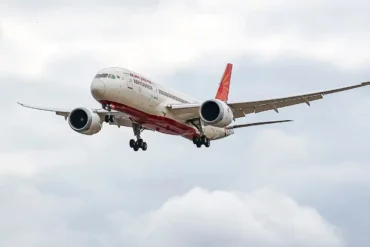
The Boeing 787 Dreamliner is among the most sophisticated commercial aircraft ever built, using composite materials for over 50% of its structure to reduce weight and increase fuel efficiency. It features fly-by-wire control systems, advanced aerodynamics, and next-gen avionics. But this technological leap also means that diagnosing faults—especially those within software-regulated subsystems—can be exceedingly difficult.
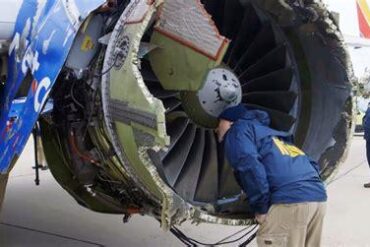
The aircraft is powered by General Electric GEnx-1B engines, designed to offer 15% improved fuel efficiency over previous generation engines. However, these engines have faced criticism over the years for issues related to icing, turbine blade durability, and now possibly undetected fault signatures.
International Safety Standards and Regulatory Collaboration
The crash has triggered a full-scale collaboration between multiple international investigative bodies:
- India’s Aircraft Accident Investigation Bureau (AAIB) – Lead investigator
- DGCA (India) – Regulatory enforcement
- National Transportation Safety Board (U.S.) – Aircraft manufacturer oversight
- UK’s Aircraft Accident Investigation Branch (AAIB) – Flight destination jurisdiction
- GE Aerospace – Engine OEM investigation
While the aircraft’s Flight Data Recorder (FDR) and Cockpit Voice Recorder (CVR) have been recovered, the data decryption and analysis process may take weeks. Initial black box data reportedly confirms engine anomalies immediately post-takeoff, but precise causality is yet to be determined.
Passenger Safety and Public Perception
Aviation safety experts have warned that while this is a singular incident, public confidence could erode if additional faults are discovered in similar aircraft. Consumer sentiment, already fragile from recent airline mishaps globally, could suffer if transparent communication and fast, accurate reporting are not maintained by the airline and regulators.
Experts have urged all carriers operating the Boeing 787 with GEnx engines to not just rely on mandatory checks but also initiate voluntary internal audits, particularly of electronic engine monitoring systems.
Looking Forward: Toward Resolution and Trust Restoration
The airline has pledged to complete inspections across its remaining 787 aircraft within the DGCA’s compliance deadline. Although the DGCA has not yet specified penalties for non-compliance, delays could potentially lead to suspensions of long-haul slots, especially in highly regulated EU and North American corridors.
Industry analysts believe the results of the Flight 171 crash investigation will shape regulatory behavior for next-generation aircraft in years to come. From mandatory EECU redundancy checks to stricter post-maintenance certification, a sweeping reevaluation of safety layers seems imminent.
As Air India works to regain operational normalcy, its focus remains on compliance, transparency, and communication. But the reverberations of this tragic crash extend far beyond a single airline or model; they underscore the fragile relationship between technological advancement and operational risk in modern aviation.