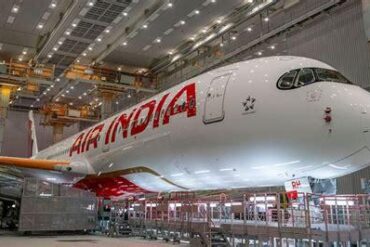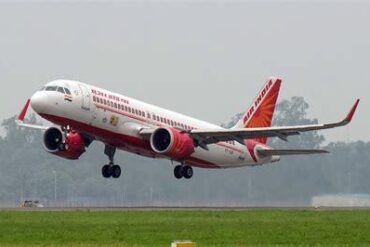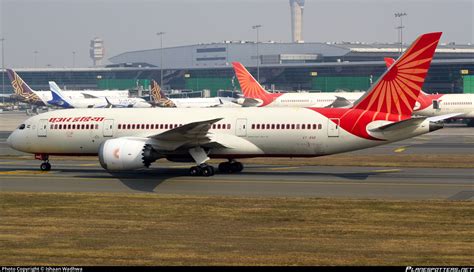
Air India has cancelled five international Boeing 787 Dreamliner flights on June 17, 2025, despite safety inspections being conducted across its fleet. The cancellations come as Indian aviation authorities increase scrutiny over the Dreamliner series, particularly the Boeing 787-8 variant, in the aftermath of the tragic crash of Flight AI 171 in Ahmedabad last week. The move by the Tata Group-owned airline underscores the growing caution among regulators and operators alike, as concerns over aircraft safety continue to mount across the global aviation community.
The airline has temporarily grounded several Dreamliners, even those deemed mechanically fit, as a precautionary measure. While the exact cause of the Ahmedabad crash remains under investigation, the circumstances surrounding the incident — including a potential dual-engine failure just seconds after takeoff — have triggered alarm bells within both the Directorate General of Civil Aviation (DGCA) and the international aviation safety network.
Multiple Air India Flights Affected Despite No Confirmed Fleet-Wide Fault
Among the five cancelled Air India services, three were outbound from Delhi: AI 915 to Dubai, AI 153 to Vienna, and AI 143 to Paris. Another flight, AI 159 from Ahmedabad to London Gatwick, was also pulled from service. The return leg of this route, AI 170 from London Gatwick to Amritsar, was similarly grounded.
Air India explained that AI 143 was cancelled due to a technical discrepancy identified during pre-flight checks. The fault, although not considered critical, would have delayed takeoff beyond the permissible operational window at Paris Charles de Gaulle Airport, which enforces strict night-time movement restrictions. The cancellation, therefore, was based more on airport operational compliance than mechanical fault.
For AI 159, the airline clarified that the aircraft assigned had no technical issues but was rendered unavailable due to airspace constraints and resource limitations, a direct consequence of the shifting operational dynamics post-crash. These cascading disruptions reflect the sensitive logistical ballet required to operate a long-haul fleet with precision during a period of heightened regulatory scrutiny.
A Hong Kong Incident Compounds Fleet Woes
In addition to the cancellations, a Hong Kong-based Dreamliner operating AI 315 to Delhi reported a technical malfunction mid-air. The aircraft was forced to return to Hong Kong International Airport, further compounding the pressure on Air India’s fleet managers. While the specific issue remains unconfirmed, sources suggest that the aircraft’s electronic engine control (EEC) system may have triggered a caution alert during climb-out.
This event followed another disruption involving a San Francisco to Mumbai service, which encountered technical trouble during its scheduled refueling and crew rotation stop at Kolkata Netaji Subhas Chandra Bose International Airport. The aircraft’s crew chose to evacuate all passengers as a precaution, though no injuries were reported.

Ripple Effects Across Global Airlines Operating Dreamliners
Air India is not the only operator facing trouble with the Boeing 787s. Recent days have seen British Airways and Lufthansa each return Dreamliners to their departure airports following inflight abnormalities. Lufthansa’s aircraft, en route to Hyderabad, was forced to return to Frankfurt, while British Airways aborted its journey to Chennai, circling back to London Heathrow shortly after takeoff.
Though no formal linkage has been established between these incidents and the Ahmedabad crash, the temporal proximity and aircraft commonality have intensified the focus on potential systemic faults, especially in models using GEnx engines.
The Ahmedabad Tragedy: Catalyst for a National Aviation Reckoning
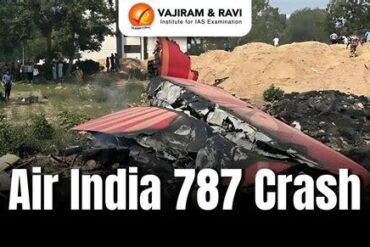
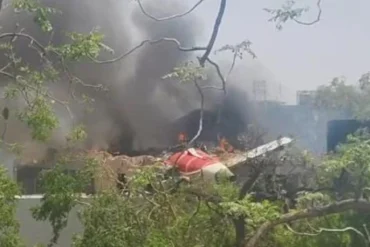
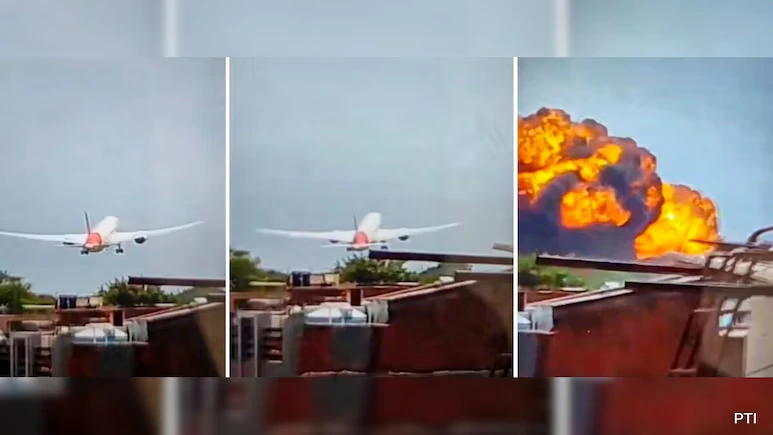
The pivot to intense aircraft inspections stems from the June 12 crash of Air India Flight AI 171, a Boeing 787-8 Dreamliner operating from Ahmedabad to London Gatwick. Just 40 seconds after takeoff, the aircraft lost altitude rapidly and crashed into a college hostel, located two kilometres from Sardar Vallabhbhai Patel International Airport.
Eyewitnesses and airport CCTV footage revealed the plane struggling to maintain climb, banking erratically before descending sharply. The impact resulted in 241 onboard fatalities out of 242 people and killed 33 individuals on the ground, making it one of the deadliest aviation disasters in Indian history.
The sole survivor — a British-Indian national seated in 11A, directly above the wing — escaped with third-degree burns and spinal trauma, currently under critical care in London. The Indian government and Air India have since retired the flight number AI 171, as a mark of respect to those who perished.
Investigation Progress and Ram Air Turbine Deployment Findings
Investigators from the DGCA, assisted by Boeing and representatives from the U.S. National Transportation Safety Board (NTSB), retrieved both the Cockpit Voice Recorder (CVR) and the Flight Data Recorder (FDR). Early analysis has confirmed the deployment of the Ram Air Turbine (RAT) — a backup power system that automatically engages during catastrophic failures such as simultaneous engine shutdowns or total electrical loss.
This rare activation, combined with the near-total loss of thrust observed in early data, indicates that dual-engine failure or complete hydraulic/electronic failure may have occurred — scenarios considered extremely rare in the Boeing 787 series. The investigation, however, remains in its early phase, and no mechanical cause has been officially identified.
DGCA Tightens Oversight: Mandatory Checks on All GEnx-Equipped Dreamliners
In response, the DGCA has mandated exhaustive inspections of all Boeing 787-8 and 787-9 aircraft fitted with General Electric GEnx engines — a powerplant shared by most Dreamliners in Indian service. These checks include:
- Full diagnostic evaluation of takeoff performance data
- Review and recalibration of electronic engine control units
- Inspection of fuel distribution and ignition systems
- Assessment of redundancy systems, including hydraulic backup circuits
The directive affects all 33 Dreamliners operated by Air India and the solitary Boeing 787 owned by IndiGo, which currently uses it for select long-haul operations. The Ministry of Civil Aviation has urged Indian carriers to prioritize transparency and technical reporting throughout the inspection process.
Industry Repercussions and Global Aviation Alarm
The grounding and disruption caused by the AI 171 crash have sent ripples through the global aviation market. Boeing, still reeling from years of safety-related setbacks — including the 737 MAX crises — faces renewed scrutiny over the design complexity and fault tolerance of the Dreamliner family.
Aviation experts suggest that while the 787 platform remains one of the most advanced in commercial service, its reliance on software-based redundancies and composite fuselage structures introduces vulnerabilities not as easily detected in traditional metal-frame aircraft. The Boeing 787, celebrated for fuel efficiency and long-range capability, now faces potential regulatory bottlenecks and operational hesitations until clarity emerges from the investigation.
Air India’s Operational Balancing Act Under Fire
Air India’s decision to cancel flights even before a fleet-wide fault was confirmed underscores the delicate operational balance airlines must strike between revenue generation, passenger safety, and regulatory compliance. With limited long-haul aircraft available in the fleet beyond the Dreamliner — the carrier’s workhorse for Europe and transcontinental routes — the airline may need to explore interim leasing options or temporary route restructuring.
A source within Air India’s operations division hinted that wet leasing arrangements with European or Middle Eastern carriers are under consideration to sustain international connectivity without compromising safety oversight.

Conclusion: A Tragedy That May Redefine Aviation Safety Norms in India
The chain of events set off by the Ahmedabad crash has redefined Air India’s risk calculus, and potentially, India’s broader aviation safety doctrine. With international aviation authorities monitoring developments closely, the outcomes of the ongoing probe could lead to design reviews, revised training protocols, and perhaps even certification adjustments for certain aircraft systems.
What’s clear is that the crash has prompted a paradigm shift in how flight worthiness is evaluated, especially in technologically advanced aircraft like the Boeing 787. As safety audits continue and findings from the AI 171 investigation emerge, airlines, regulators, and passengers alike must brace for a new phase in aviation accountability — one written in the aftermath of unimaginable loss.