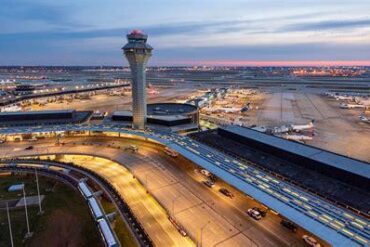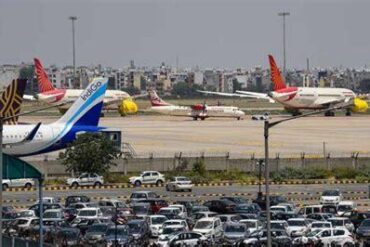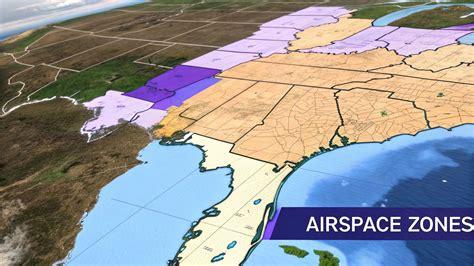
Los Angeles International Airport, one of the world’s busiest aviation gateways, has entered a new and uncertain chapter. The Federal Aviation Administration (FAA) has introduced sweeping airspace restrictions around LAX, effectively blocking helicopter access and sharply limiting certain Visual Flight Rules (VFR) operations. The decision, framed as a proactive safety measure, has immediately disrupted emergency response units that rely on rotorcraft as critical tools in a city defined by congestion and scale.
For a metropolitan area as vast as Los Angeles, helicopters are not luxuries; they are infrastructure. The Los Angeles Police Department (LAPD), fire services, and medical operators use them daily to navigate gridlocked highways, track suspects, transport trauma patients, and conduct organ transplant missions where minutes mean survival. Under the FAA’s new framework, these aircraft are being denied entry into LAX-controlled airspace, a zone that overlaps with multiple urban divisions and vital transport corridors.
The restriction is indefinite. That single word—indefinite—has become the source of mounting frustration across Southern California’s public safety community.
FAA Restricts LAX Airspace Over Safety Concerns
The FAA has described the measure as part of a “proactive nationwide safety review” targeting airports where helicopters and fixed-wing aircraft share congested skies. At LAX, this review has translated into tighter control of VFR traffic and a near-total halt to helicopter operations within key sectors of the airport’s surrounding airspace.
Visual Flight Rules allow pilots to operate aircraft based on visual references rather than relying entirely on instrument navigation. In complex urban airspace, VFR traffic demands careful coordination between pilots and air traffic controllers. By restricting these operations, the FAA is effectively reducing the density and unpredictability of aircraft movements near LAX’s approach paths.
LAX consistently ranks among the top global hubs for passenger traffic. Widebody jets from Asia, Europe, and the Middle East descend into tightly sequenced arrival corridors throughout the day. Helicopters operating nearby introduce a different performance profile—slower speeds, variable altitudes, and unique maneuvering capabilities—that require constant coordination. In high-density environments, even small deviations can have outsized consequences.
The FAA’s move reflects an institutional preference for caution. By narrowing the airspace to predominantly controlled, instrument-based traffic, regulators are reducing operational complexity during the review period.
Emergency Services Voice Strong Opposition
The reaction from local agencies has been swift and critical. The LAPD Air Support Division, often described as the “eye in the sky,” depends on helicopter mobility to oversee ground operations. The restriction reportedly affects three police divisions entirely and part of a fourth, limiting aerial support in densely populated neighborhoods.
Officials argue that the decision introduces measurable public safety risks. Helicopters assist in pursuits, search-and-rescue missions, and real-time tactical coordination. Removing that capability near a major urban center creates gaps that cannot easily be filled by patrol cars navigating surface traffic.
Fire and medical services are similarly affected. Air ambulances conducting trauma transfers and organ procurement flights depend on rapid routing through controlled airspace. Organ transplant missions, in particular, operate under narrow time windows. Any delay increases the risk of organ viability loss, transforming logistical friction into life-and-death stakes.
Industry groups representing helicopter pilots have echoed these concerns. Operators note that they have historically coordinated safely with LAX controllers for decades. Their position is straightforward: the system functioned effectively through cooperation and procedural discipline, and an abrupt blanket restriction undermines that operational trust.
The Shadow of the Washington Mid-Air Collision
While the FAA has not publicly tied the LAX restrictions to a single event, the broader context is impossible to ignore. In January 2025, a PSA Airlines Bombardier CRJ700, operating as American Eagle Flight 5342, collided mid-air with a U.S. Army helicopter during approach to Washington National Airport. The crash claimed the lives of all 67 people aboard both aircraft.

The accident triggered nationwide scrutiny of helicopter operations near major airports. Investigations examined altitude separation protocols, communication procedures, and airspace design. In Washington, helicopter flights in certain areas were permanently banned following the incident.
That tragedy reshaped regulatory thinking. Mixed traffic environments—where military, emergency, and civilian aircraft converge—are now viewed through a sharper lens of risk mitigation. The LAX restriction appears to be part of that recalibration, reflecting a systemic reassessment rather than an isolated local concern.
Operational and Economic Implications for Los Angeles
Beyond emergency response, the restrictions affect general aviation operators, news helicopters, and private charter services. Southern California’s aviation ecosystem is layered and dynamic. From traffic-reporting aircraft to aerial cinematography, helicopters are woven into the region’s commercial and media landscape.
Constraining this segment of aviation alters economic patterns. Flight schools, rotorcraft maintenance providers, and charter companies may face operational rerouting or reduced activity. The ripple effect extends beyond the airport perimeter.
At the same time, LAX remains a critical international hub. Airlines operating Airbus A380s, Boeing 777s, and next-generation widebodies depend on tightly managed approach sequencing. Reducing unpredictable airspace elements could enhance arrival stability and controller workload management during peak periods. From a strictly air traffic management perspective, fewer aircraft categories mean fewer variables.
The tension lies between systemic aviation safety and localized emergency capability. Both objectives are legitimate. The challenge is reconciling them without eroding public trust.
An Indefinite Timeline and Growing Uncertainty
Perhaps the most destabilizing aspect of the FAA’s action is the absence of a clear timeline. Helicopter pilots reportedly began experiencing denied access last week, yet no formal duration has been provided. Regulatory reviews can stretch for months, especially when nationwide policy adjustments are under consideration.
Uncertainty complicates planning. Emergency agencies must explore alternative routing strategies, ground resource redistribution, or inter-agency agreements. Aviation businesses must adjust schedules and assess financial exposure. Without defined benchmarks for reinstatement, stakeholders operate in a strategic vacuum.
The FAA’s safety review will likely analyze traffic density modeling, separation standards, controller workload data, and incident reporting trends. If historical collision risk assessments indicate elevated exposure in mixed-use airspace, permanent structural changes could follow.
For now, Los Angeles finds itself balancing two imperatives: safeguarding one of the busiest airports in the world and preserving the aerial lifelines that serve millions on the ground. The skies over LAX have not grown quieter by accident—they are quieter by design, shaped by a regulatory philosophy that prioritizes preemption over reaction in an era where one mid-air tragedy can redefine national aviation policy.