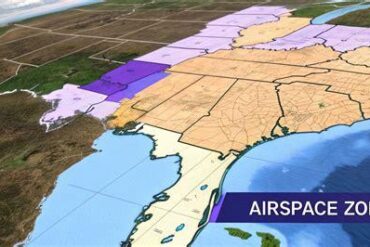
The prospect of sweeping changes to the United States’ international aviation network is rapidly moving from speculation to serious policy discussion. A proposal from newly appointed Department of Homeland Security Secretary Markwayne Mullin has placed some of the nation’s busiest airports—among them John F. Kennedy International Airport (JFK) and Los Angeles International Airport (LAX)—under scrutiny, raising the possibility that they could lose their ability to process international flights altogether.
At the heart of the issue lies a contentious political divide. The proposal targets airports located in so-called “sanctuary cities,” jurisdictions that limit cooperation with federal immigration enforcement agencies. If implemented, the plan would involve withdrawing Customs and Border Protection (CBP) personnel from these locations, effectively stripping airports of their designation as official Ports of Entry. Without CBP presence, international arrivals cannot legally be processed, meaning long-haul flights would simply cease.
A Policy Shift With Immediate Aviation Consequences
The implications of this proposal are immediate and profound. Airports function as complex ecosystems where security, immigration, customs, and logistics converge seamlessly. Removing CBP officers would disrupt this balance overnight. Flights from overseas would have nowhere to land within these cities, forcing airlines to reroute or cancel services entirely.
Secretary Mullin has framed the proposal as a matter of federal compliance and operational integrity, questioning whether cities that resist immigration enforcement should continue to benefit from international connectivity. His remarks signal a willingness to escalate beyond previous measures, such as withholding federal funding, into territory that directly impacts transportation infrastructure and global mobility.
The 11 Airports Facing Potential Impact
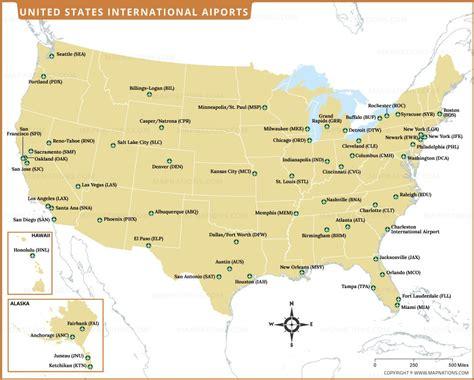
A total of eleven major US airports could be affected, many of which serve as critical nodes in global aviation. These include:
- New York JFK (JFK)
- Los Angeles (LAX)
- Newark Liberty (EWR)
- Chicago O’Hare (ORD)
- San Francisco (SFO)
- Boston Logan (BOS)
- Seattle-Tacoma (SEA)
- Denver (DEN)
- Philadelphia (PHL)
- LaGuardia (LGA)
- Chicago Midway (MDW)
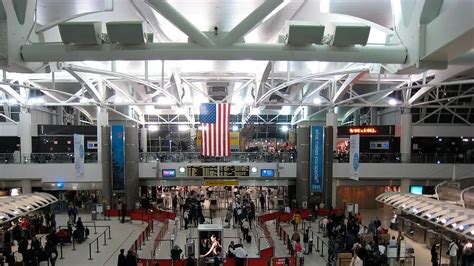
These airports are not minor regional facilities—they represent a substantial portion of America’s international passenger throughput. JFK alone handled more than 34 million international travelers in 2025, with over half its traffic tied to global routes. LAX, meanwhile, acts as a vital transpacific gateway, linking the United States with Asia and Oceania.
Economic Shockwaves Across the Aviation Sector
The removal of international status from these airports would trigger a cascading economic impact. Airlines rely heavily on long-haul routes, which tend to be more profitable than domestic services. Cutting off these routes would not only disrupt airline revenue streams but also weaken the broader travel economy, including tourism, hospitality, and cargo logistics.
Major hub airports like San Francisco International Airport (SFO) and Philadelphia International Airport (PHL) play specialized roles in global connectivity. SFO is a cornerstone of transpacific travel, while PHL anchors transatlantic operations for several carriers. Eliminating their international capabilities would force airlines into costly restructuring, potentially shifting traffic to alternative hubs or even outside the United States.
Sanctuary Cities at the Center of the Debate
The policy debate hinges on the definition and role of sanctuary jurisdictions. In August 2025, the Department of Justice identified multiple cities—including New York, Los Angeles, Chicago, Philadelphia, and Seattle—as maintaining policies that limit cooperation with federal immigration enforcement. Entire states, such as California, were also included.
Critics argue that linking aviation access to immigration policy introduces unnecessary risk into an already strained system. California Governor Gavin Newsom dismissed the proposal as economically reckless, warning that restricting international travel would deepen existing financial pressures rather than resolve political disagreements.

Timing Collides With Global Events
The timing of the proposal adds another layer of complexity. The United States is preparing to co-host the FIFA World Cup 2026, an event expected to generate massive international travel demand. Airports will serve as the primary gateways for millions of visitors, with projections estimating up to six million यात्रers moving through the system during the tournament.
Disrupting international operations at major hubs just months before such a global event would create logistical challenges on an unprecedented scale. Airlines, already grappling with staffing shortages and operational bottlenecks, would face additional pressure to reconfigure networks under tight timelines.
Operational Strain and Infrastructure Risks
Even without policy changes, US airports are experiencing mounting operational strain. Ongoing disputes over Transportation Security Administration (TSA) staffing and pay have led to congestion at checkpoints, highlighting vulnerabilities within the system. Introducing a major structural shift—such as removing CBP services—could amplify these issues significantly.
Airports are not easily reconfigured entities. Infrastructure, staffing, and airline schedules are tightly interwoven. A sudden withdrawal of customs services would ripple through every layer, from baggage handling systems to international gate assignments, creating a level of disruption that cannot be quickly resolved.
A Defining Moment for US Aviation Policy
What emerges is a moment of genuine uncertainty for the future of US international aviation policy. The proposal is not merely administrative—it challenges the foundational relationship between federal authority and local governance, using airports as the battleground.
For travelers, airlines, and city economies alike, the stakes are unmistakably high. Airports like JFK and LAX are more than transit points; they are symbols of global connectivity. Altering their role would redefine how the United States engages with the world, not gradually, but in a single decisive shift.