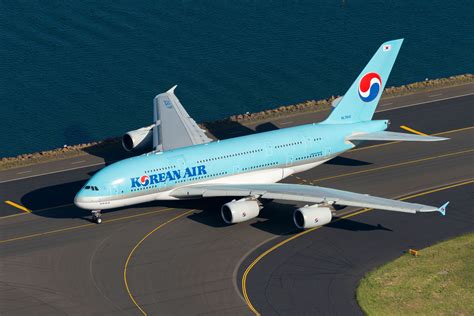
Korean Air is reaffirming its commitment to high-capacity transpacific travel by officially bringing back its Airbus A380 to two of the most competitive routes in the United States: New York John F. Kennedy International Airport (JFK) and Los Angeles International Airport (LAX) for the Summer 2026 travel season.
Korean Air Deploys A380 on Transpacific Routes Again
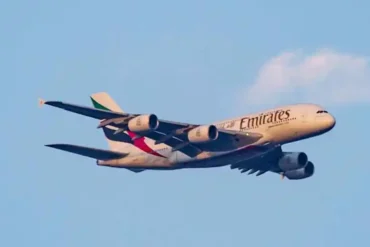
From March 29, 2026, Korean Air will operate the Airbus A380 daily to New York JFK, replacing the Boeing 777-300ER on this high-demand route. This move reestablishes Korean Air as one of the few airlines globally—alongside Emirates—to maintain a regular A380 presence at JFK.
The outbound flight from Seoul Incheon International Airport (ICN) to JFK will depart at 10:00 AM local time, landing at JFK at 10:00 AM the same day, owing to the transpacific date line crossing. The return journey from JFK will take off at 12:00 PM, landing back in Seoul at 5:45 PM the following day, following an approximate 14-hour block time in both directions.
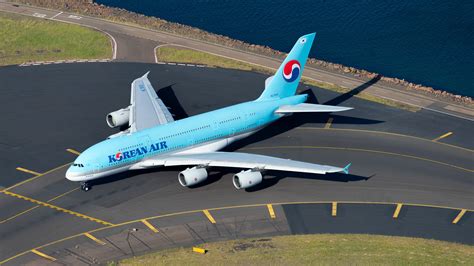
This isn’t the first A380 deployment on this route, but it marks the first long-term scheduled return for the aircraft post-pandemic, where its appearances had been restricted to peak holiday seasons like Christmas or Chuseok. Korean Air’s return to the JFK route with the A380 signifies strong demand projections and a strategy focused on capacity maximization amid a delayed influx of next-gen aircraft like the Airbus A350 and Boeing 787.
A380 to Los Angeles: Four Weekly Flights Starting March 30
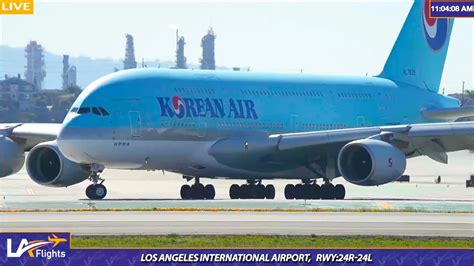
In addition to the daily JFK service, Korean Air is also assigning the A380 to Los Angeles International Airport (LAX) starting March 30, 2026, operating on a four-times-weekly basis—specifically on Mondays, Tuesdays, Thursdays, and Saturdays.
Flight KE11 will depart Seoul at 7:40 PM, arriving in Los Angeles at 1:40 PM local time on the same day. The return flight, KE12, is scheduled to leave LAX at 10:50 PM, arriving back at Seoul Incheon at 5:10 AM two days later. This route sees the Airbus A380 replacing the Boeing 747-8, another iconic aircraft that Korean Air is gradually phasing out of frontline service.
Strategic Fleet Management: Extending A380 Lifecycle
Korean Air’s renewed use of the A380 isn’t just about capacity and prestige. It’s also a matter of necessity. While the airline has plans to retire its A380 fleet, those plans have been pushed back due to delays in deliveries of the Airbus A350 and Boeing 787 Dreamliners. With only five A380s in its fleet—aged between 11 and 13 years—Korean Air is undertaking extensive maintenance and retrofitting programs to extend their usability for at least another decade.
These aircraft remain essential to routes with high passenger density and strong premium cabin demand, including Frankfurt, Tokyo Narita, and Taipei Taoyuan—all part of the airline’s seasonal A380 deployments. The JFK and LAX routes join this prestigious lineup once again.
Fleet Snapshot: Korean Air’s Airbus A380 Units
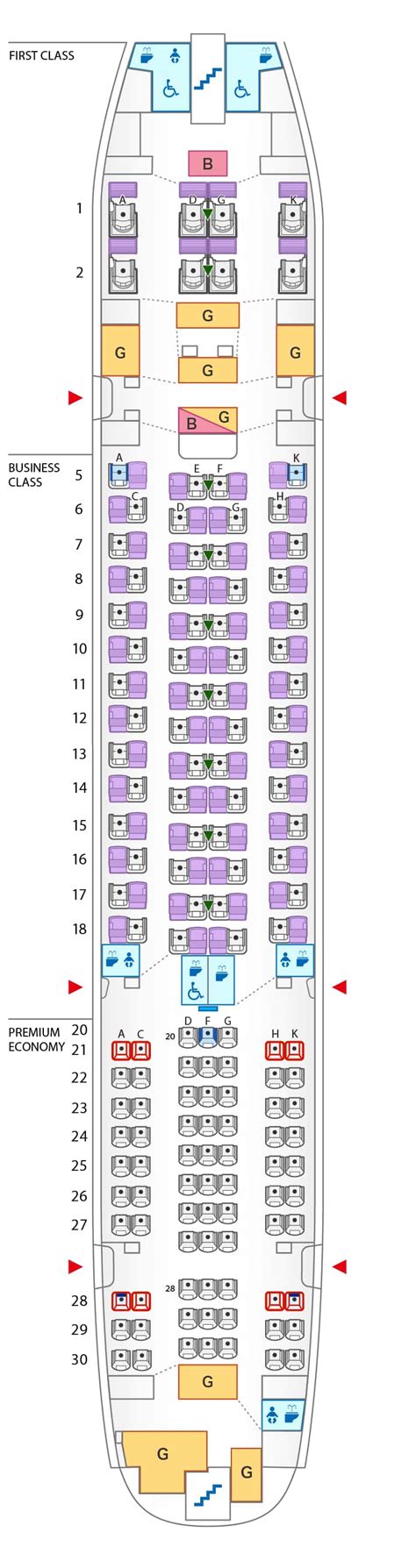
Korean Air’s five Airbus A380 aircraft are among the most luxurious in the skies, offering over 400 economy seats and 94 premium seats split between business and first-class cabins. Each aircraft is registered as follows:
- HL7619 – Delivered December 10, 2012 (Serial Number 96)
- HL7621 – Delivered August 27, 2013 (Serial Number 126)
- HL7622 – Delivered October 25, 2013 (Serial Number 128)
- HL7627 – Delivered June 27, 2014 (Serial Number 130)
- HL7628 – Delivered July 28, 2014 (Serial Number 156)
These aircraft have become emblematic of Korean Air’s long-haul identity, especially as it becomes one of the few remaining global A380 operators. While most major carriers have either phased out or drastically reduced A380 operations, Korean Air’s ability to continue leveraging the aircraft offers a competitive edge in comfort and capacity.
Competitive Dynamics at JFK and LAX
By reintroducing the A380 to JFK and LAX, Korean Air is not only showcasing confidence in market recovery but also strategically positioning itself against rivals like Emirates, which has maintained consistent A380 services to JFK, and other Asian carriers that are reducing their superjumbo operations.
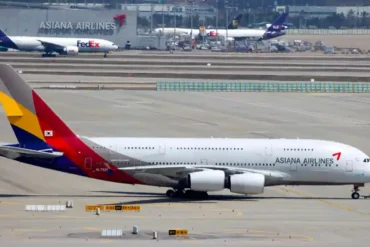
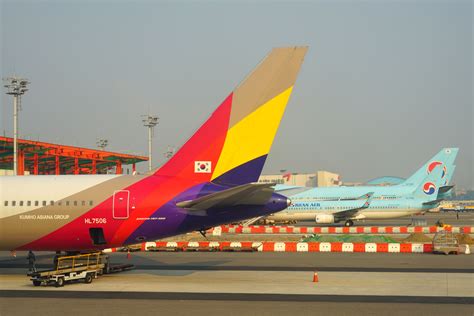
Furthermore, the move coincides with Asiana Airlines discontinuing its A380 flights to LAX, tightening Korean Air’s grip on the double-decker market share in Southern California. This timing is crucial, especially as the two carriers move forward with merger integration efforts, consolidating their transpacific strategies.
Market Trends and Future Implications
The decision to reintroduce the A380 is reflective of broader market signals: robust passenger demand, especially on routes connecting major economic and cultural centers. With 22 Airbus A380 routes planned to the U.S. in the summer of 2026, Korean Air joins a select group of airlines investing in ultra-high-capacity service.
These developments come as global aviation continues to face supply chain challenges. Aircraft manufacturers are struggling to meet delivery targets for fuel-efficient replacements, forcing airlines to maximize the utility of legacy aircraft like the A380. Korean Air’s move is a textbook example of balancing fleet limitations with market demand—while still offering passengers a product that’s synonymous with space, quietness, and comfort.
Passenger Experience: Double-Decker Delight
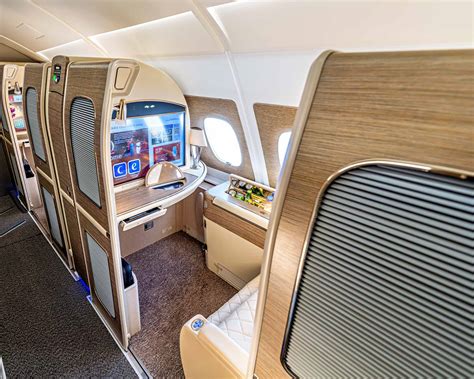
Flying on Korean Air’s A380 is not merely about getting from point A to B—it’s an experience. The aircraft offers a two-deck configuration, with luxurious lounges, first-class Kosmo Suites, and an upper deck fully dedicated to premium travelers. Even in economy, passengers benefit from wider seats, more legroom, and a quieter cabin due to the A380’s four-engine design and composite structure.
This makes Korean Air’s A380 particularly attractive for business travelers, leisure passengers, and aviation enthusiasts alike. With international travel returning to near pre-pandemic levels, the timing could not be more favorable.
Looking Ahead: A380’s Final Decade in the Sky?
While Korean Air has not provided an exact retirement timeline, the airline has made it clear that the A380 will not be part of its long-term fleet strategy past the 2030s. The current return of the superjumbo represents a stopgap solution, enabled by retrofit upgrades and postponed aircraft deliveries.
In the interim, Korean Air will continue using the A380 to anchor its presence on high-volume routes, reinforcing its brand as a premium full-service international airline with one of the few remaining A380 fleets in active use. The airline’s ability to turn fleet delays into strategic opportunities is a testament to its agile planning and operational foresight.
As summer 2026 approaches, all eyes will be on JFK and LAX, where the A380’s massive wingspan and iconic silhouette will once again dominate the tarmac—reminding travelers and competitors alike that size, comfort, and elegance still matter in aviation.