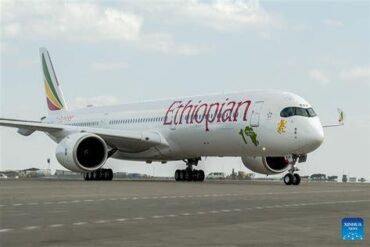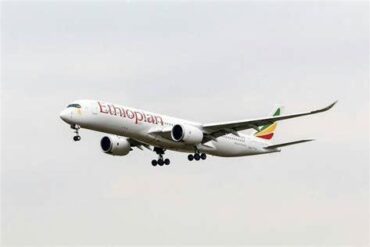
Ethiopian Airlines, Africa’s largest and most profitable carrier, is strategically positioning itself for its next phase of regional expansion by exploring a significant new fleet acquisition. The airline is currently evaluating a double-digit order for next-generation regional jets, with Airbus, Boeing, and Embraer all under active consideration. The news was confirmed by CEO Mesfin Tasew Bekele during the International Air Transport Association (IATA) Annual General Meeting, held in June 2025. This anticipated order could reshape not only Ethiopian’s short-haul capabilities but also influence the competitive balance among jet manufacturers in the regional jet segment.
Bekele revealed that Ethiopian Airlines is considering a minimum of 20 new aircraft, a substantial investment that will see the airline further cement its dominant position on the African continent. He noted that the final count of aircraft to be ordered will depend on the type and configuration of the jets selected. The models currently in contention include the Embraer E2 series, Airbus A220, and the not-yet-certified Boeing 737 MAX 7.
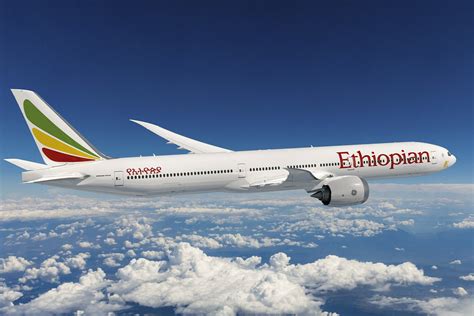
Strategic Evaluation of Aircraft Options
The careful evaluation of these three aircraft types comes at a time when Ethiopian Airlines is dealing with a mix of fleet modernization goals and operational bottlenecks. Each of the shortlisted jets offers distinct advantages. The Airbus A220, known for its fuel efficiency and passenger comfort, could provide a seamless extension of Ethiopian’s existing Airbus fleet. Meanwhile, the Embraer E2 jets, especially the E190-E2 and E195-E2, are lauded for their cost-efficiency and suitability for thinner regional routes. The Boeing 737 MAX 7, although still pending certification, promises fleet commonality benefits with the airline’s existing Boeing 737 NGs and MAX 8s.
The decision will likely be influenced by factors including operating costs, maintenance efficiency, range, and compatibility with Ethiopian’s existing infrastructure. More importantly, Ethiopian Airlines is seeking jets that can efficiently cover underserved routes within Africa and connect secondary cities across the continent—an objective at the heart of its Vision 2035 strategy.
Delivery Delays and Grounded Aircraft: A Critical Pressure Point
While charting its path toward future growth, the airline is also navigating immediate operational headwinds. CEO Bekele openly addressed ongoing issues with aircraft delivery delays and engine maintenance constraints during his IATA interview. He confirmed that Ethiopian Airlines has faced delays from both Boeing and Airbus, with some aircraft arriving up to six months late. In parallel, engine maintenance issues have forced the airline to ground several Boeing 787 Dreamliners and De Havilland Q400 turboprops, reducing fleet availability during peak demand periods.
These setbacks underscore the urgency behind acquiring a new batch of reliable, readily available aircraft. With regional connectivity remaining a cornerstone of its pan-African strategy, the addition of new regional jets is not just a fleet refresh—it is a necessity.
Balancing the Big Order Book: Existing Commitments to Boeing and Airbus
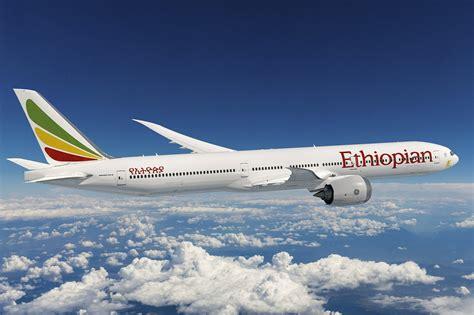
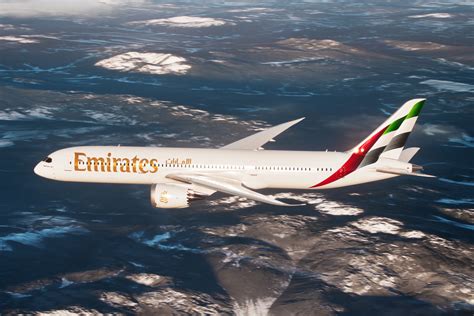
Despite the current disruptions, Ethiopian Airlines has not slowed its long-term fleet modernization. The carrier has significant outstanding orders with both Boeing and Airbus. The current backlog includes 11 Boeing 787-9 Dreamliners, eight Boeing 777-9s, and 11 Airbus A350-900s. These aircraft, when delivered, will bolster Ethiopian’s long-haul and ultra-long-haul capabilities, linking Addis Ababa with key destinations across Asia, Europe, and the Americas.
However, the airline’s future growth will not rely solely on long-haul routes. Intra-African travel remains the most underutilized segment of air travel globally. Ethiopian’s plan to deploy regional jets across underserved routes fits squarely into the Single African Air Transport Market (SAATM) agenda, which aims to liberalize air services and improve connectivity across Africa.
Embraer, Airbus, or Boeing? Competitive Stakes Are High
The regional jet deal represents a high-stakes contest for the three manufacturers involved. For Embraer, landing Ethiopian as a major customer for its E2 jets would reinforce its growing momentum in Africa and validate its product as a top-tier contender. The E2 family, with its low seat-mile costs and short runway performance, is optimized for the kind of rugged, underdeveloped airport environments often encountered in Africa.
Airbus, on the other hand, is likely banking on the A220’s technological advantages and its existing relationship with Ethiopian Airlines through the A350 program. The A220’s wide cabin and fuel-efficient Pratt & Whitney engines make it an attractive solution for premium and economy configurations alike. However, engine availability and parts supply could prove decisive.
Boeing’s MAX 7 option, though promising in terms of fleet commonality, is still not certified, raising questions about delivery timelines. Given Ethiopian’s negative experience with delivery delays, the uncertainty around the MAX 7 could weigh heavily in Airbus or Embraer’s favor.
Sharjah Launch and Strategic Gulf Presence
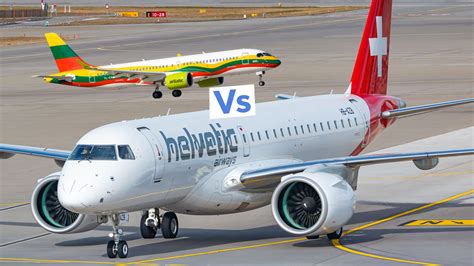
While regional aircraft decisions occupy executive bandwidth, Ethiopian Airlines is simultaneously expanding its global network. On June 1, 2025, the airline launched a new route to Sharjah, the third-largest emirate in the United Arab Emirates. Operating four times per week, the new service makes Sharjah Ethiopian’s second UAE destination after Dubai.
“We are truly delighted to connect our passengers to an additional getaway in the UAE with our new flights to Sharjah,” said Bekele. “We have been connecting the UAE and Africa for nearly five decades now and the new service will help boost the investment, tourism, diplomatic and socioeconomic bonds between the two regions.”
The route highlights Ethiopian’s intent to grow beyond traditional gateway hubs and tap into emerging business and leisure traffic flows. Sharjah, known for its cultural heritage and increasing economic relevance, offers a strategic foothold for African carriers looking to diversify beyond the crowded corridors to Dubai and Abu Dhabi.
Fleet Composition and Future Outlook
Ethiopian Airlines currently operates a diversified fleet, including Boeing 737s, 777s, and 787s; Airbus A350-900s and A350-1000s; and the De Havilland Q400 turboprop. This wide range allows the airline to serve everything from ultra-long-haul routes to high-frequency regional operations. However, the middle-of-the-market segment—ideal for 100-150 seat jets—is currently underserved.
The addition of either the A220, E2, or MAX 7 will fill this gap, offering flexibility, right-sizing capabilities, and fuel efficiency. Ethiopian’s strategy is clearly oriented toward building a network that can adapt to economic fluctuations, respond to demand volatility, and stimulate growth in secondary African markets.
With the African Union’s open skies push gaining momentum and regional carriers struggling to maintain scale, Ethiopian Airlines appears well-positioned to become the connective tissue of Africa’s fragmented aviation landscape. A bold regional jet order will not only extend its operational reach but reaffirm its role as the continent’s de facto flag carrier.
Conclusion: A Defining Moment for Regional Aviation in Africa
The potential acquisition of 20 or more new regional jets marks a pivotal inflection point for Ethiopian Airlines and African aviation more broadly. As the airline navigates delivery delays, engine maintenance hurdles, and the competitive dynamics of aircraft procurement, its decision in the coming months will reverberate across the global aerospace sector.
Should Ethiopian opt for the Embraer E2 or Airbus A220, it could signal a significant shift away from Boeing dominance in this segment. Conversely, a bold bet on the MAX 7 could consolidate Boeing’s standing—if certification and delivery schedules align.
In either case, Ethiopian’s move is about more than jets. It’s about reshaping intra-African connectivity, empowering regional economies, and asserting Africa’s place in global aviation. With the continent poised for a travel and trade renaissance, the right regional aircraft could be the wings that carry it forward.