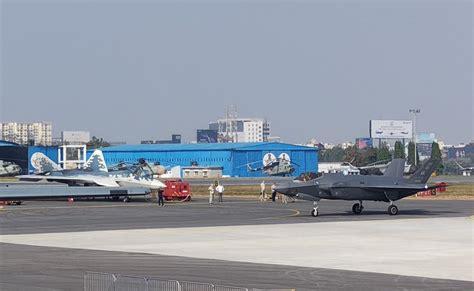
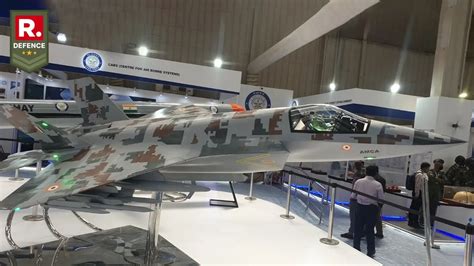
With growing concerns over regional military imbalances and the delay in its indigenous Advanced Medium Combat Aircraft (AMCA) project, India is actively considering the acquisition of two to three squadrons of fifth-generation fighter jets, aiming to fill a critical capability gap in the Indian Air Force (IAF).
A typical IAF squadron comprises 18 to 20 fighter aircraft, which means India may soon procure between 40 to 60 stealth fighters from either the United States or Russia. The options on the table: the American F-35 Lightning II and the Russian Su-57 Felon. This move reflects India’s strategic recalibration in light of Chinese advancements and possible fifth-generation fighter transfers to Pakistan.
India’s Strategic Urgency: Border Realities and Capability Gaps
The decision to fast-track the import of fifth-generation fighter aircraft is rooted in operational necessity. China’s rapid modernization of its People’s Liberation Army Air Force (PLAAF), including development of sixth-generation capabilities, has sounded alarm bells in New Delhi. The PLA Air Force already deploys the J-20 stealth fighter, and unconfirmed reports suggest a possible transfer of these fighters to Pakistan, India’s traditional adversary on the western front.
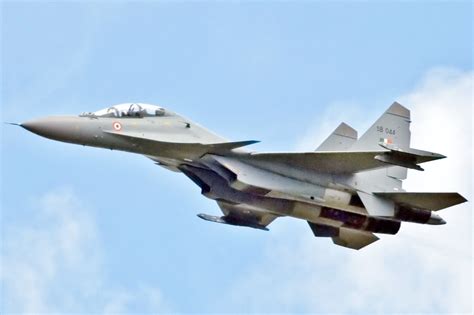
India’s air superiority is currently reliant on a mix of Su-30MKIs, Rafales, and aging MiG-29s and Jaguars. While potent, none of these platforms match the low observable (stealth) characteristics, advanced sensor fusion, and network-centric warfare capabilities of a true fifth-generation fighter.
The Indian AMCA, a homegrown fifth-generation fighter being developed by the Aeronautical Development Agency (ADA) and Hindustan Aeronautics Limited (HAL), is unlikely to become operational before 2032–2035, even under optimistic projections. That long gestation period has prompted the Indian government to examine stopgap imports.
The American Offer: F-35 Lightning II and Its Strings
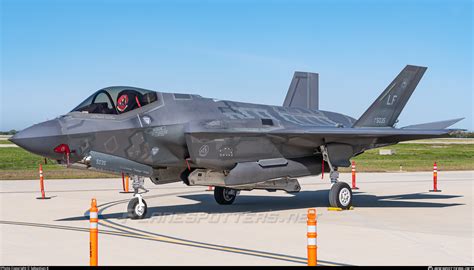
The F-35 Lightning II, developed by Lockheed Martin, is arguably the world’s most advanced multirole stealth fighter. It offers stealth capabilities, sensor fusion, electronic warfare dominance, and all-weather precision strike ability. Used by the US Air Force, US Navy, and numerous NATO and non-NATO allies including Israel, Japan, and South Korea, the F-35 boasts global support and extensive combat testing.
Technologically, the F-35 is unrivaled. Its Active Electronically Scanned Array (AESA) radar, Distributed Aperture System (DAS), and Electro-Optical Targeting System (EOTS) provide unparalleled situational awareness. The aircraft also excels in data sharing and networked operations, vital for modern warfare.
However, the F-35 doesn’t come without drawbacks for India:
- High acquisition and lifecycle costs
- Strict end-user monitoring and compliance agreements
- Limited operational autonomy due to proprietary systems
- Dependency on US geopolitical alignment
Critics within India’s defense community, including former IAF officers, argue that relying on American platforms could undermine India’s strategic autonomy, especially given Washington’s unpredictable foreign policy shifts.
Russia’s Pitch: The Su-57 Felon and its Controversies
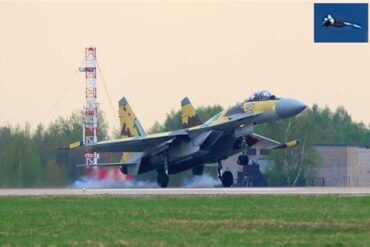
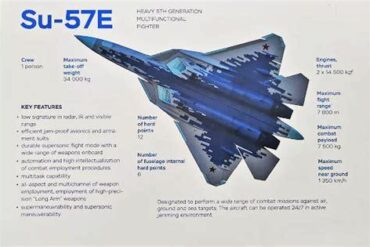
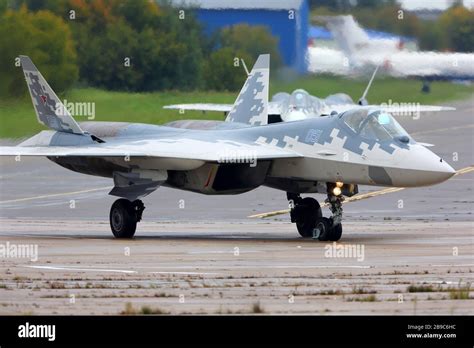
Russia’s offer centers on the Sukhoi Su-57 Felon, its fifth-generation multirole stealth fighter developed by Sukhoi. Originally part of a joint development program with India (the now-abandoned FGFA project), the Su-57 is designed for air superiority and ground attack, blending stealth with high maneuverability and hypersonic missile capability.
The Su-57’s defining features include:
- Three-dimensional thrust vectoring for extreme agility
- Advanced composite airframe and radar-absorbent materials
- Large internal weapons bay supporting hypersonic weapons like the Kinzhal
- High-speed data link for combat networking
Yet, the Su-57 is marred by development delays, limited production runs, and questionable stealth performance. Only a handful have been delivered to the Russian Air Force, and independent assessments suggest that its radar cross-section (RCS) is significantly larger than the F-35’s, making it less effective in contested airspace.
Moreover, the Su-57 reportedly incorporates Chinese-manufactured electronics, raising supply chain security concerns. In a hypothetical conflict scenario where China is a belligerent, this could compromise the integrity of Russian-supplied systems.
Voices from the Ground: The Call for Indigenous Solutions
Amidst growing chatter about acquisitions, former IAF officer Group Captain Ajay Ahlawat criticized both options. “We have two bad choices,” he said. “F-35 comes with strings attached. Su-57 is not truly a fifth-gen aircraft. Imagine being in a shooting war and your jet’s avionics are powered by components from your enemy.”
Ahlawat proposes an alternative path: fast-tracking the AMCA program under the direct supervision of the Prime Minister’s Office (PMO), treating it as a mission of national urgency. His suggestion includes appointing a 3-star IAF officer as project head and unifying the command chain under the National Security Advisor (NSA) to accelerate development.
While such nationalist sentiment resonates with many, the reality remains: AMCA is not ready, and India faces a near-term deficit in next-generation capabilities, especially if the China-Pakistan axis continues its upward trajectory.
Operational Scenarios: Why Fifth-Gen Fighters Matter Now
The need for stealth fighters isn’t cosmetic—it’s strategic. In a contested air environment, especially one dominated by long-range surface-to-air missile (SAM) systems like the Chinese HQ-9 or Russian S-400, non-stealth aircraft have diminished survivability. Fifth-gen fighters enable:
- First-strike penetration without detection
- Electronic jamming and cyber warfare integration
- Air dominance through advanced dogfighting capability
- Precision ground strikes on hardened targets
India’s potential adversaries are developing or already operating such systems. Without parity, the IAF risks becoming technologically outclassed.
Strategic Implications: Beyond Fighter Jets
Beyond aircraft, the purchase of either the F-35 or Su-57 carries broader geopolitical consequences. Acquiring the F-35 could further tilt India toward the Quad Alliance (India, US, Japan, Australia), reinforcing Indo-Pacific cooperation and placing India more firmly in the American defense orbit.
Conversely, choosing the Su-57 would revitalize the Indo-Russian defense partnership, which has seen strain following India’s diversified procurement policy. Yet, this could expose India to Western sanctions under CAATSA (Countering America’s Adversaries Through Sanctions Act), particularly if the aircraft incorporate sensitive Russian tech.
In either case, the decision will impact:
- Interoperability with allies
- Supply chain security
- Defense industrial collaboration
- Technology transfer potential
The Interim and the Indigenous: A Dual Track Path
India isn’t placing all its eggs in the fifth-gen basket. Parallel to this urgent import plan, the government is working on acquiring 114 multirole fighters under a separate program intended for domestic manufacturing with foreign collaboration—candidates include the Dassault Rafale, Boeing F-15EX, Saab Gripen E, and Eurofighter Typhoon.
This initiative aligns with the Make in India and Atmanirbhar Bharat goals and is expected to bolster India’s aerospace ecosystem, create jobs, and develop long-term capabilities in radar, propulsion, and stealth tech.
Conclusion: A Pivotal Decision for India’s Air Dominance
India’s contemplation between the F-35 and Su-57 marks more than just a fighter jet deal—it is a defining moment for India’s defense doctrine, diplomatic posture, and technological direction. While neither option is perfect, the pressing threat perception and delay in AMCA leave little room for indecision.
The final verdict will likely reflect a balance of operational urgency, strategic autonomy, cost-benefit analysis, and geopolitical alignment. Whatever the outcome, it will have a lasting impact on the Indian Air Force’s ability to maintain deterrence and air superiority in the decades to come.
Frequently Asked Questions (FAQs)
Why does India need fifth-generation fighters now?
India faces an urgent capability gap as China and potentially Pakistan deploy advanced stealth platforms. Fifth-generation fighters provide survivability, precision strike capability, and air superiority—vital for modern conflicts.
Is the F-35 or Su-57 better for India?
The F-35 is technologically superior but comes with operational restrictions and geopolitical dependencies. The Su-57 offers more autonomy but lags in stealth and has development concerns.
What is the status of the AMCA project?
India’s AMCA is still in the prototype design phase. It’s expected to fly by 2028 and may enter service in the early 2030s, making it unsuitable for addressing near-term defense needs.
Will India face sanctions if it buys the Su-57?
There’s a risk of US sanctions under CAATSA if India purchases major Russian defense equipment, including the Su-57, though India has previously received waivers (e.g., for the S-400).
Could India eventually buy both the F-35 and Su-57?
Unlikely, due to logistical, strategic, and interoperability issues. A single platform would be preferred for training, maintenance, and doctrine integration.
Is manufacturing 114 4.5-gen jets still happening?
Yes, India is simultaneously evaluating a deal to manufacture 114 advanced fighters locally in collaboration with a foreign partner, under the ‘Make in India’ initiative.