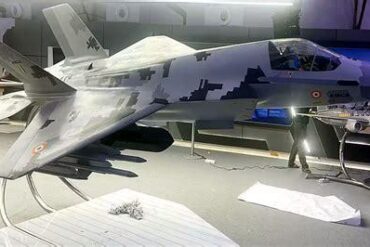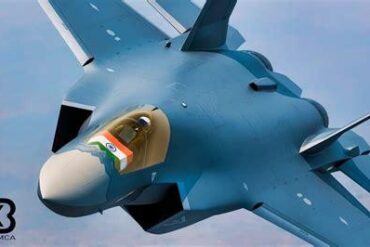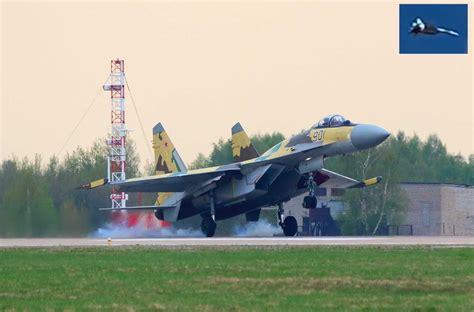
With India’s Advanced Medium Combat Aircraft (AMCA) unlikely to take flight before 2035, the country is actively evaluating a proposal from Russia to procure and co-produce the Sukhoi Su-57, a fifth-generation multirole stealth fighter jet. Meanwhile, New Delhi has reportedly dismissed the possibility of acquiring America’s F-35 fighter, citing concerns over delays, lack of local manufacturing guarantees, and restricted technology transfer.
Indigenous AMCA Still a Decade Away From Reality
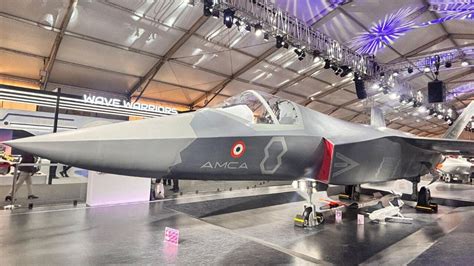
The Defence Research and Development Organisation (DRDO) began work on the AMCA following government approval in 2023, but even optimistic timelines suggest a first rollout no earlier than 2035. This delay stems from the typical development cycle for a fifth-generation fighter jet, which can span 10 to 15 years due to the complexities of designing stealth architecture, advanced avionics, and next-generation propulsion systems.
After fulfilling its order of Tejas LCA Mark-1 fighters, Hindustan Aeronautics Limited (HAL) is expected to shift production to the Mark-2 variant around 2028–2029. Only after this transition will resources likely be directed toward AMCA production infrastructure, making it a long wait for a domestic stealth fighter.
Pakistan’s J-35A Spurs Strategic Urgency
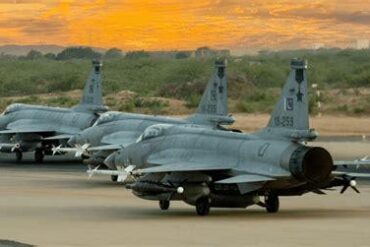
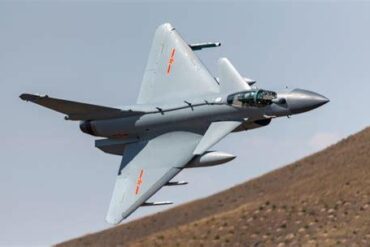
The urgency is compounded by regional developments. In a significant leap, Pakistan is set to begin receiving deliveries of the Chinese J-35A fifth-generation stealth fighters within 2025. The jet, built by China’s Shenyang Aircraft Corporation, brings advanced stealth, long-range strike capability, and modern avionics to Pakistan’s arsenal. This shift threatens to disrupt the strategic air-power balance in South Asia, making India’s delay in fielding a comparable aircraft particularly worrisome.
Russia’s Su-57 Emerges as the Preferred Stopgap
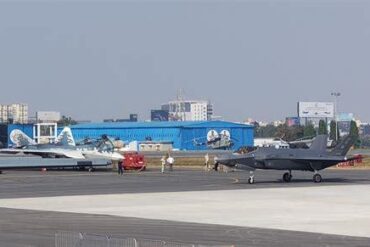
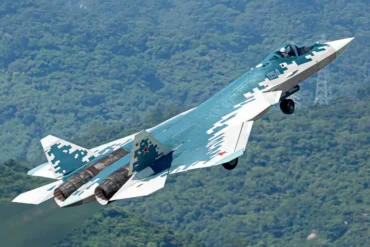
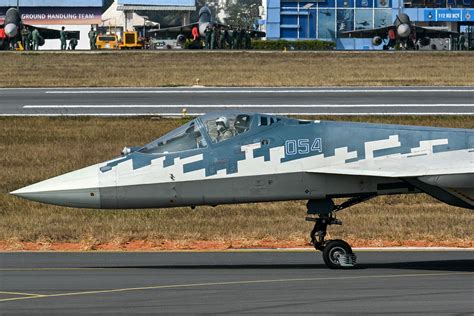
In response, India is leaning toward acquiring the Sukhoi Su-57E, the export version of Russia’s stealth-capable, twin-engine fighter aircraft that entered service with the Russian Aerospace Forces in 2020. This platform has matured significantly since its earlier iterations, and recent public performances, including at Aero India 2025, have reinvigorated interest in New Delhi.
According to Denis Alipov, the Russian Ambassador to India, Moscow is offering not just aircraft, but an extensive technology-sharing and co-production package. “We’re offering not only to sell but to co-produce. We offer technology sharing, creation of necessary industrial facilities, and are open to configuration changes,” Alipov stated at the India Today Conclave 2025.
Full Access to Source Code: A Game-Changer
Perhaps the most groundbreaking aspect of the Russian proposal is its offer of full access to the Su-57’s source code—a rare and strategic concession. This would allow India to integrate indigenous systems, such as the Astra air-to-air missile, Rudram anti-radiation missile, and locally developed avionics suites, creating a tailored platform suited to Indian operational doctrines.
This is a significant upgrade from earlier offers. India had initially joined the PAK FA program with Russia in 2011 and was poised to procure over 200 aircraft. However, citing issues with stealth capability, avionics, and radar systems, India withdrew in 2018. The Su-57’s current iteration has reportedly addressed many of those concerns, prompting a potential strategic re-engagement.
Deep Roots in Indo-Russian Defence Collaboration
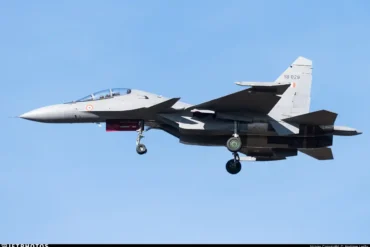
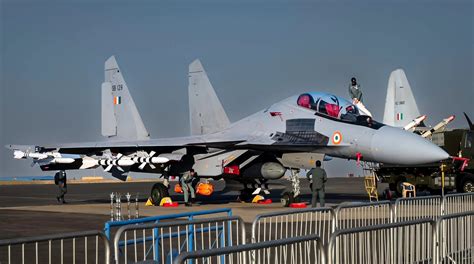
India and Russia already have a deep history of joint defence ventures, most notably the Sukhoi Su-30MKI, a heavily customized variant of the Su-30 developed specifically for India. HAL continues to produce the Su-30MKI domestically, providing a strong industrial and logistical framework that could be leveraged for Su-57 production as well.
The Su-57 features stealth shaping, internal weapons bays, thrust-vectoring engines, and an advanced AESA radar, placing it among the elite few fifth-generation jets in operational service worldwide. Russia’s openness to modifying its platform to suit India’s strategic needs only adds to its appeal.
US F-35 Offer Stalled by Strategic Incompatibility
While the United States has repeatedly floated the idea of selling F-35A jets to India, such a deal seems unlikely to materialize soon. The F-35, produced by Lockheed Martin, is arguably the most widely operated fifth-gen jet globally, boasting unmatched network-centric warfare capabilities, stealth, and sensor fusion. However, India remains wary of the geopolitical and logistical complexities tied to an F-35 acquisition.
Key sticking points include the lack of technology transfer, restrictions on local manufacturing, and a string of delayed deliveries in recent American defence deals. For example:
- Delivery of GE F404 engines for Tejas Mark-1 was delayed by over two years.
- The GE F414 engine deal for Tejas Mark-2 remains stalled, despite an MoU signed during the Biden administration.
- The delivery of Boeing AH-64E Apache helicopters, expected by May 2024, has not commenced.
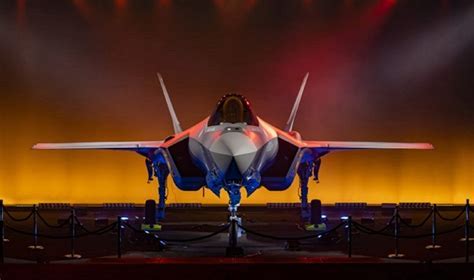
Furthermore, US policy generally prohibits foreign countries from modifying the F-35’s source code or integrating non-NATO-standard weapons. This is a non-starter for India, which has invested heavily in its own weapon systems and seeks full autonomy in platform configuration.
Strategic Autonomy and Industrial Goals
India’s broader defence policy is oriented toward self-reliance (Atmanirbhar Bharat) and the creation of a robust domestic defence-industrial base. In this context, any fifth-generation fighter deal must include domestic manufacturing and meaningful technology transfer—elements missing from current US offers.
The Russian Su-57 proposal, with its emphasis on joint development, technology sharing, and Indian customization, aligns more closely with these long-term strategic goals. Moreover, India’s existing industrial ecosystem, already producing Russian-origin jets like the Su-30MKI, could more readily adapt to Su-57 assembly and maintenance lines.
Geopolitical Ramifications
Acquiring the Su-57 could also have implications beyond defence. It may signal a realignment or reaffirmation of Indo-Russian strategic ties at a time when global geopolitics are rapidly shifting. While India continues to diversify its defence portfolio with Israeli, French, and American systems, the Su-57 acquisition could solidify Moscow’s position as a key technology partner.
At the same time, rejecting the F-35 offer may impact Indo-US defence relations, though both nations are likely to continue cooperation in other spheres like intelligence sharing, joint naval exercises, and emerging technology sectors.
Conclusion: A Calculated Compromise
With the indigenous AMCA years away, and Pakistan gaining a stealth edge with Chinese jets, India finds itself at a crucial juncture. While the F-35 remains an aspirational platform, the lack of local production and tech access make it a strategic misfit for India’s evolving defence doctrine. On the other hand, the Sukhoi Su-57, now a mature platform with robust Russian backing, emerges as a pragmatic and strategically aligned choice.
Should India finalize a Su-57 acquisition with local production rights, technology transfer, and source code access, it would not only bridge the fifth-generation capability gap but also bolster its long-term goal of defence self-sufficiency—without surrendering operational sovereignty.