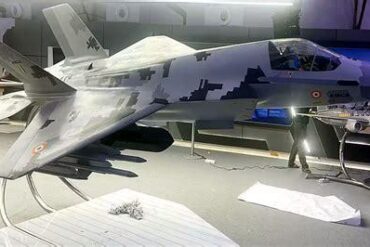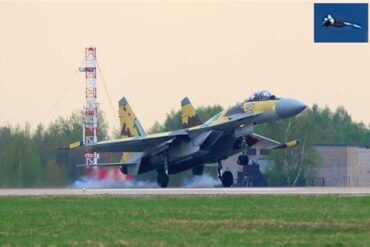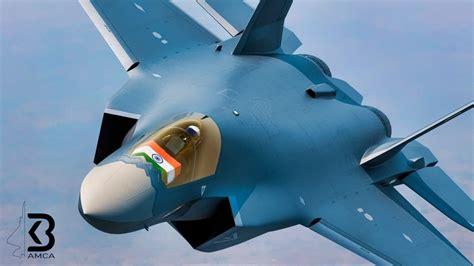
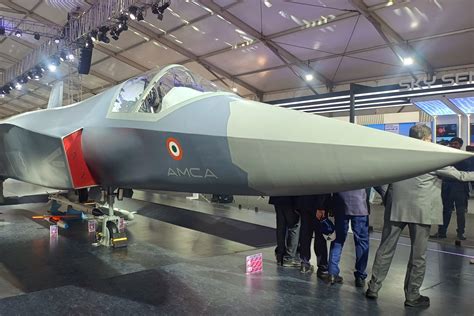
India has officially stepped back from formal negotiations over the acquisition of foreign fifth-generation stealth fighter jets, namely the American F‑35A and Russian Su‑57E, opting instead for a far more strategic and self-reliant approach. In a significant statement that sets the tone for India’s defence aviation future, Defence Secretary Rajesh Kumar Singh revealed that the country is placing its full bet on the indigenous Advanced Medium Combat Aircraft (AMCA) programme. This homegrown stealth jet, expected to take flight within eight years, marks a milestone moment in India’s long-term plan to solidify its status as a self-sufficient defence powerhouse.
India’s Fifth-Generation Fighter Gamble: Why Not the F‑35 or Su‑57?
“On F‑35A and Sukhoi Su‑57E, whatever has been discussed has been informal. We don’t have any formal consultation going on,” Singh clarified in a recent podcast with ANI. These remarks effectively put to rest months of speculation surrounding India’s potential procurement of foreign fifth-generation stealth aircraft, especially amid rising tensions in Asia and the global race for air superiority.
Despite both platforms offering considerable advantages—the F-35A being widely regarded as the world’s most technologically advanced stealth fighter, and the Su-57E as Russia’s answer to fifth-gen combat supremacy—India’s Ministry of Defence is shifting gears toward autonomy. Singh emphasized, “What I can talk about is our fifth-generation fighter, which will be the AMCA.”
This decision is not just symbolic. It reflects a broader movement within India’s defence ecosystem to decrease dependence on foreign suppliers while pushing the country toward technological self-reliance. It is a step in line with the vision of Atmanirbhar Bharat (Self-Reliant India).
AMCA: The Core of India’s Stealth Aspirations
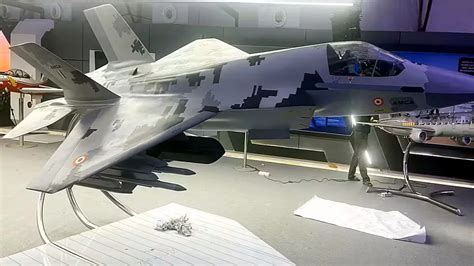
The AMCA is more than just a defence project—it is a cornerstone in India’s future air warfare strategy. Designed to be a true fifth-generation stealth aircraft, the AMCA will feature advanced radar-absorbing materials, internal weapons bays, supercruise capabilities, and cutting-edge avionics tailored to India’s unique operational requirements.
Developed by the Defence Research and Development Organisation (DRDO) and Aeronautical Development Agency (ADA), with Hindustan Aeronautics Limited (HAL) as the prime manufacturer, the programme is now being expanded to include private sector participation for the first time ever.
A Competitive Execution Model: Opening the Skies to Private Sector
In a landmark policy shift, the Ministry of Defence issued a Request for Information (RFI), inviting bids from both public and private aerospace companies. This is a transformative move in a sector that has long been dominated by HAL. Singh elaborated, “We’ve kept it open for the public and private sectors for the first time. The intent is that we need to have at least two aircraft manufacturers in the country, if not more.”
This initiative will follow a Competitive Execution Model, recently approved by Defence Minister Rajnath Singh. Under this model, companies can bid solo, form joint ventures, or enter consortiums. The key objective is to create a balanced, competitive landscape that fosters innovation, quality, and faster execution.
HAL is still expected to play a pivotal role, but it now faces an environment where performance will be judged against rising private players. “HAL will also gain from healthy competition,” Singh noted. “There was a committee headed by me… that gave the report we need to open it up.”
HAL’s Challenges and the Push for Efficiency
Even as HAL remains central to India’s defence manufacturing ecosystem, it has not been without its flaws. Singh candidly acknowledged HAL’s current challenges, stating, “The LCA production line has not stabilised, largely because of delays in engine supplies from the US… But they already have six years of orders with them.”
These bottlenecks underline the urgency of India’s push to diversify its defence industrial base. With more players, the hope is that the sector will evolve from a sluggish, state-heavy model to a more agile, tech-savvy and globally competitive enterprise.
Reducing Reliance on Russian Defence Equipment
One of the underlying motivations behind India’s AMCA strategy is a noticeable shift in defence sourcing priorities. Singh revealed that India’s dependence on Russian defence imports has declined significantly—from nearly 70% in previous decades to about 40% today. This pivot has been driven not only by the desire for indigenous capability but also due to disruptions caused by international conflicts.
“The S-400s… are delayed, but we now have a firm schedule; they’ll come next year by April,” Singh mentioned, referencing the S-400 Triumf air defence system India purchased from Russia. Further compounding the situation are delays in contracts from Israel and other Western partners, a consequence of escalating regional tensions.
India’s recalibration is clear: the country aims to limit vulnerabilities stemming from over-reliance on any single foreign supplier, especially those affected by geopolitical instability.
Why AMCA Over F‑35 and Su‑57: Strategic and Operational Logic
From a strategic perspective, India’s preference for AMCA over F‑35 or Su‑57 is rooted in long-term vision, control over critical technologies, and operational sovereignty.
- Cost and Conditions: The F‑35, while a proven platform, comes with high costs and tight operational restrictions from the U.S. Department of Defense. Its software source code is tightly controlled, limiting India’s ability to modify or integrate indigenous systems.
- Su-57’s Uncertainty: Although the Su-57 is operational within the Russian Air Force, the export version (Su-57E) has had a limited international reception. Its production rate and combat maturity are still debated in Western and even Russian circles.
- AMCA as Tailored Solution: The AMCA will be tailored to the Indian subcontinent’s unique warfare theatres—high-altitude borders, desert combat zones, and coastal defence—providing superior adaptability.
AMCA’s Roadmap: What to Expect in the Next 8 Years
India’s goal is ambitious: complete the development, testing, certification, and initial production of AMCA within eight years. This includes multiple stages:
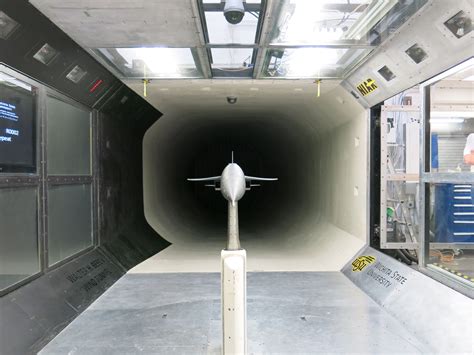
- Technology Demonstration Phase – Already underway with component testing, stealth shaping analysis, and avionics integration.
- Prototype Development – The first flight-worthy prototype is expected within four years.
- Flight Trials – Extensive testing over multiple terrains and mission scenarios.
- Production Readiness – Parallel production infrastructure will be established with HAL and private collaborators.
A Broader Vision: Creating a Next-Gen Aerospace Ecosystem
What India is building is not just a fighter jet, but an entire aerospace innovation ecosystem. The AMCA programme is expected to create thousands of skilled jobs, support hundreds of MSMEs, and spawn new research in radar absorption, composites, and propulsion.
It also aligns with India’s larger defence strategy: self-sufficiency across all critical systems, from hypersonic weapons and AI-enabled command systems to drone warfare and space-based ISR capabilities. In many ways, AMCA is the tip of the spear for a future-ready Indian military.
Conclusion: India’s Stealth Journey Gains Momentum
India’s decision to bypass immediate F‑35 and Su‑57 acquisitions is not a retreat from cutting-edge airpower but a calculated step towards long-term strategic autonomy. With the AMCA programme, India is not just designing a stealth aircraft—it is scripting a new chapter in aerospace self-reliance. As global tensions evolve and the geopolitical chessboard shifts, AMCA’s successful deployment will mark India’s arrival in the elite league of fifth-generation stealth-capable nations—on its own terms, powered by its own hands.