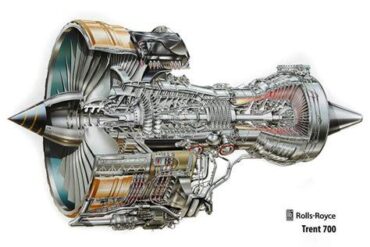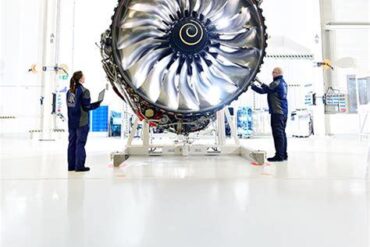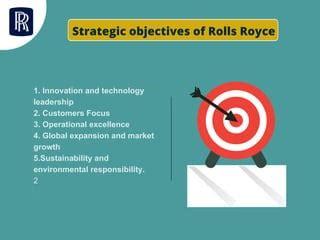
Rolls-Royce, the iconic UK-based aircraft engine manufacturer, is preparing to elevate its relationship with India to a new strategic echelon. With the United Kingdom, the United States, and Germany already established as core manufacturing and development hubs, the company is now eyeing India as its third ‘home market’, where it plans to ramp up aircraft engine production and collaborate on next-generation defense technologies.
The announcement, driven by a vision of long-term defense cooperation and industrial co-creation, aligns with India’s rapid ascent in the global aerospace landscape and its ambitions for indigenous capability across aviation and defense manufacturing.
India’s Ascent in Aerospace: A Magnetic Force for Rolls-Royce
India’s emergence as the world’s third-largest aviation market has caught the attention of the world’s foremost aerospace players. With a burgeoning commercial and military aviation ecosystem, India is no longer just a consumer but a potential co-developer and strategic partner in high-value aerospace ventures.
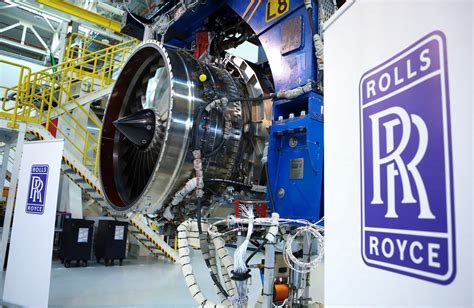
Sashi Mukundan, Executive Vice President of Rolls-Royce India, underlined in a recent interview with PTI that India’s combination of policy clarity, manufacturing scale, and a fast-maturing defense ecosystem makes it a compelling destination for deep, long-term investment. According to Mukundan, “India offers scale, policy clarity, and a strong push toward a defense and industrial ecosystem that is expanding rapidly and becoming more sophisticated.”
Laying the Groundwork: MoUs with Indian Defense Giants
In a bid to solidify its intent, Rolls-Royce is planning to formalize two critical memoranda of understanding (MoUs) with Indian defense public sector undertakings. These agreements are expected to establish the groundwork for co-manufacturing of engines for armored vehicles and the development of advanced propulsion systems for future aerial combat platforms.
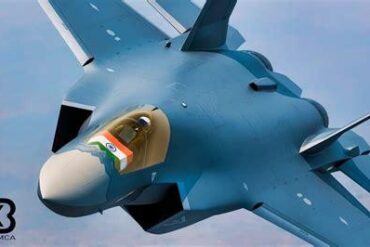
The first MoU will cover the manufacture of engines for the Arjun Main Battle Tank, showcasing the company’s entry into land-based defense systems. The second and more ambitious pact will focus on powering India’s future Advanced Medium Combat Aircraft (AMCA)—a fifth-generation stealth fighter currently under development for both the Indian Air Force and Navy.
The AMCA Engine Race: Rolls-Royce Among Key Global Contenders
India’s AMCA program is designed in two stages—Mk1 and Mk2—with progressively higher indigenous content and technological sophistication. While the Mk1 variant will be powered by twin General Electric F414 INS6 engines, the Mk2 variant demands an advanced, high-thrust engine developed in partnership with a capable foreign original equipment manufacturer (OEM).
Rolls-Royce is one of the three leading contenders in discussions with Indian agencies, alongside Safran of France and GE Aerospace. The British firm’s pitch hinges on its deep military aviation heritage, bolstered by flagship programs such as the EJ200 engine powering the Eurofighter Typhoon and its leading role in the Global Combat Air Programme (GCAP)—a sixth-generation fighter project involving the UK, Japan, and Italy.
With a focus on engines producing over 110 kilonewtons of wet thrust and a thrust-to-weight ratio exceeding ten, the AMCA Mk2 program represents a significant leap in India’s aerospace self-reliance agenda. Rolls-Royce has emphasized its experience and credibility, with Mukundan asserting, “If India is thinking about next-generation engines, Rolls-Royce is probably the best partner.”
Strategic Investment Plans: A New Industrial Horizon
Rolls-Royce’s ambitions in India are not limited to assembling engines or licensing designs. The company is envisioning a transformational investment aimed at creating a holistic aerospace value chain within the country. Mukundan described this as a strategic step towards a sustainable, co-created ecosystem.
“If everything goes well, it would be a significant investment. It’ll be big enough that people will notice it, but I don’t want to put a number to it. What matters is the impact of this investment, which would be the development of the entire value chain and ecosystem here across sectors that we operate in,” he said.
This strategy mirrors Rolls-Royce’s collaborative models in its other core markets, where design, production, testing, and lifecycle support are integrated through robust local partnerships.
India as a Global Innovation Hub for Aerospace Engineering
The country’s fast-growing pool of engineering talent, research institutions, and innovation-focused policy frameworks is pushing companies like Rolls-Royce to reimagine their India footprint from a sales office to an engineering powerhouse. The potential home-market designation would entail not just localized manufacturing, but also design and R&D ownership within India.
For Rolls-Royce, which already has a history of collaboration with Indian research entities and technical institutes, this marks a logical evolution. India’s commitment to ‘Atmanirbhar Bharat’ (self-reliant India) and programs like ‘Make in India’ provide the macro policy support for these ambitions to take root.
Beyond Fighter Jets: Expanding into Multi-Sectoral Engine Programs
Rolls-Royce’s India strategy isn’t confined to fighter aircraft propulsion. The company is also signaling interest in developing powerplants for next-generation combat vehicles, helicopters, and even marine applications. This reflects a broader plan to tap into India’s cross-domain defense modernization drive.
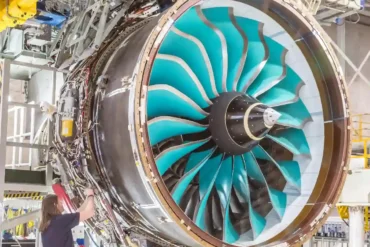
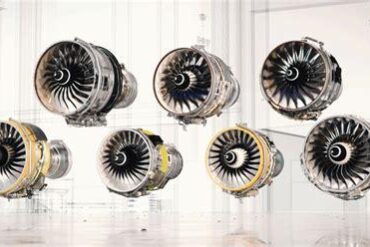
In addition to its combat credentials, Rolls-Royce powers several global civilian aircraft fleets through its Trent XWB and other commercial engines. The convergence of civil and military aerospace infrastructure in India creates synergies that can accelerate tech transfer, testing, and joint certification.
Global Programs, Local Synergies: The F130 and EJ200 Legacy
The manufacturer’s role in iconic engine programs gives it an edge in both technical depth and geopolitical trustworthiness. Notably:
- The EJ200 engine, used in the Eurofighter Typhoon, showcases Rolls-Royce’s expertise in high-performance military engines.
- The F130 engine, recently selected to re-engine the US Air Force’s B-52J Stratofortress, reflects Rolls-Royce’s deep relationships within NATO militaries.
- The company also collaborated with GE Aerospace on the F136 engine, once considered for the F-35 Lightning II.
These credentials place Rolls-Royce as a proven and reliable engine partner for long-term defense programs—a crucial criterion for India’s strategic defense planning.
Toward Industrial Sovereignty: A Shared Vision with India
India is seeking not just foreign investment but true industrial sovereignty. Rolls-Royce’s approach—centered on joint IP creation, ecosystem development, and indigenous capability building—positions it well in this respect. The prospect of developing engines in India, for India, and eventually from India for the world is no longer aspirational; it is rapidly becoming actionable.
The company’s current trajectory aligns closely with India’s goal of becoming a defense manufacturing hub for both regional and global needs. The proposed investments and collaborations would serve as a cornerstone of India’s future aerospace dominance.
Conclusion: A Defining Moment in UK-India Aerospace Ties
As Rolls-Royce inches closer to designating India as its third home market, the implications are profound. It reflects a deeper strategic shift—not just in market dynamics, but in trust, capability sharing, and mutual long-term interest.
This is not merely a corporate expansion story; it is the unfolding of a new chapter in UK-India defense and industrial relations, powered by innovation, ambition, and shared geopolitical alignment. If executed to full potential, Rolls-Royce’s India gambit may well become one of the most consequential aerospace partnerships of the 21st century.