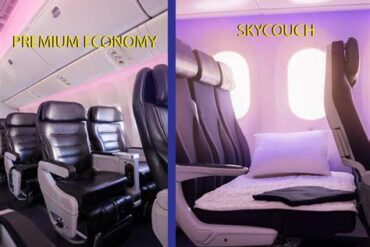
Premium economy is supposed to occupy the space between economy and business class, but the experience can vary dramatically once passengers leave the aircraft. A wider seat, additional legroom, better meals, priority boarding, and extra baggage are increasingly common, yet airport lounge access remains one of the clearest dividing lines between a true premium experience and an upgraded economy ticket.
That distinction matters because premium economy fares can cost hundreds or even thousands of dollars more than standard economy. Travelers naturally expect some meaningful benefits in return for that additional spending. Yet at many airports, a premium economy passenger can step off a relatively spacious aircraft seat and immediately find themselves back in a crowded terminal, searching for an empty chair near a departure gate.
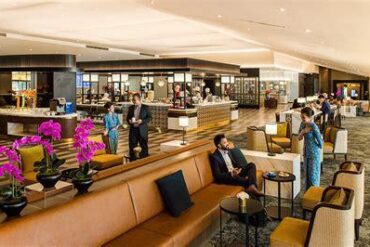
The reason is simple: airlines generally regard lounge access as one of the most valuable privileges attached to business and first class. Lounges offer food, drinks, workspace, showers, quiet seating, and an escape from the main terminal. Opening those facilities to another cabin can therefore undermine both capacity management and the perceived exclusivity that airlines use to justify premium fares.
Which Airlines Include Lounge Access With Premium Economy?
The list of airlines that routinely include complimentary lounge access with international premium economy is surprisingly short. Among major global network carriers, Japan Airlines (JAL) and All Nippon Airways (ANA) stand out most clearly. Their approach treats the airport experience as part of the premium economy product rather than as an entirely separate purchase.
Other airlines, including SAS and LATAM Airlines, also provide lounge access under particular premium economy products or on specific international routes. Italian long-haul operator Neos has offered lounge privileges with selected premium economy fares, while Asiana Airlines has historically provided lounge access for passengers traveling in its Economy Smartium product at Incheon.
This makes premium economy a fascinating cabin from a commercial perspective. Two tickets can have remarkably similar seat dimensions and onboard service, yet one can include access to a comfortable business-class lounge while another leaves the passenger dependent on a credit card, elite status, or an additional payment.
For travelers who spend several hours at airports, that difference can be substantial. A long international journey does not begin when the aircraft door closes. It begins with check-in, security, waiting, eating, working, and preparing for the flight. Lounge access can therefore turn premium economy from a better seat into a more complete travel product.
Japan Airlines and ANA Set the Premium Economy Benchmark
Japan’s two largest international network carriers occupy an unusual position in the global premium economy market. JAL and ANA both provide lounge access to qualifying international premium economy passengers, making them among the strongest choices for travelers who want ground benefits without paying business-class prices.
For JAL passengers, international premium economy travelers can access eligible Sakura Lounges at major Japanese gateways including Tokyo Haneda and Narita. Depending on the itinerary and applicable rules, partner lounges can also be available outside Japan. The policy is particularly notable because JAL does not treat lounge access merely as a reward for elite frequent flyers. For qualifying passengers, it is connected directly to the purchased cabin and fare.
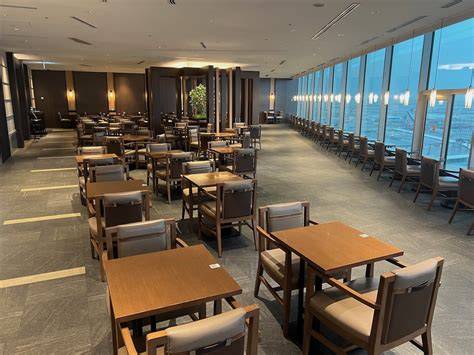
There are important conditions, however. Lounge access generally applies at the departure airport, does not automatically include guests, and is subject to JAL’s eligibility rules. Travelers should also pay attention to the restrictions surrounding airport upgrades. A passenger who receives a same-day upgrade under certain circumstances should not automatically assume that the resulting ticket will carry the same lounge privilege.
ANA follows a broadly similar philosophy. Qualifying passengers traveling in international premium economy on ANA-operated flights can access designated business lounges at airports such as Haneda, Narita, Kansai, and Honolulu, with additional access available through selected partner arrangements.
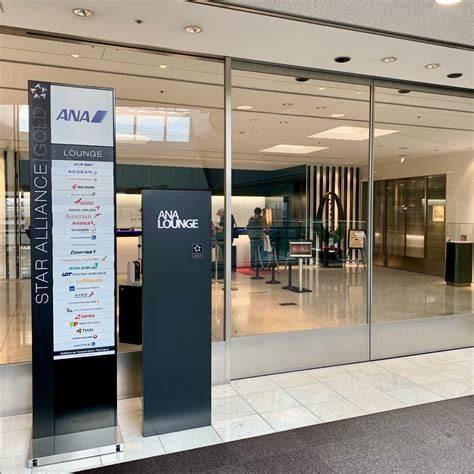
The significance of this policy goes beyond free food and comfortable chairs. JAL and ANA effectively acknowledge that premium economy passengers can be commercially valuable international travelers. By including lounge access, they give customers a reason to choose their premium economy cabins rather than simply purchasing the cheapest economy fare.
For business travelers whose employers will not approve business class, this can be particularly attractive. A premium economy ticket with lounge access offers a compromise between corporate economy restrictions and the much higher cost of a business-class fare. Self-funded travelers can benefit for the same reason.
SAS Plus Makes Lounge Access Part of the Product
Scandinavian Airlines (SAS) is another important exception. Its SAS Plus product has traditionally occupied a premium position above standard economy and can include lounge access for eligible passengers.
At SAS’s Scandinavian hubs, including Copenhagen, Oslo, and Stockholm, eligible SAS Plus passengers can access SAS Lounges. Depending on the itinerary and applicable arrangements, access can also extend to selected partner lounges.
The SAS model illustrates how lounge access can be used to reinforce a regional premium product. A passenger traveling through Copenhagen, Oslo, or Stockholm is not merely buying additional space on the aircraft. The passenger is purchasing a package of airport and onboard advantages.
That distinction becomes particularly important for frequent travelers. When an airline repeatedly serves the same route, seemingly small conveniences can influence purchasing decisions. A quiet lounge before departure, reliable Wi-Fi, food, and a place to work can be worth more to a frequent traveler than another minor improvement to an already comfortable seat.
SAS therefore demonstrates that premium economy lounge access does not have to be a universal global benefit to be commercially meaningful. It can instead be concentrated around strategically important hubs where the airline has the strongest lounge infrastructure.
LATAM Offers One of the Most Interesting Exceptions
In Latin America, LATAM Airlines stands out as a major carrier that has provided complimentary lounge access for eligible premium economy passengers on international services at selected locations.
The benefit is particularly associated with major international gateways such as Santiago, Bogotá, São Paulo, Buenos Aires, and Miami, subject to the applicable fare, route, and lounge rules.
LATAM’s approach is important because it demonstrates another version of the premium economy lounge strategy. Rather than opening every lounge to every mid-cabin passenger across the network, the airline can focus the benefit on international operations and major hubs.
That structure provides a useful balance between customer appeal and capacity control. International premium economy passengers receive a meaningful differentiator, while the airline avoids automatically creating additional lounge demand across every domestic or regional operation.
For travelers planning an international itinerary in South America, this means the phrase “premium economy” deserves closer inspection. The cabin label alone does not tell the entire story; the route and departure airport can determine whether lounge access is included.

Asiana and Neos Show How Niche Benefits Can Matter
The global list becomes more complicated when smaller or more specialized operators are considered. Asiana Airlines, for example, has offered lounge access to passengers traveling in its Economy Smartium section at Incheon International Airport.
Economy Smartium is not identical to conventional premium economy products used by JAL, ANA, or SAS, but its treatment demonstrates an important principle: airlines sometimes attach lounge access to a particular premium economy-style seating product even when the cabin is not formally marketed under the same name.
Italian long-haul airline Neos has also offered lounge access with selected premium economy fares on its Boeing 787-9 services. Such benefits can be especially relevant for leisure travelers because premium economy is increasingly being used as an alternative to business class on long-haul vacation routes.
These examples also explain why travelers should avoid relying solely on generic statements such as “premium economy includes lounge access.” Airline policies can depend on fare type, operating carrier, route, airport, frequent-flyer status, and lounge availability.
The safest approach is to verify the specific ticket’s benefits before purchase. A premium cabin logo on the booking screen is not necessarily proof that the passenger can enter the lounge.
Most Major Airlines Do Not Include Lounge Access
For every airline that includes lounge access, there are many more that do not.
Some of the world’s largest carriers have deliberately maintained a hard boundary between premium economy and business class. Emirates, Qantas, Lufthansa, and the major U.S. legacy carriers generally reserve their international business lounges for passengers holding qualifying business or first class tickets, elite status, or another specific access entitlement.
This can be surprising when the onboard premium economy product is highly developed.
Emirates is perhaps one of the clearest examples. The airline invested heavily in its Airbus A380 premium economy product, introducing wider seats, additional legroom, upgraded meals, larger entertainment screens, and other improvements. Yet purchasing premium economy does not automatically unlock the airline’s Dubai business-class lounges.
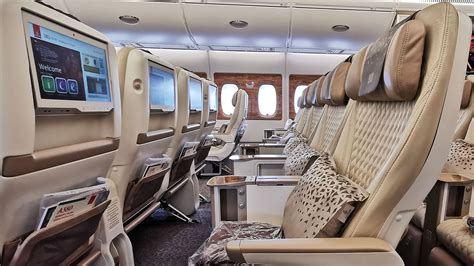
Qantas follows a similar philosophy. Its long-haul premium economy passengers can receive an enhanced onboard experience, but the cabin does not automatically provide international business lounge access. The distinction remains important on long transpacific routes where passengers may spend many hours in transit before or after an exceptionally long flight.
American Airlines also keeps its premium economy product separate from its Admirals Club and Flagship Lounge access rules. A passenger can enjoy an upgraded meal, extra space, priority services, and additional baggage benefits while still being treated differently from a business-class passenger on the ground.
That separation is not accidental. Lounge access is part of the airline’s revenue architecture.
Why Airlines Protect Business Class Lounge Access
The fundamental reason is economics.
Business-class tickets can sell for several times the price of economy or premium economy. Airlines therefore have a strong incentive to protect the benefits that make business class feel materially different. Lounge access is one of those benefits because it requires expensive real estate, staffing, catering, cleaning, security, and maintenance.
Capacity is another issue. A widebody aircraft may carry dozens of premium economy passengers. If every one of them receives lounge access, the number of people entering a hub lounge can rise significantly during concentrated departure waves.
The result could be longer queues, crowded seating areas, depleted food supplies, reduced workspace, and a generally less exclusive atmosphere.
That creates a difficult commercial equation. An airline can sell one more premium economy ticket by offering lounge access, but it can potentially damage the perceived value of business class for many other passengers by making the lounge substantially more crowded.
This is why airlines tend to protect lounge access more aggressively than benefits such as priority boarding or extra baggage. Those services can generally be scaled more easily. Lounge capacity cannot.
Air Canada, Lufthansa, and Air France Take a Different Approach
Although many airlines refuse lounge access entirely, another group has found a middle ground: sell it separately.
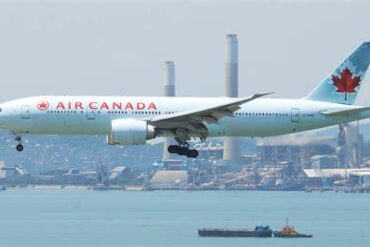
Air Canada has allowed eligible premium economy travelers to purchase access to its Maple Leaf Lounges under applicable conditions, including an option to purchase a single-visit pass during the booking process or within a specified period before departure. The reference material places the price at approximately CA$49, although travelers should verify the current price and eligibility for their particular itinerary.
The Lufthansa Group has used a similar strategy across brands such as Lufthansa, SWISS, and Austrian Airlines, with eligible premium economy passengers able to purchase access to selected business lounges for fees that have commonly fallen in the approximate €39-to-€49 range depending on location and circumstances.
Air France has also offered paid lounge access to eligible passengers in certain situations, with availability and pricing varying by airport.
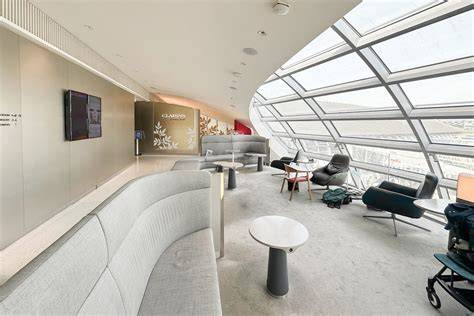
This model makes commercial sense because it allows airlines to monetize passengers who want the experience without permanently changing the cabin’s included benefits. It also gives travelers more choice.
Someone who has a five-hour airport connection may consider a €40 or €50 lounge fee excellent value. Another passenger with a short connection may prefer to save the money and remain in the terminal.
Is Paying for Lounge Access Better Than Buying Business Class?
For many travelers, the answer is yes.
The enormous difference between premium economy and business-class fares can make the economics of buying lounge access separately surprisingly compelling. A premium economy fare might cost around $1,200 on a long-haul itinerary, while business class on the same route could exceed $4,000 depending on timing and demand.
If a traveler adds a $40-to-$60 independent lounge visit, the total cost remains dramatically below business class. The passenger will not receive a lie-flat bed, priority services at the same level, premium dining, or the privacy of a business-class cabin. But the airport experience can be upgraded for a fraction of the difference in airfare.
This is especially attractive for travelers who care primarily about seat comfort and airport comfort rather than full business-class service.
A premium economy seat can provide substantially more personal space than standard economy, while a paid lounge can handle the pre-flight portion of the journey. The combination effectively creates a personalized middle ground.
Credit-card lounge programs and independent airport lounges make this strategy even more accessible. Travelers who already have lounge membership through a financial product may have little reason to pay an airline several thousand dollars more simply to obtain bundled lounge access.
JAL and ANA Have a Powerful Advantage
This is where the Japanese carriers’ strategy becomes particularly interesting.
If a traveler already wants to fly JAL or ANA, complimentary lounge access can eliminate one of the main disadvantages associated with premium economy. Instead of purchasing a separate lounge pass, the passenger receives access as part of the eligible ticket.
That can make the effective value of premium economy significantly higher.
Consider a traveler departing Tokyo for North America. The difference between an ordinary economy fare and an international premium economy fare may already be justified by the wider seat, additional legroom, better meal service, baggage allowance, and priority handling. If lounge access is included as well, the passenger receives a meaningful airport benefit without paying a separate fee.
The same logic applies to long-haul corporate travelers. A company that prohibits business-class bookings but permits premium economy may effectively allow employees to receive some of the practical benefits of business travel without paying for the full cabin.
This is why lounge access can be more than a luxury—it can influence which airline a traveler chooses.
Premium Economy Is Becoming More Than a Better Seat
The broader premium economy market is evolving quickly. New-generation aircraft such as the Airbus A350-1000 and Boeing 777-9 are expected to carry substantial premium economy sections on many international networks, and some aircraft can accommodate several dozen passengers in the cabin.
As airlines increase the number of premium economy seats, the commercial question becomes harder to ignore.
If a carrier sells dozens of premium economy seats on every widebody flight, should those customers receive a complete mid-tier experience? Or should the airline continue to divide the journey into two separate worlds: premium treatment onboard and standard treatment at the airport?
JAL and ANA have effectively answered the question in favor of a more integrated product. Other airlines have chosen paid access, while many major carriers continue to keep the lounge door closed.
The answer will probably depend on the airline’s network, lounge capacity, passenger mix, and business-class demand. A carrier with enormous international business-class volumes may have little incentive to dilute exclusivity. A carrier competing aggressively for premium economy customers may see lounge access as an inexpensive way to differentiate its product.
What Travelers Should Check Before Booking
The most important lesson is that “premium economy” does not automatically mean “lounge access.” Travelers should verify the benefit against the exact airline, route, fare, operating carrier, and departure airport.
Even airlines that normally include lounge access can impose restrictions. A partner-operated flight, codeshare itinerary, airport upgrade, or unusual fare class can change the passenger’s eligibility. Similarly, a premium economy passenger may discover that lounge access applies only at the departure airport and does not extend to a connecting airport.
Travelers should also distinguish between complimentary access and the ability to purchase access. An airline offering a $49 lounge pass is not technically including lounge access with the premium economy fare.
That distinction matters when comparing fares because the value of the ticket depends on what is actually included.
The Airlines Worth Watching
The premium economy market is moving toward greater product differentiation. For now, JAL and ANA remain among the strongest choices for travelers specifically seeking complimentary lounge access with international premium economy, while SAS, LATAM, and selected niche products provide important regional alternatives.
Meanwhile, Air Canada, Lufthansa Group airlines, and Air France demonstrate how paid access can create a flexible middle ground. Travelers can choose whether the lounge is worth the additional expense instead of paying for a more expensive cabin solely to obtain that benefit.
At the other end of the spectrum, airlines such as Emirates, Qantas, and the major U.S. legacy carriers continue to protect the traditional separation between premium economy and business-class lounge privileges.
The result is a premium economy market with no universal definition of “premium.” The seat may be premium, the meal may be premium, and the baggage allowance may be premium—but the lounge door tells travelers how far the airline is actually willing to take the experience.
As premium economy cabins grow across the world’s newest widebody aircraft, that distinction could become increasingly important. Airlines that include lounge access have a powerful marketing advantage, while carriers that exclude it retain a valuable reason for passengers to pay for business class.
For travelers, the lesson is refreshingly simple: never judge a premium economy ticket by the seat alone. Before paying the premium, examine the complete package, including baggage, priority services, meals, seat dimensions, change conditions, and—perhaps most importantly—what happens before the aircraft even leaves the gate.