Air Canada is preparing for a much busier long-haul winter, with its schedule for 2026/2027 featuring some remarkably long services across the Pacific, Atlantic, Middle East, and South Asia. The airline is expected to average 47 daily long-haul departures, representing a 10% increase from the previous winter, while accounting for about 40% of Canada’s long-haul flying. Much of that international network will continue to revolve around Toronto Pearson, Montréal–Trudeau, and Vancouver International Airport.
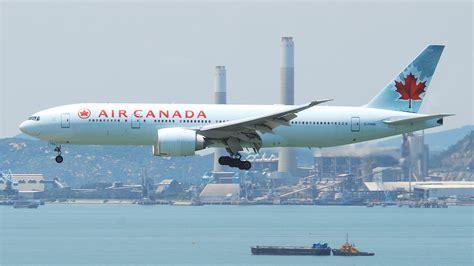
The most striking number is almost impossible to overlook: 22 hours and 55 minutes. That is the maximum scheduled block time for Air Canada’s longest route this winter, linking Toronto with Sydney through Vancouver on a daily Boeing 777-200LR. Although the itinerary includes a stop, it operates as a same-flight-number service, making it an unusually long scheduled journey within the carrier’s network.
Block time is particularly useful for understanding these figures because it represents the scheduled time from departure at the gate to arrival at the destination gate. It includes taxiing, the airborne portion of the journey, and an allowance for normal operational delays. As a result, these figures should not be interpreted as pure time in the air, but they accurately reflect what passengers see when planning their journeys.
Air Canada’s 23-Hour Sydney Service Leads the Winter Network
The Toronto-Sydney via Vancouver service stands apart from the rest of Air Canada’s winter schedule with its maximum block time of 22 hours and 55 minutes. The route is operated daily with the Boeing 777-200LR, an aircraft designed specifically for demanding long-range missions. The Vancouver stop also demonstrates how Air Canada can combine two major Canadian gateways into a single international itinerary while maintaining a very long through-service.
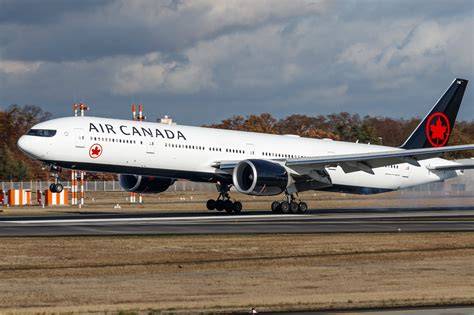
The second-longest operation is much more straightforward. Vancouver to Singapore is scheduled for as long as 17 hours, although most departures are listed at approximately 16 hours and 45 minutes. Five weekly flights are planned using the Boeing 787-9, but the service is scheduled to end in January 2027. Once it disappears, Air Canada’s longest nonstop route will change significantly.
Vancouver-Singapore Is Air Canada’s Longest Nonstop Flight
Air Canada’s Vancouver-Singapore operation has become one of the airline’s signature ultra-long-haul services. At up to 17 hours, it currently represents the carrier’s longest nonstop flight. The unusually long westbound block time is influenced by prevailing winds and the routing available to modern commercial aircraft.
The service also has an important connecting role. Air Canada’s partnership with Singapore Airlines allows passengers to continue beyond Singapore, and more than 30% of passengers are reported to connect onward or arrive from another destination. That makes the route more than a simple city pair: Singapore functions as a major connecting gateway within Air Canada’s broader Asia-Pacific strategy.
Air Canada returned to Singapore in April 2024 after a long absence. The airline had originally served the city until 1991, while Singapore Airlines later operated its own service before returning to the market and eventually withdrawing in 2023. Air Canada’s renewed operation therefore filled an important gap in its Asia-Pacific network.
Delhi Becomes Air Canada’s New Longest Nonstop Route
Once Vancouver-Singapore ends, Delhi-Toronto is positioned to become Air Canada’s longest nonstop service during the winter schedule. The return journey from Delhi to Toronto has a maximum scheduled block time of 16 hours and 25 minutes, with the route operated daily by the 777-200LR.
The unusually long timing is partly connected to today’s airspace restrictions. Airlines cannot simply choose the most direct routing over every region, and restrictions involving Russian and Iranian airspace can force longer flight paths. Those additional miles become particularly noticeable on flights connecting Canada with India, where headwinds can further increase westbound travel times.
Air Canada’s Montréal-Delhi operation is also among its longest, reaching 16 hours and 10 minutes on the return journey. Four weekly flights are planned with the 787-9, giving the airline two exceptionally long links between Canada and India’s capital.
Vancouver Bangkok and Other 16-Hour Flights
Air Canada’s winter schedule contains several additional services that approach or exceed 16 hours in one direction. Vancouver-Bangkok reaches 16 hours and 15 minutes and can operate daily with the 787-9. The route highlights Vancouver’s role as Air Canada’s principal Pacific gateway, connecting Western Canada directly with Southeast Asia.
The Toronto-Buenos Aires operation can reach 16 hours and five minutes when operated via São Paulo, while Toronto-Shanghai reaches 16 hours. Toronto-Shanghai is scheduled five? No—four weekly 787-9 flights are listed for the winter period, adding another long-distance link between Canada and China.
Meanwhile, Vancouver-Sydney reaches 15 hours and 55 minutes. Air Canada plans up to 10 weekly flights through a combination of daily 777-200LR service and three weekly 787-9 flights terminating in Sydney. That makes Australia one of the most important destinations in Air Canada’s ultra-long-haul network.
Seoul, Brisbane and Dubai Complete the Top 11
The remaining routes are still extraordinary by normal airline standards. Toronto-Seoul reaches 15 hours and 15 minutes with five weekly 787-9 flights, while Vancouver-Brisbane is scheduled at up to 15 hours using a daily 787-9.
The final entry is Dubai-Toronto, with a maximum block time of 14 hours and 50 minutes. Air Canada plans to resume the service in January 2027 after postponing its previously planned October launch. The route is closely tied to Air Canada’s partnership with Emirates, with a substantial share of passengers connecting onto Emirates flights, particularly toward South Asia.
Together, these 11 routes show how dramatically Air Canada’s international network stretches during winter 2026/2027. From a nearly 23-hour Toronto-Sydney itinerary to nonstop flights lasting around 17 hours, the schedule demonstrates the operational importance of long-range aircraft such as the 777-200LR and 787-9. It also shows how airspace restrictions, connecting partnerships, seasonal winds, and network strategy can make scheduled journey times far longer than the simple distance between two cities might suggest.