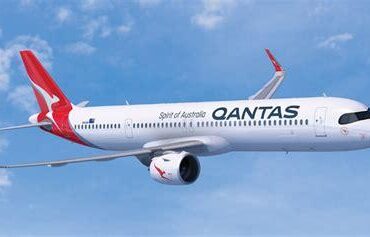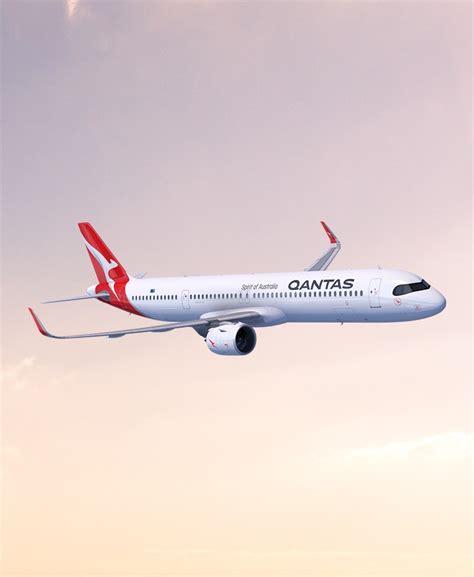
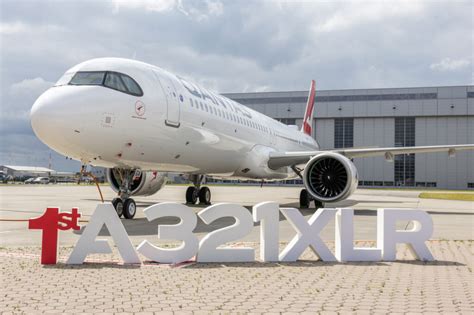
On June 30, 2025, Qantas Airways, Australia’s flag carrier, marked a defining moment in aviation history by officially taking delivery of its first Airbus A321XLR, becoming the first airline in the Asia-Pacific region to operate this next-generation long-range narrowbody aircraft. This acquisition is not only a pivotal addition to Qantas’ ambitious fleet renewal strategy but also a critical step in enhancing its long-range capabilities, fuel efficiency, and operational flexibility.
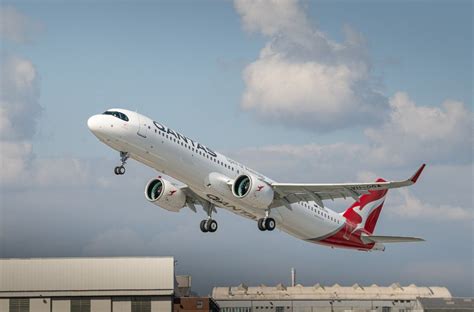
The milestone aircraft, registered VH-OGA, departed from Airbus’ Hamburg facility, embarking on what will be recorded as the longest A321XLR flight to date, covering over 9,000 kilometers on its delivery journey to Sydney with a stopover in Bangkok. The significance of this historic flight underscores the A321XLR’s extraordinary range and highlights its role in transforming single-aisle, medium-haul aviation.
Qantas’ Longest A321XLR Flight Demonstrates Aircraft Potential
The delivery flight, operating as QF6041, showcases the unmatched capabilities of the A321XLR. While the direct distance between Hamburg and Sydney is approximately 16,600 kilometers, flight tracking data reveals that the aircraft’s total journey, including the Bangkok stop, will exceed that figure, making it the longest-ever A321XLR flight completed by a commercial airline.
After departing Hamburg, the aircraft will first touch down in Bangkok for a scheduled crew stopover, covering over 9,000 kilometers on the first leg. The second stretch to Sydney adds another 7,600 kilometers, providing an operational demonstration of the aircraft’s advertised range of up to 4,700 nautical miles (8,704 kilometers). This flight is not only a technical milestone but also a statement of Qantas’ intent to revolutionize its short to medium-haul operations with more fuel-efficient and capable aircraft.
Airbus A321XLR: Redefining Long-Range Narrowbody Travel
The A321XLR, part of the successful A320neo family, is designed to bridge the gap between traditional narrowbody aircraft and long-haul widebodies. Powered by Pratt & Whitney GTF engines, the aircraft delivers significant improvements in fuel burn, range, and emissions, making it one of the most environmentally responsible choices for airlines aiming to expand their transcontinental reach.
Key performance features of the Airbus A321XLR include:
- Maximum range of 4,700 nautical miles (8,704 kilometers)
- 30% lower fuel burn compared to previous-generation narrowbody jets
- Increased maximum takeoff weight for enhanced payload capacity
- Optimized cabin space for improved passenger comfort
These attributes align seamlessly with Qantas’ long-term sustainability goals, enabling the airline to modernize its fleet while reducing its environmental impact.
A Core Component of Qantas’ Fleet Renewal Strategy
The acquisition of the A321XLR marks a major milestone in Qantas’ Project Winton, the airline’s comprehensive initiative to replace aging aircraft and future-proof its operations. The airline has placed orders for 28 A321XLRs, which will progressively replace portions of its Boeing 737 fleet used primarily for domestic and short-haul international services.
The new aircraft offers a two-class configuration:
- 20 Business Class seats arranged in a 2-2 layout
- 177 Economy Class seats with a 3-3 arrangement
The initial batch of aircraft will temporarily feature 180 Economy seats to maximize capacity during the transitional phase. Passengers can expect a superior in-flight experience, with wider cabins compared to the existing Boeing 737s, advanced cabin pressurization, and state-of-the-art seating designed for comfort on medium-haul journeys.
The airline’s low-cost subsidiary, Jetstar, is also set to benefit from this technological advancement. Out of the 40 A321XLRs ordered by the Qantas Group, 12 are allocated to Jetstar, empowering the carrier to explore new routes and markets that were previously beyond the range of its existing fleet.
Passenger-Centric Design: Comfort Meets Innovation
Qantas has collaborated with renowned Australian designer David Caon to ensure that the A321XLR’s interior reflects both functionality and style. One of the standout features includes larger overhead bins, capable of holding up to 60% more carry-on luggage, addressing a common pain point for travelers.
Additionally, the slightly wider cabin enhances passenger comfort, providing more personal space and a superior in-flight environment. Business Class passengers will experience a thoughtfully crafted cabin aimed at delivering premium comfort on flights that can stretch to nearly nine hours.
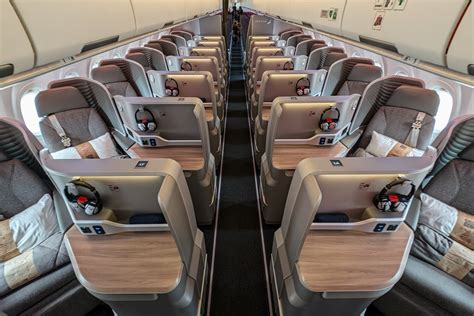
These innovations not only improve passenger satisfaction but also contribute to operational efficiency by streamlining boarding processes and optimizing cabin utilization.
Comprehensive Pilot Training for the Next Generation of Operations
Transitioning to a new aircraft type requires substantial investment in pilot training, and Qantas has been proactive in preparing its workforce. A CAE 7000XR Series A320 simulator has been installed at the Sydney Flight Training Center, forming the backbone of Qantas’ A321XLR training program.
Over the next three years, more than 240 Qantas pilots will undergo rigorous simulator-based instruction, with each pilot completing approximately 60 hours of advanced training. This ensures that crews are fully equipped to operate the technologically advanced A321XLR safely and efficiently from day one.
Such investments reflect Qantas’ commitment to maintaining the highest standards of safety, operational excellence, and regulatory compliance as it phases out older aircraft and integrates the new A321XLRs into its fleet.
Global Demand for the Airbus A321XLR Accelerates
The market for long-range narrowbody aircraft has seen significant growth, with the Airbus A321XLR at the forefront of this trend. Since its launch, the aircraft has attracted over 500 orders from carriers worldwide seeking to optimize route networks, reduce emissions, and improve profitability on medium-haul and transcontinental routes.
Airlines such as Aer Lingus, Iberia, and Wizz Air have already begun operating the A321XLR, leveraging its exceptional range and economics to open new city pairs that were previously uneconomical or technically unfeasible with older narrowbody models.
Qantas’ adoption of the A321XLR signals not only a vote of confidence in Airbus’ engineering but also an acknowledgment of shifting market dynamics favoring more efficient, flexible aircraft that can serve thinner long-haul routes without sacrificing passenger comfort or profitability.
The Broader Implications for Qantas and the Aviation Industry
The integration of the A321XLR into Qantas’ operations represents more than just fleet modernization; it reflects a strategic pivot toward more sustainable, efficient, and versatile air travel. By deploying aircraft capable of flying longer distances with lower fuel consumption, Qantas is positioning itself to meet evolving market demands and regulatory pressures related to carbon emissions.
The record-breaking delivery flight from Hamburg to Sydney, spanning more than 16,600 kilometers, is both a technical demonstration and a symbolic statement of Qantas’ aspirations to lead in aviation innovation.
As global travel continues to rebound post-pandemic, airlines are increasingly focused on fleet renewal strategies that balance economic performance with environmental stewardship. The A321XLR provides a compelling solution to these dual imperatives, making it a cornerstone of many carriers’ long-term planning.
Conclusion: A New Era Takes Flight for Qantas
The arrival of the Airbus A321XLR heralds a transformative chapter for Qantas Airways, enhancing its ability to serve distant destinations with greater efficiency, comfort, and operational flexibility. This aircraft not only strengthens Qantas’ competitive position in the Asia-Pacific region but also underscores the airline’s commitment to sustainability, innovation, and superior passenger experiences.
The successful completion of the longest-ever A321XLR flight from Hamburg to Sydney cements Qantas’ role as a pioneer in adopting cutting-edge aviation technology. As more A321XLRs join its fleet, Qantas is well-positioned to shape the future of medium-haul travel, offering passengers more options, greater convenience, and a lower environmental footprint.
The sky is no longer the limit — with the A321XLR, Qantas is poised to redefine what is possible in the world of single-aisle, long-range aviation.