United Airlines has made one of the most significant changes to its premium domestic strategy in years by officially introducing United Polaris branding on select domestic routes for the first time. The move transforms how the airline positions its top-tier product inside the United States, especially on heavily traveled transcontinental services and long-haul Hawaii flights where premium demand continues to surge.
For years, United operated a confusing split between its international Polaris experience and its domestic premium cabins. Travelers flying between Newark and Los Angeles or San Francisco often enjoyed lie-flat seats and elevated onboard service nearly identical to Polaris business class, yet the ticket still carried the “United First” label. Despite paying premium fares, passengers were excluded from one of the airline’s most coveted perks: access to the exclusive Polaris Lounge network.
That distinction is now disappearing.
United has quietly begun selling select domestic flights as United Polaris, fundamentally changing the customer experience for premium travelers on some of the airline’s most competitive routes. The rebranding is more than cosmetic. It grants eligible passengers access to Polaris Lounges previously reserved almost entirely for long-haul international business-class travelers.
The shift signals a broader transformation inside United Airlines as the carrier aggressively expands its premium ecosystem to compete more directly with Delta Air Lines and American Airlines in the lucrative high-end domestic market.
After years of treating Polaris as an international-only brand, United is now acknowledging that some domestic routes generate enough premium demand to justify a flagship-level experience.
United Polaris Expands Beyond International Flights
The newly designated domestic Polaris routes include United’s busiest premium transcontinental corridors and select Hawaii services operated with long-haul aircraft.
The first routes receiving the Polaris designation include:
- Newark Liberty International Airport (EWR) to Los Angeles International Airport (LAX)
- Newark Liberty International Airport (EWR) to San Francisco International Airport (SFO)
- Newark Liberty International Airport (EWR) to Honolulu International Airport (HNL)
- Chicago O’Hare International Airport (ORD) to Honolulu International Airport (HNL)
- Chicago O’Hare International Airport (ORD) to Kahului Airport (OGG)
These routes are among the airline’s most strategically important premium markets. Newark to San Francisco and Newark to Los Angeles alone support dozens of weekly flights and attract a constant stream of corporate travelers, financial executives, entertainment industry professionals, and high-value loyalty customers.
United’s transcontinental routes have long featured lie-flat seating and upgraded meal service, but passengers often questioned why the onboard product resembled Polaris while the ground experience fell short of true flagship treatment.
Now, travelers purchasing qualifying Polaris fares on these routes can access Polaris Lounges before departure, creating a far more seamless premium experience.
That lounge access is the real headline.
Polaris Lounge Access Becomes a Domestic Luxury
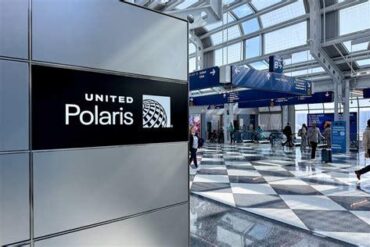
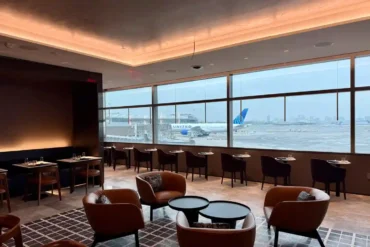
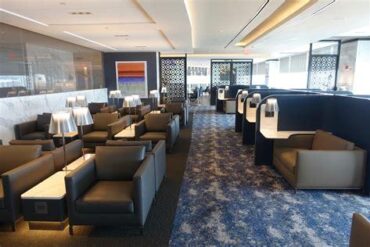
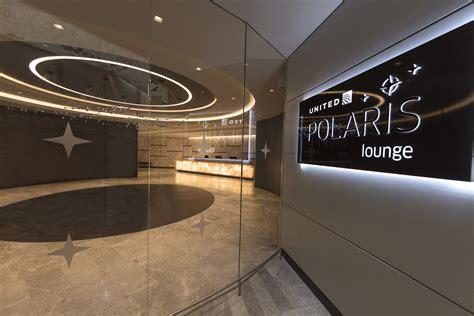
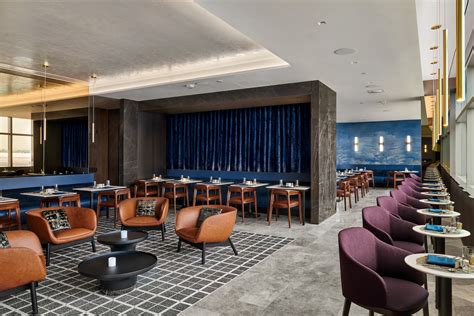
United Polaris Lounges are widely considered among the best premium airline lounges in North America. Unlike standard United Club locations, Polaris Lounges feature restaurant-style dining, luxury shower suites, quiet rest areas, curated cocktails, and significantly more upscale interiors.
Until now, domestic travelers were largely shut out.
A passenger flying Newark to Los Angeles in a lie-flat seat could spend thousands of dollars on a premium ticket and still be denied Polaris Lounge access unless connecting to an eligible international flight.
United’s new policy changes that dynamic entirely.
Passengers booked on eligible Standard or Flexible Polaris fares on approved domestic Polaris routes will now gain access to these lounges. However, not all tickets qualify. Travelers purchasing lower-tier Polaris Base fares may still receive only standard United Club access.
This distinction reflects United’s increasingly aggressive strategy to segment premium travelers by fare type and willingness to spend.
United’s Premium Revenue Strategy Is Becoming Clear
The domestic Polaris rollout is part of a much larger restructuring of United’s premium business model.
The airline is introducing layered fare categories across Polaris and Premium Plus cabins, allowing passengers to pay for varying levels of flexibility and benefits. The approach mirrors strategies already deployed across the broader airline industry, where carriers maximize revenue by carefully separating premium perks.
United has openly stated that it wants customers to choose which benefits they value most and pay accordingly.
In practice, this means:
- Higher-priced Polaris fares unlock lounge access and premium flexibility
- Lower Polaris fare tiers may include seat access only
- Premium cabin branding becomes more consistent across domestic and international markets
- High-spending travelers receive clearer differentiation from standard first-class passengers
The strategy also helps United better monetize limited Polaris Lounge capacity.
Interestingly, the airline recently tightened lounge access for some Star Alliance partner passengers, reducing eligibility in order to prevent overcrowding. That decision initially surprised many travelers, but the domestic Polaris announcement now reveals the broader logic behind the move.
United appears to be reallocating premium lounge space away from some alliance passengers and toward its own high-yield domestic customers.
From a business perspective, the move is highly calculated.
The Battle for Premium Transcontinental Travelers Intensifies
United’s decision comes as major US airlines continue escalating competition for premium coast-to-coast travelers.
American Airlines already offers Flagship Lounge access on select premium transcontinental flights, while Delta Air Lines has aggressively expanded its Delta One Lounge concept for high-revenue travelers.
United was increasingly at risk of appearing behind its rivals in the premium domestic market despite operating strong onboard products.
The Polaris expansion effectively closes that gap.
The airline can now offer a more complete flagship experience on routes where business travelers increasingly expect lie-flat seating, upscale lounges, and differentiated service levels.
That matters enormously on routes like Newark to Los Angeles and Newark to San Francisco, where premium passengers often choose airlines based on total experience rather than simply schedule convenience.
In many ways, United’s move represents an acknowledgment that domestic premium travel has fundamentally changed since the pandemic.
Corporate travel has become more concentrated around high-value routes, while affluent leisure travelers are spending more aggressively on comfort and exclusivity. Airlines are responding by investing heavily in premium-heavy aircraft, upgraded lounges, and differentiated cabins.
United’s domestic Polaris launch fits squarely into that industry trend.
The Airbus A321neo Coastliner Is Central to the Plan
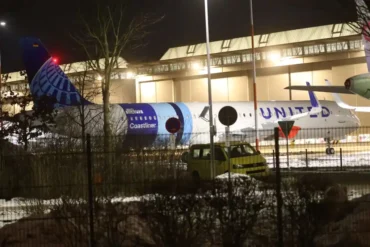
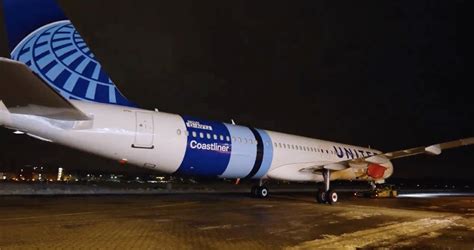
The airline’s newly unveiled Airbus A321neo “Coastliner” fleet provides perhaps the clearest indication of where United intends to take this strategy over the next decade.
The Coastliner aircraft are specifically designed for premium domestic routes and will eventually replace a mix of older Boeing 757s and widebody aircraft currently operating transcontinental services.
United plans to deploy 50 Coastliner A321neos configured with an unusually premium-heavy layout.
The aircraft will feature:
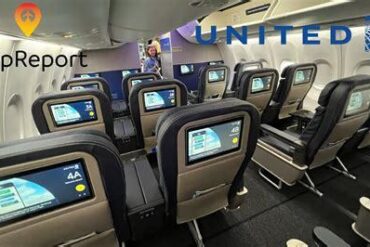
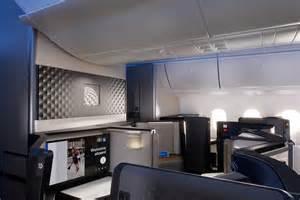
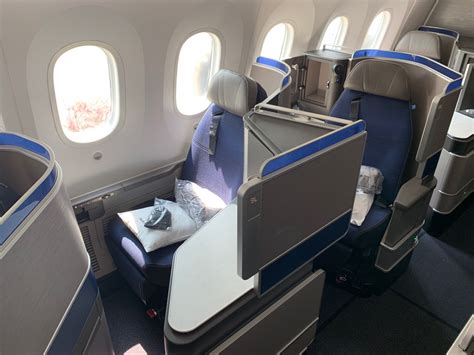
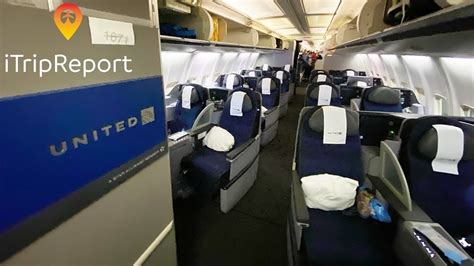
- 20 lie-flat Polaris seats in a private 1-1 configuration
- 12 Premium Plus seats
- 36 Economy Plus seats
- 93 standard economy seats
That seating mix reflects a dramatic shift toward premium revenue generation. Rather than maximizing total passenger count, United is prioritizing high-margin seating categories capable of generating substantially greater revenue per flight.
The Coastliner concept also creates consistency.
Historically, passengers on identical routes could experience vastly different products depending on which aircraft happened to operate the flight. The A321neo fleet allows United to standardize the premium experience with dedicated Polaris cabins, updated interiors, and a predictable onboard product.
Equally important, the narrowbody aircraft free up widebody jets for expanding international operations, where United continues to grow aggressively across Europe, Asia, and the Pacific.
Newark Emerges as the Heart of Domestic Polaris
No airport stands to benefit more from the domestic Polaris rollout than Newark Liberty International Airport.
Newark already hosts one of United’s flagship Polaris Lounges and serves as the carrier’s primary East Coast international gateway. By extending Polaris branding to domestic flights from Newark to Los Angeles and San Francisco, United effectively creates a near-seamless premium network connecting Wall Street, Silicon Valley, Hollywood, and major international destinations.
Passengers traveling between Newark and California can now access Polaris Lounges at both ends of their journey, dramatically improving the overall travel experience.
The Hawaii routes are equally notable.
Flights from Newark and Chicago to Honolulu regularly exceed nine or even eleven hours in duration, making them among the longest domestic flights in the United States. United clearly sees these services as worthy of true flagship treatment rather than standard domestic first class.
That distinction could become increasingly important as airlines continue targeting wealthy leisure travelers willing to spend heavily on long-haul comfort.
United’s Domestic Polaris Expansion May Only Be Beginning
The current rollout likely represents only the first phase of United’s broader domestic premium ambitions.
Washington Dulles International Airport already hosts a Polaris Lounge, making future transcontinental Polaris routes from Washington a logical next step. Houston could also see expansion if United grows long-haul Hawaii operations from its Texas hub.
As more Coastliner aircraft enter service, additional premium routes may eventually receive Polaris branding and lounge access eligibility.
The larger strategy is becoming unmistakable.
United is no longer treating Polaris as simply an international business-class product. Instead, the airline is transforming Polaris into a complete premium travel ecosystem built around aircraft design, fare segmentation, airport lounges, loyalty retention, and route planning.
For premium travelers, that means domestic flying on United may soon feel far closer to an international business-class experience than traditional US first class.
And for competitors, it signals that the battle for high-value domestic passengers is entering an even more aggressive phase.