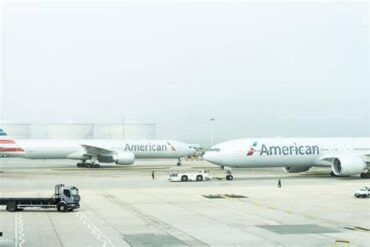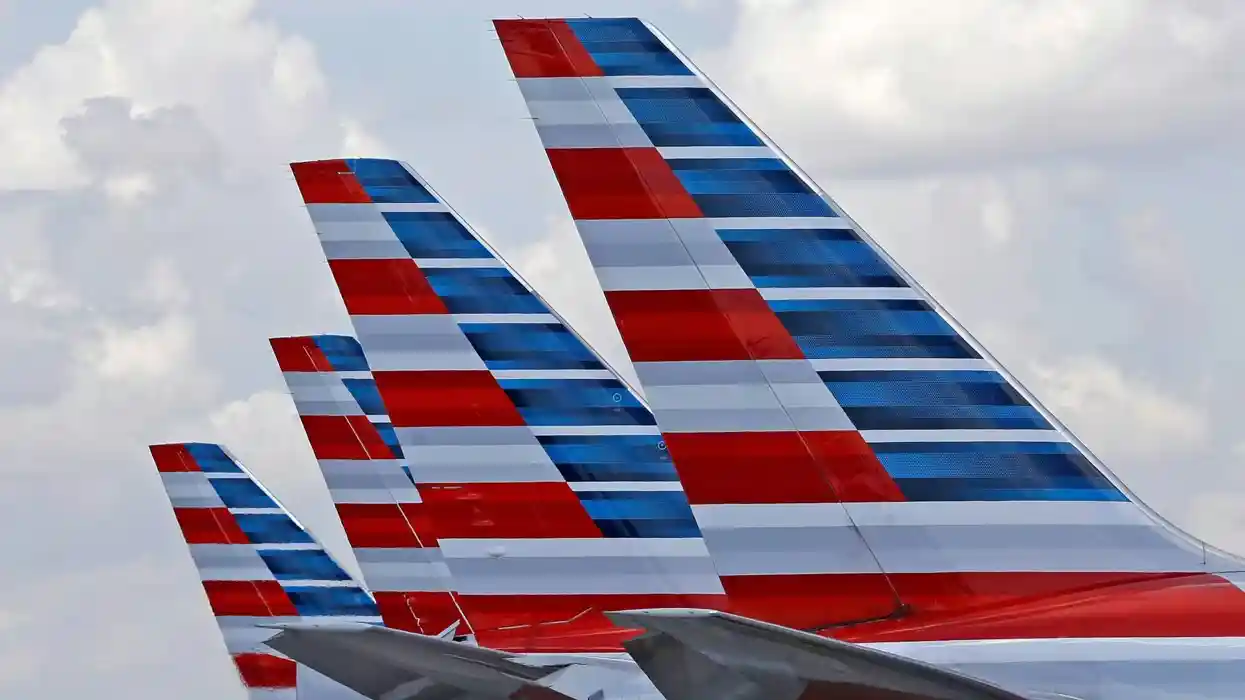
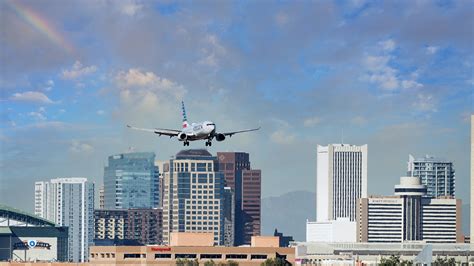
Two American Airlines Boeing 737s operating the same flight number found themselves airborne at the same time near Phoenix, creating an unusual air traffic control conflict that required immediate intervention. The incident involved AA2482, a flight number American Airlines uses for service between Phoenix Sky Harbor International Airport (PHX) and Chicago O’Hare International Airport (ORD). Because the inbound aircraft was delayed while the outbound flight departed on schedule, both Boeing 737-800s were simultaneously operating under the same callsign.
The unusual situation developed on a Thursday evening when the Chicago-to-Phoenix sector arrived substantially behind schedule. The flight landed at 12:13 a.m., more than an hour after its scheduled 10:43 p.m. arrival. Meanwhile, the Phoenix-to-Chicago AA2482 departed at 11:58 p.m., only 13 minutes after its scheduled departure time. That meant the returning flight was already climbing away from Phoenix while the delayed aircraft was still approaching the same airport.
Two American Airlines AA2482 Flights Shared the Same Callsign
The central problem was not simply that two aircraft carried the same commercial flight number. Airlines routinely reuse flight numbers in opposite directions, and identical numbers can also appear at different times or in different areas of the air traffic system. The unusual element was that both AA2482 flights were airborne simultaneously in the same area and communicating with the same air traffic controller.
According to the reported air traffic control recording, the controller recognized the duplication and informed the crews that another American Airlines aircraft was operating with the same callsign. A veteran controller with roughly 25 years of experience reportedly indicated that he had never encountered two aircraft under the same callsign operating together in the same airspace.
The controller then adopted a simple but important method to distinguish the aircraft, referring to one as American 2482 arrival and the other as American 2482 departure. This gave both crews an unambiguous reference while allowing the controller to maintain positive identification of each aircraft. The pilots were also made aware of the unusual situation, ensuring that everyone involved understood which Boeing 737 was being discussed.
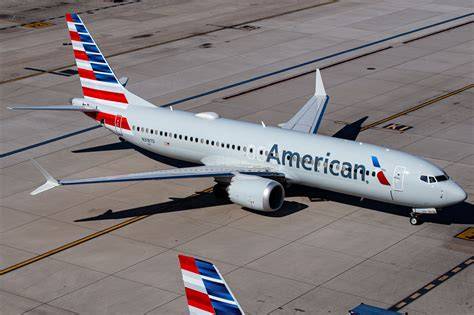
Why the Two Boeing 737s Flew Toward Each Other
The sequence demonstrates how an apparently ordinary airline schedule can create an unusual operational problem when delays disrupt the planned separation between flights. AA2482 was being used for both directions of the Phoenix-Chicago route, but the Chicago-bound aircraft was scheduled to depart before the Phoenix-bound aircraft’s delayed arrival.
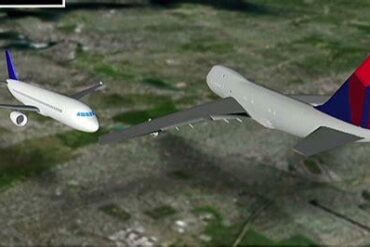
Once the inbound flight was significantly delayed, the normal temporal separation disappeared. The second Boeing 737 therefore departed Phoenix while the first aircraft was still approaching the airport. Their flight paths initially brought them toward one another, creating a situation that demanded particularly careful communication from air traffic control.
Importantly, the available information does not indicate that the aircraft actually came dangerously close to a collision. Instead, the controller identified the callsign duplication, notified both crews and ensured the aircraft remained separated. Both flights subsequently continued safely to their destinations.
N925AN and N946NN Were the Boeing 737-800s Involved
Flight-tracking information identifies the aircraft as N925AN and N946NN, both Boeing 737-800s operated by American Airlines. N925AN was operating the Phoenix-to-Chicago service, while N946NN was flying from Chicago to Phoenix.
N925AN carries serial number 29526 and was delivered to American Airlines on December 17, 1999, making it approximately 26.7 years old at the time of the incident. N946NN, by contrast, carries serial number 33234 and was delivered on February 4, 2014, giving it an age of roughly 12.6 years.
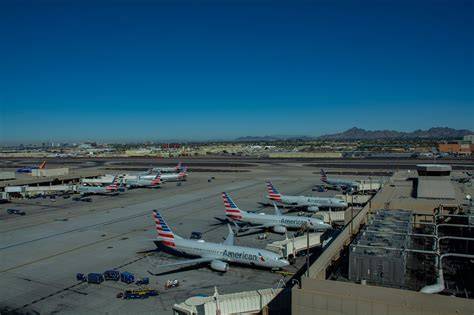
Air Traffic Control Communication Prevented a Serious Incident
The episode highlights the importance of clear callsigns, controller awareness and crew coordination in modern commercial aviation. While duplicated flight numbers are not inherently dangerous, having two aircraft with the same callsign on the same frequency can significantly increase the risk of misunderstanding if their identities are not clearly differentiated.
In this case, the controller responded quickly and professionally. By explicitly separating the two AA2482 flights as an arrival and departure, the controller gave the crews the information needed to maintain situational awareness. Both Boeing 737s ultimately kept clear of each other, and there were no reported injuries or aircraft damage.
The incident also illustrates how delays can produce unexpected operational scenarios. A flight number that normally presents no difficulty can become problematic when an inbound aircraft remains airborne beyond the scheduled departure time of its outbound counterpart. Near a busy airport such as Phoenix, where multiple aircraft converge and controllers manage complex traffic flows, precise communication becomes especially important.
Ultimately, the AA2482 incident was resolved without consequences because air traffic control recognized the duplicate callsign and acted decisively. Rather than representing a failure of the system, the event demonstrates why multiple layers of communication and professional judgment remain essential even when airline schedules appear routine.