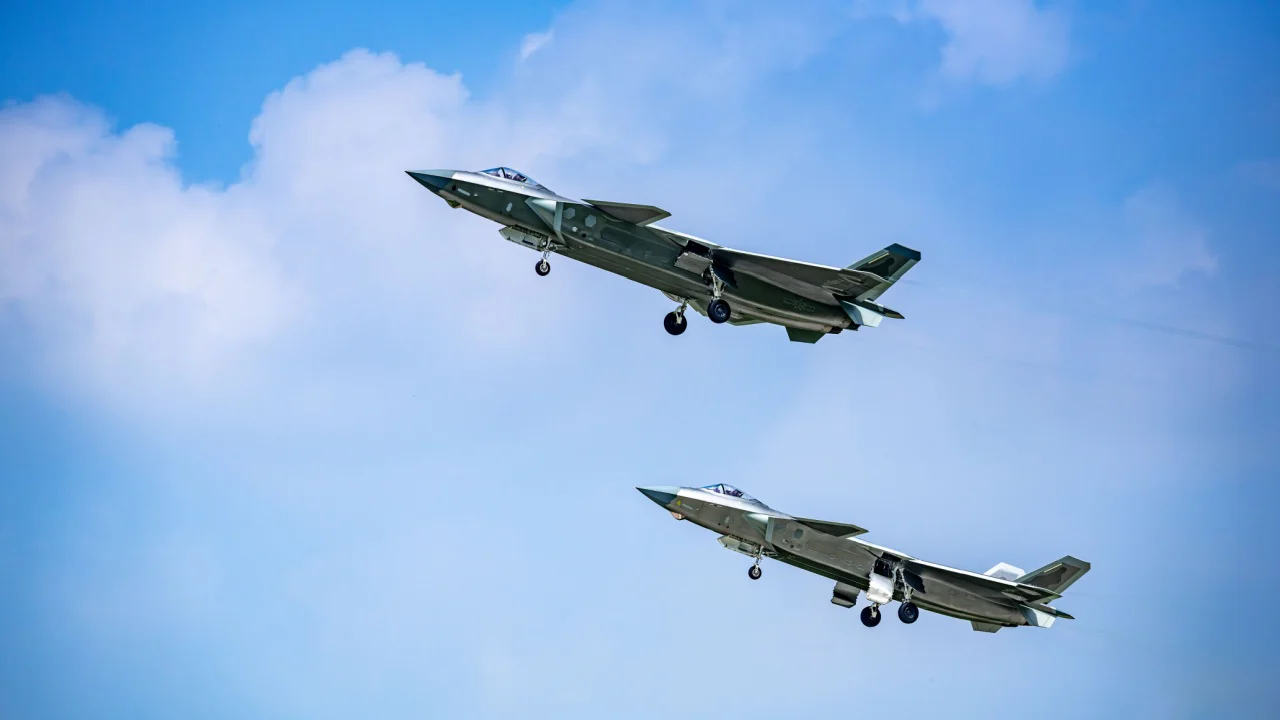
The People’s Liberation Army Air Force (PLAAF) has reignited concerns over regional air defense security following bold claims that its Chengdu J-20 Mighty Dragon stealth fighter executed a covert mission through the Tsushima Strait without detection. Chinese state broadcaster CCTV reported that the aircraft’s stealth profile allowed it to transit one of the most heavily monitored air corridors in East Asia—allegedly avoiding all Japanese, South Korean, and U.S. radar coverage.
Despite the gravity of the report, no independent verification has surfaced from any neighboring military forces. Japan’s Self-Defense Forces (JSDF), South Korea’s Ministry of Defense, and the U.S. Indo-Pacific Command have all remained silent. This silence has fueled both speculation and skepticism, leaving analysts split between whether China is dramatically overstating its technological capabilities or has indeed pulled off a strategic milestone in stealth aviation.
China’s Latest Stealth Boast: What Was Allegedly Achieved?
According to CCTV’s segment aired last week, the J-20 mission involved flights conducted over the Tsushima Strait, a vital maritime channel that connects the Sea of Japan, Yellow Sea, and East China Sea. The report did not include the exact date or time of the operation but suggested that no regional military detected the aircraft as it passed through this strategically sensitive area. The South China Morning Post (SCMP) later elaborated that the aircraft belonged to the First Fighter Brigade, referred to as an “elite” PLAAF unit that routinely conducts patrols around Taiwan and operates in high-risk air corridors.
This alleged stealth performance, if true, could signify a turning point in China’s fifth-generation air combat readiness. The J-20 has already been marketed as a rival to the Lockheed Martin F-22 Raptor and F-35 Lightning II, both of which are globally regarded as benchmarks for stealth and sensor fusion capabilities.
Strategic Geography: Why the Tsushima Strait Matters
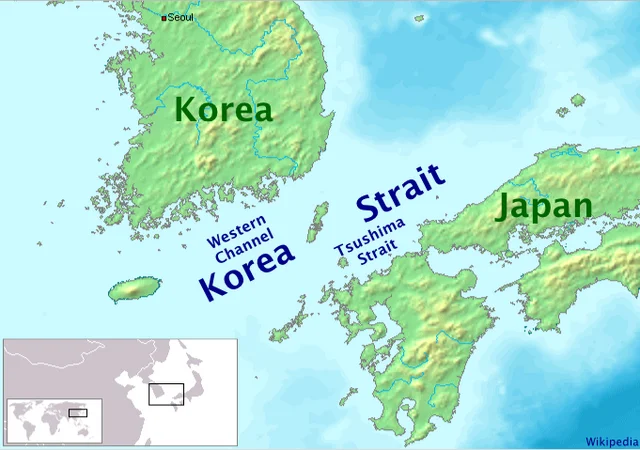
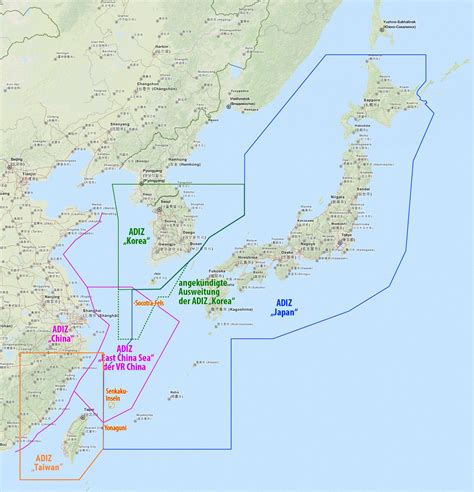
The Tsushima Strait is a geographically narrow but militarily sensitive waterway that lies between South Korea’s Busan Peninsula and Japan’s Kyushu Island. It forms a key part of the Korea Strait, which is not only a dense commercial shipping lane but also a well-patrolled aerospace corridor. The region hosts an array of integrated air and sea surveillance systems operated by the U.S., Japan, and South Korea, including the U.S. THAAD anti-missile network, AEGIS-equipped destroyers, and multi-band over-the-horizon radar facilities.
That a PLAAF aircraft might fly undetected across this sensor-saturated zone is difficult for many analysts to accept. As one retired U.S. Air Force colonel put it anonymously in defense forums, “If the J-20 truly crossed the Tsushima Strait without detection, we need to rethink every assumption about Chinese stealth tech.”
Plausible or Propaganda? The Verdict Is Still Out
Experts continue to debate whether the J-20 actually achieved this stealth feat or if the narrative is yet another carefully crafted information operation. China’s state media has repeatedly presented the J-20 as not only a symbol of national pride but also as a deterrent tool against foreign surveillance and air superiority.
This isn’t the first time PLAAF pilots or officials have claimed stealth dominance. In January 2023, PLAAF Captain Yang Juncheng stated during a televised interview that he had piloted the J-20 over Taiwan, the Bashi Channel, the East China Sea, and the Tsushima Strait without detection. At that time, Taipei’s military also issued no rebuttals or confirmations, which further muddled the narrative.
Yet, the logic of stealth itself adds to the ambiguity. After all, the entire point of stealth is to be invisible. Proving that something was undetected—especially without radar logs or satellite telemetry—is inherently elusive.
Is the J-20 Truly a Fifth-Generation Stealth Fighter?
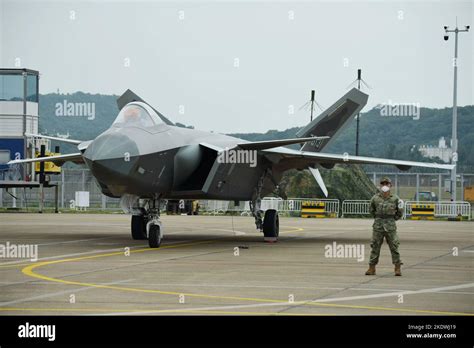
In terms of design, the Chengdu J-20 was engineered with low observable characteristics, including a faceted fuselage, serrated engine nozzles, and radar-absorbent materials. Analysts often describe it as being somewhere between the F-22 Raptor and Russia’s Su-57 Felon, although questions remain about its engine technology, avionics, and sensor fusion integration.
Western observers have long suspected that the J-20’s airframe design borrowed heavily from stolen F-22 and F-35 blueprints, following well-documented cyber-espionage operations that targeted Lockheed Martin and its contractors during the early 2000s. Still, reverse-engineering hardware does not always equate to matching performance. The J-20’s operational effectiveness is constrained by unresolved issues, particularly regarding engine reliability, supercruise capabilities, and network-centric warfare integration.
Why the Lack of Regional Response Raises Eyebrows
Even if China’s claim were factually true, the total absence of response from the JSDF, USAF, or ROKAF is highly conspicuous. The airspace around the Tsushima Strait is routinely monitored by AWACS (Airborne Warning and Control Systems), surface-based radars, and even space-based surveillance platforms.
It’s possible that regional forces detected an aircraft but chose not to publicize it in order to avoid escalating tensions. Alternatively, the aircraft may have used electronic warfare (EW) or radar deception techniques to spoof tracking systems—a bold but not implausible theory given China’s advances in military-grade ECM systems.
In contrast, Beijing’s eagerness to publicize the stealth flight suggests an intent to intimidate adversaries and project air dominance in disputed territories, especially near Taiwan, the East China Sea, and the South China Sea.
Implications for Regional Stability and Deterrence
If the J-20 did indeed complete its flight undetected, it represents a paradigm shift in airpower dynamics in the Indo-Pacific region. Until now, air superiority was assumed to lie with U.S. and Japanese air assets, particularly the F-35 squadrons deployed in Japan and South Korea.
A stealth breakthrough by China could tilt the balance, emboldening the PLAAF to conduct further deep-penetration missions, including over Taiwan or into the Philippine Sea. This would increase pressure on regional states to upgrade their air defense networks and invest in counter-stealth technologies, including passive radar, multi-static radar arrays, and quantum radar systems currently under development.
The Bigger Picture: Stealth in the Age of Hybrid Warfare
China’s narrative about the J-20’s invisible mission does more than tout its aviation prowess—it signals a broader shift in strategic messaging. Beijing is engaging in a form of psychological warfare, using unverified success stories to seed doubt in the minds of adversaries. The idea that a Chinese aircraft could fly undetected so close to Japan is as much about deterrence as it is about performance.
In that sense, the J-20’s alleged flight is not merely a technical milestone, but a political and psychological maneuver in China’s ongoing efforts to challenge U.S. military primacy in Asia.
Conclusion: Truth, Threat, or Theater?
Whether the J-20 actually pulled off an undetected flight near Japan or whether the event was an orchestrated strategic illusion, the outcome is the same: China has drawn global attention. The silence from neighboring powers may reflect strategic caution, intelligence opacity, or even technological embarrassment. But for China, every moment the West remains uncertain is a victory in the ongoing contest of influence, perception, and power projection.
The real question now is not whether the J-20 flew undetected—but whether the world is ready for what comes next if it truly did.