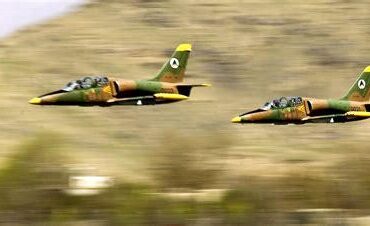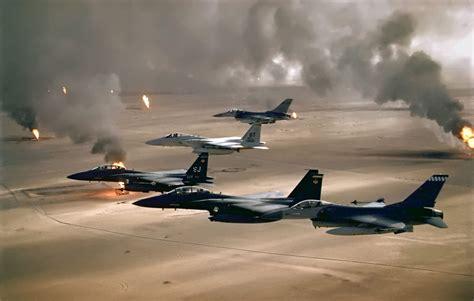
The First Gulf War, launched on January 17, 1991, was more than just a ground campaign to liberate Kuwait from Saddam Hussein’s grip. It was also a critical chapter in the history of modern aerial warfare. Iraq’s air force, once the sixth-largest in the world, boasted more than 700 aircraft, a mix of Soviet and French warplanes that had been amassed over decades. Many of these jets were stored in hardened aircraft shelters and underground bunkers, presenting a significant concern for coalition forces preparing Operation Desert Storm.
Despite this impressive numerical strength, the Iraqi Air Force’s actual combat performance was hindered by outdated equipment, poor communication systems, and strategic missteps. Only a small portion of their fighters were modern enough to engage effectively against advanced coalition aircraft. Still, the presence of these five warplanes shaped the coalition’s strategy and remains a critical study in Cold War-era military aviation.
MiG-29 Fulcrum: Iraq’s Modern Dogfighter
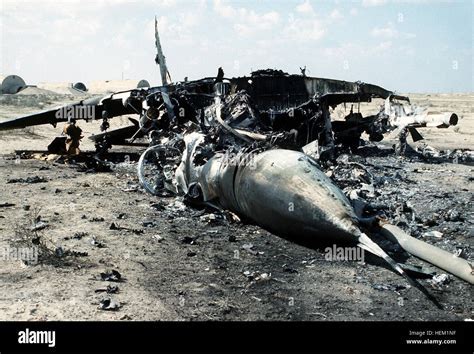
Arguably the crown jewel of the Iraqi Air Force during the First Gulf War, the MiG-29 Fulcrum represented the most advanced Soviet technology in Saddam’s arsenal. Iraq had acquired roughly 30 MiG-29s by 1991, making the Fulcrum a relatively rare but powerful presence.
The MiG-29, capable of reaching Mach 2.25, was specifically built to challenge Western fourth-generation fighters like the F-15 Eagle and F-16 Fighting Falcon. Its exceptional agility, high thrust-to-weight ratio, and off-boresight missile capabilities made it a lethal dogfighter. The Archer (R-73) missile, when paired with helmet-mounted sights, allowed pilots to target enemies without directly facing them—a shocking capability to NATO pilots at the time.
Despite its agility and radar sophistication, the Fulcrum had key limitations. Its short range, lack of data-linking, and limited situational awareness tools hampered its effectiveness in complex, multi-aircraft engagements. Iraq’s inability to integrate the MiG-29 fully into a coordinated air strategy blunted the aircraft’s potential.
MiG-25 Foxbat: The Supersonic Interceptor
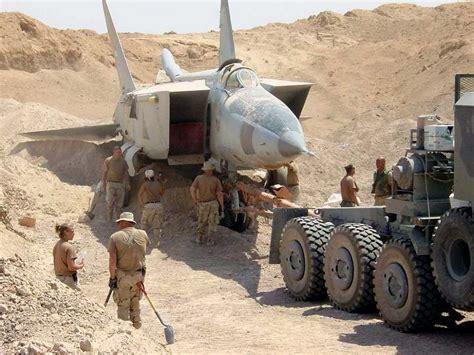
Fast, imposing, and shrouded in Cold War mystique, the MiG-25 Foxbat was a high-speed interceptor initially designed to counter U.S. reconnaissance planes like the U-2 and SR-71 Blackbird. With speeds nearing Mach 2.83, it was the second-fastest combat aircraft ever built. Iraq fielded 32 MiG-25s, with 25 configured for air-to-air combat.
The Foxbat’s titanium-reinforced airframe, long-range radar, and heavy missile payload made it ideal for fast intercept missions. However, its fuel consumption was enormous, severely restricting range and time on target. Its maneuverability at lower speeds was poor, and its dogfighting ability was notably inferior to agile U.S. fighters.
Still, the aircraft had psychological and tactical value. Foxbat pilots were the elite of Iraq’s air force, and the plane’s blistering speed allowed it to conduct reconnaissance deep into enemy airspace. But in practice, the MiG-25 rarely got a chance to engage coalition aircraft before being neutralized or outmaneuvered.
Su-24 Fencer: Iraq’s Precision Strike Bomber
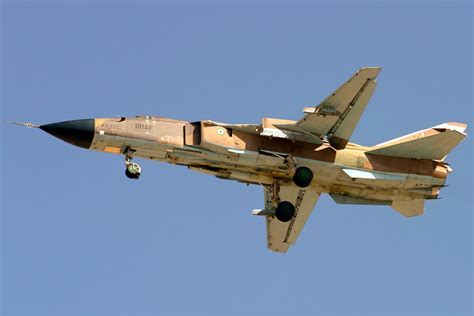
The Su-24 Fencer, designed to mirror the American F-111 Aardvark, was Iraq’s principal precision ground-attack aircraft. Iraq reportedly possessed 16 to 24 Su-24s, many of which were flown to Iran during the war in an attempt to preserve them. This desperate move underscored how critical Iraq considered these aircraft.
Built for low-level, all-weather ground attack, the Su-24 featured variable-sweep wings, a side-by-side two-man cockpit, and modern avionics. The Fencer was capable of deploying precision-guided munitions and conducting electronic warfare missions. Some variants, like the Su-24M, incorporated terrain-following radar and advanced navigation aids, enabling accurate strikes on fortified targets.
Despite its impressive capabilities, the Su-24’s effectiveness in Iraqi service was likely limited by logistical issues, pilot training gaps, and a lack of integration into a unified strike doctrine. Nonetheless, its presence forced coalition planners to factor in the risk of surprise deep-penetration bombing runs.
MiG-23 Flogger: Versatile but Vulnerable
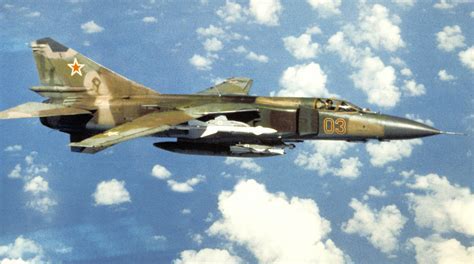
The MiG-23 Flogger was one of the most common aircraft in the Iraqi fleet during the First Gulf War, with estimates suggesting up to 120 units in various configurations. Introduced in 1969, the MiG-23 was the first Soviet aircraft to incorporate swing-wing geometry, enhancing its performance at various speeds and altitudes.
Powered by a single R-29 engine delivering 27,500 pounds of thrust, the MiG-23 could reach Mach 2.4. Its arsenal included a twin-barrel 23mm cannon, infrared-guided missiles, and medium-range radar-guided Apex missiles. Despite its formidable specifications, the MiG-23 struggled in actual combat, suffering significant losses during the Iran-Iraq War.
In the Gulf War, the MiG-23’s reputation remained mixed. While it had potential as a multirole fighter, coalition air dominance and Iraq’s lack of a cohesive aerial strategy led to many Floggers being destroyed on the ground or overwhelmed in the air.
Mirage F1: France’s Gift to Saddam’s Skies
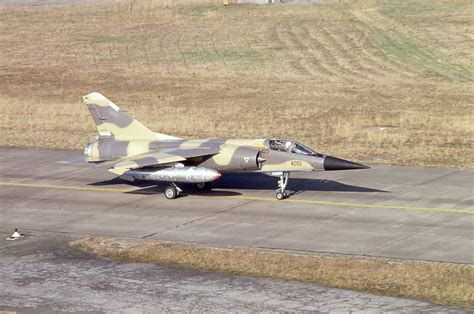
The Mirage F1, a French-built interceptor and multirole fighter, represented Iraq’s most significant Western-supplied aircraft. Iraq operated between 60 and 95 Mirage F1s, and the aircraft was one of the few non-Soviet platforms in Saddam’s air force. Its unique design combined swept-back wings with enhanced low-speed lift characteristics, allowing it to operate from shorter runways than its delta-winged predecessor, the Mirage III.
The F1 was no slouch in the skies. It could reach speeds just shy of Mach 2, soar to altitudes of 60,700 feet, and carry an arsenal that included twin 30mm cannons, air-to-air missiles, laser-guided bombs, and anti-ship munitions. Its versatility made it a workhorse during Iraqi aerial operations, especially during the Iran-Iraq conflict.
In Desert Storm, the Mirage F1 was overshadowed by the overwhelming technological superiority of coalition aircraft, but it did play a role in combat sorties and strategic bombing missions early in the war. Like the MiG-23, many were flown to Iran in a last-ditch effort to save them from destruction, never to return.
Final Reckoning: A Mighty Fleet Brought Low
Despite the raw numbers and seemingly impressive capabilities, the Iraqi Air Force failed to mount any sustained resistance during the First Gulf War. Coalition air forces executed a devastating campaign of airfield suppression, destroying hundreds of aircraft on the ground in the early hours of the conflict. Only 22 Iraqi aircraft were shot down in dogfights, a testament not to their skill but to their avoidance of air-to-air combat.
Crippled by a lack of modern command-and-control infrastructure, poor pilot training, and strategic indecisiveness, Iraq’s once-feared air arm was rendered virtually inert. Saddam’s last gambit—to send dozens of aircraft to Iran, a former enemy—only compounded the losses, as those aircraft were never returned.
Nevertheless, these five aircraft—MiG-29, MiG-25, Su-24, MiG-23, and Mirage F1—represent a fascinating snapshot of Cold War aviation and the fragile balance of military power in the Middle East. Each was a product of a different military doctrine, yet together they formed a complex and underutilized force that was ultimately overwhelmed by the technological dominance and superior strategy of the U.S.-led coalition.