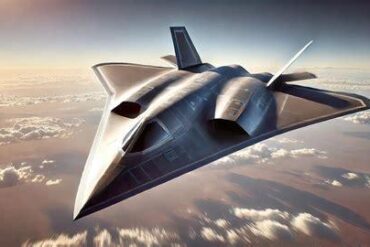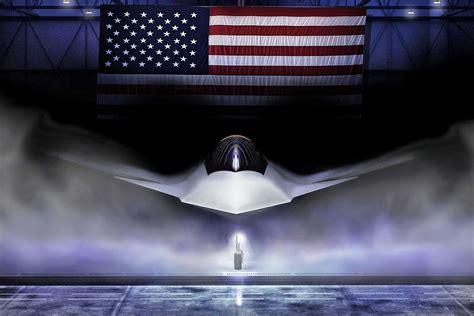
The United States has taken a decisive step to secure future air superiority by allocating $3.5 billion toward the development of the F-47 fighter jet, a cutting-edge sixth-generation platform designed to counter China’s rapidly advancing aerial capabilities.
Announced by the U.S. Department of Defense at the close of June 2025, this investment signals an unambiguous commitment to maintaining global air dominance, particularly amid mounting concerns over China’s J-36 and J-50 stealth fighter programs.
F-47: The Cornerstone of U.S. Air Dominance Strategy
Defense Secretary Pete Hegseth, testifying before the House Appropriations Defense Subcommittee on June 10, confirmed that the F-47 represents the “cornerstone” of the U.S. military’s future global force projection. With $2.6 billion earmarked as discretionary funding and an additional $900 million pending congressional reconciliation, the F-47 project sits at the center of the Next Generation Air Dominance (NGAD) program.
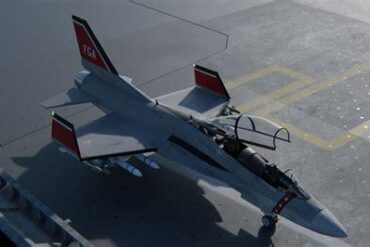
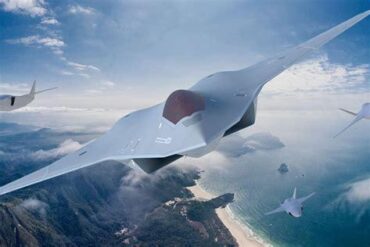
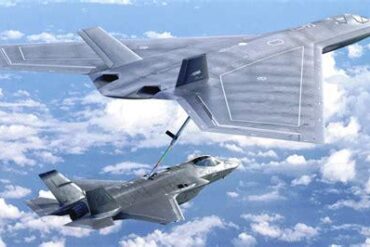
The F-47, spearheaded by Boeing, promises to usher in a new era of multi-role combat operations. Its design integrates stealth technologies, adaptive cycle propulsion, and advanced avionics systems while serving as the nerve center for a fleet of unmanned Collaborative Combat Aircraft (CCA). These autonomous assets will deploy sensor arrays, electronic warfare packages, and precision-guided munitions deep within contested environments, amplifying the lethality and survivability of the F-47.
China’s Growing Threat: J-36 and J-50 Sixth-Generation Fighters
The impetus behind the F-47’s accelerated development is China’s alarming progress in sixth-generation fighter programs. Intelligence sources confirm that prototypes of the Chengdu J-36 and Shenyang J-50 have been undergoing rigorous ground and flight testing since late 2024.
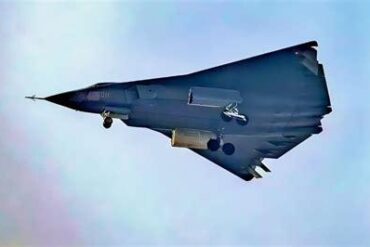
The J-36, with its trijet configuration and tailless diamond-double-delta wings, reflects China’s focus on stealth, long-range power projection, and integration with unmanned aerial systems. Its rumored inclusion of laser-based defensive capabilities and advanced electronic warfare systems underscores Beijing’s intent to neutralize traditional Western air superiority.
Meanwhile, the J-50 represents China’s drive to extend its dominance into the maritime domain. This tailless lambda-wing aircraft, featuring thrust-vectoring twin engines and a compact, carrier-compatible airframe, is poised to dramatically increase the People’s Liberation Army Navy’s (PLAN) strike reach across the Indo-Pacific.

These advancements have triggered a strategic recalibration within the Pentagon. The F-47, explicitly designed for operation in anti-access/area-denial (A2/AD) environments, will serve as the U.S.’s premier counter to China’s ambitions.
Next-Generation Capabilities: AI, Stealth, and Deep Penetration
What sets the F-47 apart from legacy fighters is its integration of AI-augmented pilot support, enabling split-second decision-making in sensor-rich, contested airspace. The aircraft’s digital-native systems allow it to seamlessly command unmanned CCAs, deploy distributed sensor networks, and execute electronic warfare missions without compromising stealth.
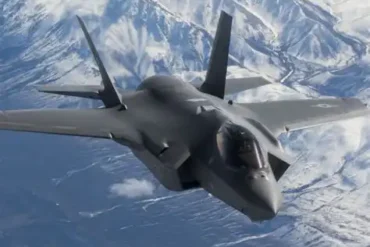
Its fusion engine technology, incorporating adaptive cycle propulsion, delivers extended range, superior thermal management, and high-speed performance that exceeds fifth-generation platforms like the F-22 and F-35. These advancements ensure the F-47 can penetrate deep into hostile territory while maintaining a low observable profile.
The aircraft’s design philosophy also emphasizes secure, resilient battlefield networks. The F-47 acts as a central node, gathering, processing, and distributing real-time intelligence and targeting data across a cloud-based command infrastructure. This network-centric approach directly challenges China’s attempts to build integrated aerial combat systems, ensuring the U.S. and its allies maintain decision-making superiority.
Coalition Warfare and Interoperability Advantage
Unlike China’s still-unproven ability to integrate diverse platforms across their air force and naval operations, the F-47 is being developed with full NATO and allied system compatibility from inception. This gives the United States and its partners a decisive edge in coalition warfare scenarios, where interoperability and rapid information sharing are mission-critical.
Maintaining freedom of action across the South China Sea, Taiwan Strait, and other contested regions depends on U.S. air superiority. Should China deploy operational sixth-generation fighters without an American counterbalance, critical forward-operating zones could be lost, reshaping the strategic landscape of the Indo-Pacific.
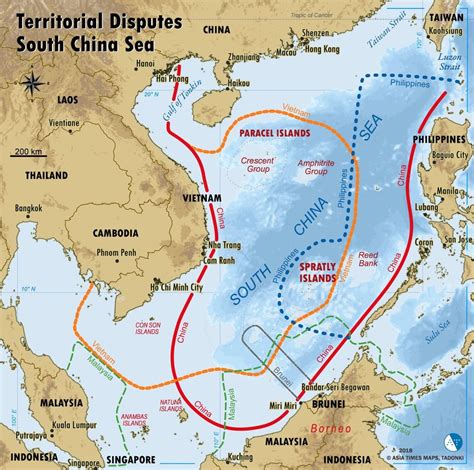
The F-47 ensures the U.S. retains control of the skies, denying adversaries the ability to dominate vital airspace or disrupt global maritime trade routes.
Industrial Synergy: Lessons from F-35 and B-21 Programs
The F-47 development process leverages insights and technology from previous high-profile programs such as the F-35 Lightning II and B-21 Raider. Industry leaders, drawing from lessons in modular design, digital twinning, and open architecture frameworks, are accelerating development timelines while controlling lifecycle costs.
This approach ensures that the F-47 remains adaptable to emerging threats and technological advancements. Digital engineering techniques, already proven in the B-21’s rapid prototyping phases, are now central to refining the F-47’s design and operational concepts.
The F-47’s production is set to ramp up over the next decade, with full-rate manufacturing expected to coincide with the anticipated deployment of China’s J-36 and J-50 fleets. By staying ahead of peer competitors, the U.S. Air Force maintains its edge in both technological sophistication and combat readiness.
$3.5 Billion Investment: Strategic Signal and Operational Imperative
The Pentagon’s $3.5 billion allocation for the F-47 is more than a budgetary line item—it is a strategic signal of resolve. As Defense Secretary Hegseth emphasized, air superiority is not optional; it is the foundation upon which joint, multi-domain operations are built.
China’s accelerating airpower trajectory, coupled with its assertive regional posture, leaves little room for complacency. The F-47 is not merely designed to match Chinese advancements but to decisively outpace them, preserving the U.S. military’s ability to operate freely across the globe.
The development of the F-47 reflects an acknowledgment that future conflicts will hinge on controlling complex, contested airspace. Whether deterring aggression in the Taiwan Strait or safeguarding freedom of navigation in the South China Sea, the F-47 embodies America’s enduring commitment to air dominance.
Conclusion: Defining the Future of Aerial Combat
The F-47 is more than an aircraft—it represents a transformational leap in U.S. military capability. By integrating next-generation stealth, AI-driven decision support, and networked warfare principles, the F-47 ensures the U.S. retains its technological and operational superiority.
As China fields increasingly capable sixth-generation platforms, the F-47 serves as both a deterrent and a guarantor of U.S. interests. The $3.5 billion investment underscores the Pentagon’s recognition that air superiority is the linchpin of future warfare. With the F-47 at the forefront, the United States aims not just to contest Chinese air dominance, but to render it unattainable.
The coming decade will define the global balance of power in the skies. The F-47 ensures that, even as new threats emerge, the United States will maintain the ultimate high ground.