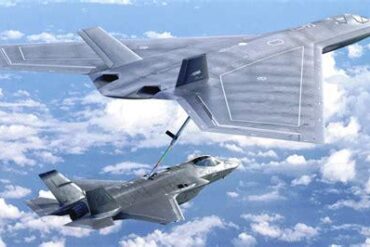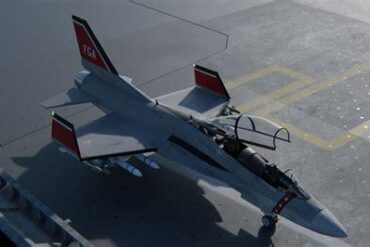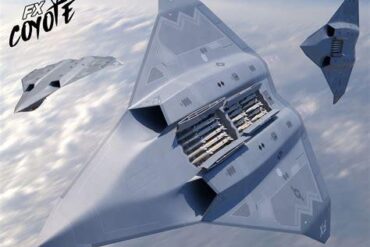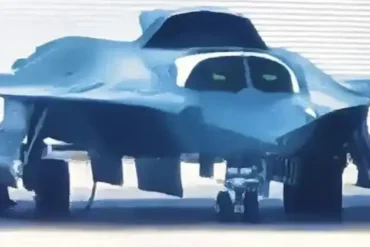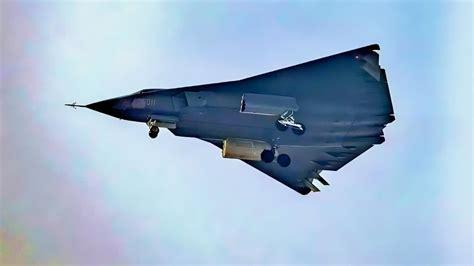
As the world teeters on the cusp of a new era in military aviation, the development of sixth-generation fighter jets emerges not merely as an arms race, but as a strategic battle of global influence. With the United States, China, Russia, the UK, and a handful of European nations engaged in fiercely guarded programs, the future of air superiority is being rewritten — technologically, geopolitically, and doctrinally. From America’s conceptual F-47, often discussed in tandem with the NGAD (Next Generation Air Dominance) program, to China’s elusive J-36, the evolution of advanced fighter technology is no longer theoretical. It is happening now.
The End of Fifth-Gen Dominance: Making Way for the Sixth
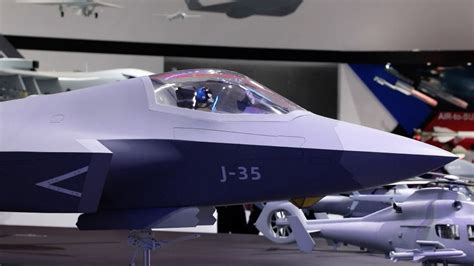
Fifth-generation fighters like the F-22 Raptor, F-35 Lightning II, and Chengdu J-20 have reigned supreme for the last two decades. Their capabilities — stealth, network-centric warfare, advanced avionics, and supermaneuverability — redefined modern air combat. However, these platforms are reaching their peak potential, and adversaries are catching up. As global power centers pivot towards multi-domain operations and AI-integrated warfare, fifth-gen platforms are becoming legacy systems.
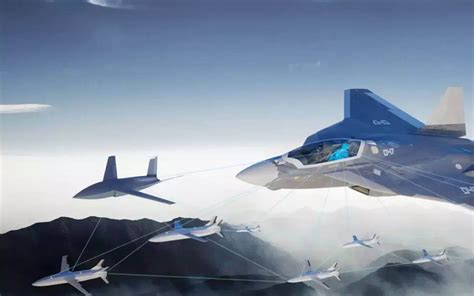
Sixth-generation fighters promise to redefine combat dominance. At their core, these platforms will likely incorporate adaptive cycle engines, directed energy weapons, AI-assisted piloting, swarming drone capabilities, and full-spectrum stealth across radar, IR, and electronic signatures.
The United States: NGAD and the F-47 Vision
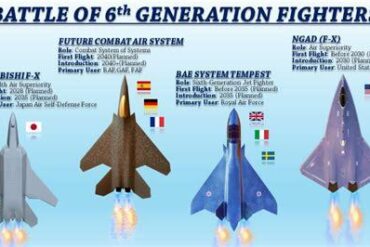
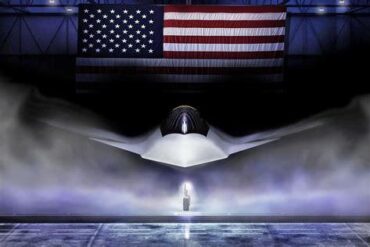
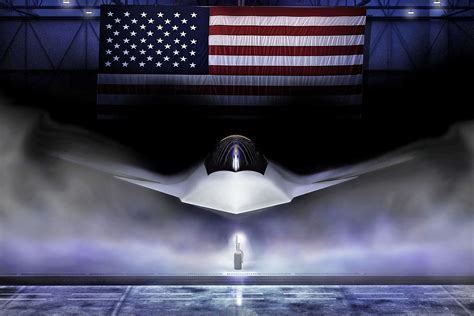
The U.S. Air Force’s Next Generation Air Dominance (NGAD) program remains the most mature and best-funded sixth-gen initiative globally. Though details are classified, leaked statements and budgetary allocations reveal an ecosystem, not a single platform. Within this ecosystem is the speculative F-47, a placeholder name used in defense circles to represent the manned centerpiece of the NGAD effort.
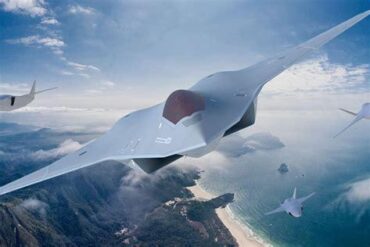
The NGAD’s defining attribute is its modular lethality: the idea that multiple systems — manned jets, unmanned drones (CCAs: Collaborative Combat Aircraft), and AI-driven platforms — will work as one intelligent force. The NGAD manned fighter will lead, but not alone. It will deploy drones capable of autonomous ISR (Intelligence, Surveillance, Reconnaissance), electronic warfare, and kinetic strikes.
What differentiates the American approach is its high reliance on digital engineering. The concept of the “Digital Century Series” allows for rapid prototyping and shorter development cycles, ensuring the U.S. maintains tactical supremacy while minimizing cost and obsolescence.
China’s Shadow Development: Enter the J-36
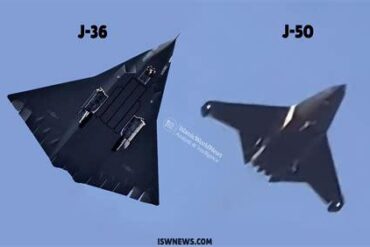
China has remained secretive about its sixth-gen ambitions, but satellite imagery, defense white papers, and military expos point to the development of the J-36, an aircraft poised to rival the NGAD program. Developed by AVIC (Aviation Industry Corporation of China), the J-36 is reportedly a heavy, twin-engine platform inspired by both the J-20 and the American B-21 bomber design.
What makes the J-36 formidable is its potential integration into China’s overarching informatized warfare doctrine. This doctrine emphasizes real-time data fusion, electronic counter-countermeasures, and long-range kill chains. The J-36 is expected to act as a force multiplier, equipped with quantum radar, high-speed data links, and swarming drone coordination, mirroring NGAD’s structure but within China’s unique cyber-heavy framework.
Europe’s Position: Torn Between Innovation and Politics
Europe’s sixth-gen project, known as FCAS (Future Combat Air System), spearheaded by Germany, France, and Spain, faces both innovation and internal tension. Initially launched to counterbalance American and Chinese advancements, FCAS aims to deliver a fully integrated air combat system by 2040. Its flagship fighter, often referred to as the SCAF, will work in tandem with remote carriers and a combat cloud architecture.
However, recent political developments — notably Germany’s veto against Türkiye’s acquisition of Eurofighter Typhoons — highlight a deeper rift within European defense unity. Türkiye, a NATO ally, was interested in the Eurofighter as a stopgap before developing or acquiring a sixth-gen alternative. Germany’s refusal, driven by political disagreements and domestic pressure, could impact future collaboration in defense programs, especially as Türkiye accelerates its indigenous TF-X fighter program, which aims to meet sixth-gen thresholds.
Technological Pillars of Sixth-Generation Fighters
Though each nation’s platform may vary, sixth-generation fighters will likely share common technological hallmarks:
- AI-assisted mission systems: AI will manage threat analysis, weapons allocation, and real-time route optimization.
- Directed Energy Weapons (DEWs): Lasers and microwaves capable of intercepting incoming missiles or disabling enemy sensors.
- Adaptive engines: Engines that optimize thrust, fuel use, and stealth based on mission needs.
- Multispectral stealth: Not just radar, but reduced IR, visual, and acoustic signatures.
- Autonomous teaming: Manned jets coordinating drone squadrons for recon, suppression of enemy air defenses (SEAD), or decoy roles.
These capabilities require massive data bandwidth, secure communication protocols, and quantum encryption to withstand modern cyber warfare threats.
The Geopolitical Implications of Sixth-Gen Superiority
Beyond technology, sixth-gen fighters are instruments of geopolitical leverage. Nations that master this domain will dictate airspace narratives and shape regional balances. The U.S. aims to maintain global air dominance, ensuring it can project power in the Indo-Pacific and Eastern Europe without peer challenge. China’s ambition is equally assertive, seeking strategic deterrence in the South China Sea and near-Taiwan airspace.
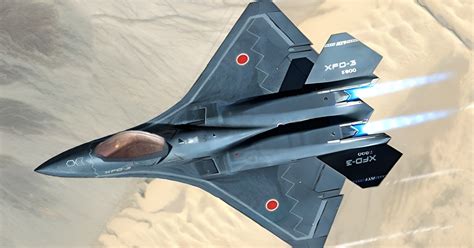
For emerging powers like India, Japan, South Korea, and Türkiye, entry into sixth-gen capabilities signifies a move from regional defense to global relevance. Each of these nations is either initiating indigenous programs or securing partnerships, aiming to future-proof their air forces.
Industrial Ecosystems and Defense Economies
The shift to sixth-generation warfare reshapes defense economies. Instead of isolated fighter programs, nations are developing defense ecosystems — integrating AI firms, aerospace giants, and cyber-security specialists into unified production chains. Lockheed Martin, Boeing, BAE Systems, Dassault Aviation, AVIC, and Mitsubishi Heavy Industries are no longer aircraft manufacturers; they are strategic architecture providers.
This industrial evolution also raises questions of interoperability. NATO, for instance, must reconcile different sixth-gen doctrines and technologies. Without a unified combat cloud or data-sharing infrastructure, alliance-based air power could face strategic fragmentation.
Challenges to Fielding Sixth-Gen Capabilities
Despite the momentum, several hurdles remain:
- Cost: Projected per-unit costs for sixth-gen fighters exceed $300 million, excluding the ecosystem.
- Security leaks and espionage: With so many stakeholders involved, safeguarding IP and tech secrets becomes exponentially harder.
- Talent scarcity: Nations face shortages of aerospace engineers, cyberwarfare specialists, and AI experts.
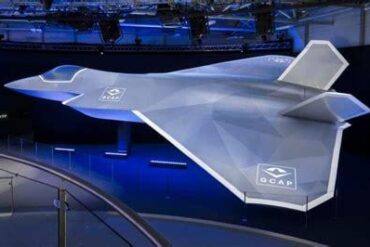
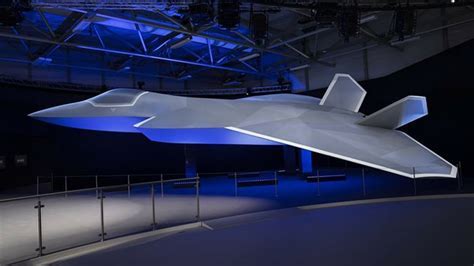
- Political inertia: Programs like FCAS and GCAP (Global Combat Air Programme) are vulnerable to electoral shifts and inter-governmental disputes.
Looking Ahead: Aerial Warfare in 2040 and Beyond
By 2040, air combat will be less about dogfights and more about networked supremacy. Victory will hinge on who controls the data, not just the skies. Sixth-generation fighters will be neural nodes, linking satellites, ground forces, and cyber assets in an orchestrated ballet of precision.
The nations investing early — and wisely — in sixth-gen technologies will command not just the air, but the strategic narrative of the 21st century. As the F-47, J-36, FCAS, and other platforms near operational reality, we are witnessing not just the future of air power, but the birth of a new global order in aerospace dominance.
The skies are no longer the limit — they are the next battlefield.