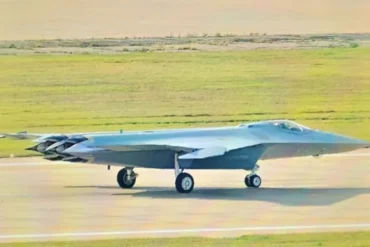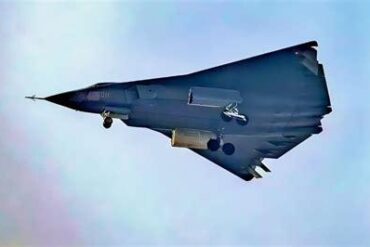
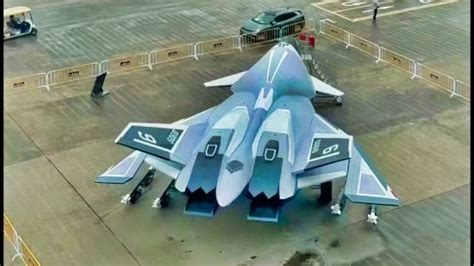
A new chapter in the evolution of military aviation has opened with the most detailed image yet of China’s ultra-long range sixth generation fighter jet, widely believed to be designated as the J-36. Developed in secrecy and now seen more clearly than ever, the aircraft is understood to be the largest fighter jet ever built, signaling China’s intent to fundamentally shift the strategic balance in the skies over the Asia-Pacific and beyond.
The image—captured using a long-range telephoto lens—unveils a behemoth of aerospace engineering. The aircraft’s triple ventral weapons bays, seen gaping open in the photo, dominate its belly. Not only do they confirm years of speculation about the scale of the aircraft’s internal armaments, but they also provide a visible demonstration of its massive payload capacity—reportedly many times that of fifth-generation aircraft like the F-35 Lightning II and China’s own J-20 Mighty Dragon.
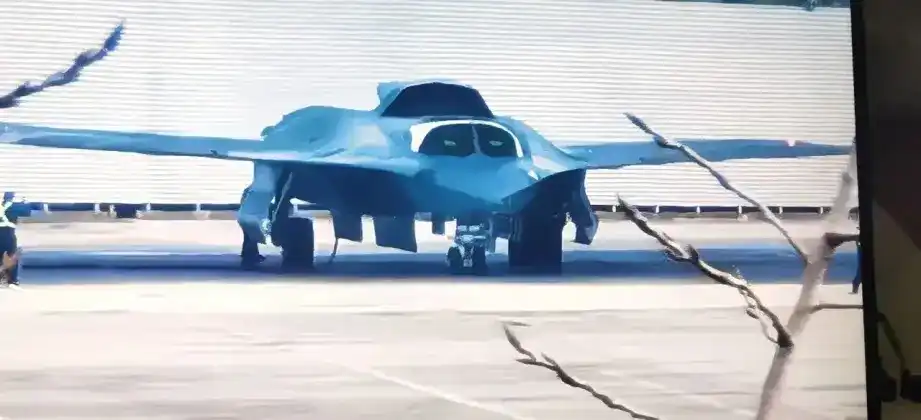
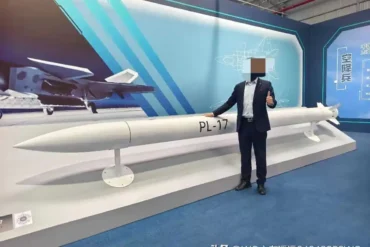
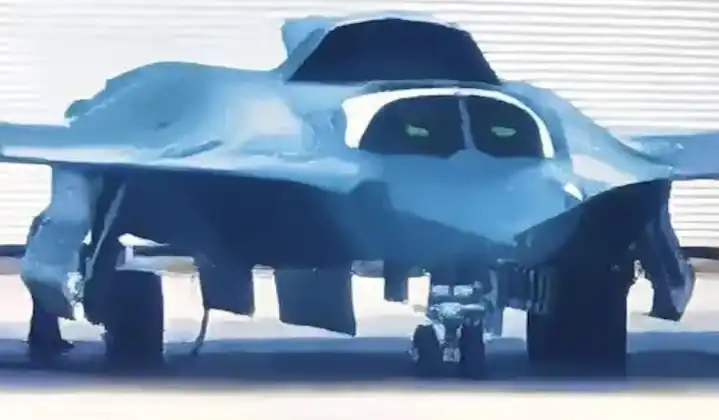
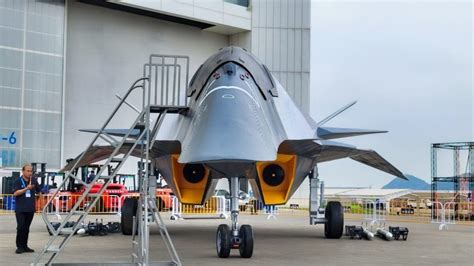
What sets this new aircraft apart isn’t just its bulk or firepower. The enormous nose cone, dwarfing the ground personnel nearby, hints at an equally massive radar array within—likely the largest radar suite ever fitted to a combat aircraft. This would endow the J-36 with surveillance, targeting, and electronic warfare capabilities far beyond anything currently deployed by global air forces. Adjacent to the central weapons bays are two smaller, side-mounted bays—presumed to house short-range air-to-air missiles such as the PL-16, a cutting-edge development in China’s missile technology arsenal.
The Strategic Logic Behind an Oversized Fighter Jet
Designing a fighter of this unprecedented scale is not simply an exercise in excess. Instead, it reflects China’s doctrinal and strategic thinking, particularly with regard to the operational demands of the Pacific theatre. The J-36’s extended range, achieved through enormous internal fuel capacity, allows it to operate far beyond the First Island Chain—an area of vital geopolitical importance that stretches from Japan to the Philippines and marks the initial boundary of Western military influence.
A larger frame not only supports longer missions but also makes room for more extensive avionics, mission systems, and internal weapons storage. These attributes make the J-36 ideally suited to multi-role missions, from air superiority and strike operations to strategic escort and command-and-control roles deep within contested territory. Additionally, analysts speculate that the aircraft could serve as a ‘mothership’ platform for coordinating drone swarms, a role that will likely become central in future aerial warfare.
Twin Seats, Twin Minds: The Side-by-Side Cockpit
Another revelation from the recent image is the side-by-side twin-seat configuration of the cockpit, a feature that sharply distinguishes the J-36 from most modern fighters. Green-tinted reflections from dual Heads-Up Displays (HUDs) are clearly visible, confirming the layout. This design choice reinforces reports that sixth-generation fighters will require multi-crew configurations, even as AI becomes more integral to flight operations.
The complexity of operating such an advanced and multi-capable aircraft—particularly over the vast, electronic warfare-rich environments of the Western Pacific—means that one pilot may be dedicated to flying and combat, while the other manages sensor fusion, target tracking, and tactical command functions. The decision to place both crew members side-by-side rather than in tandem suggests a prioritization of crew communication and shared situational awareness, improving real-time coordination during complex missions.
Weaponry and Payload Capabilities: A Flying Arsenal
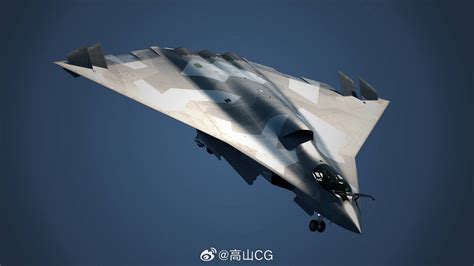
From what is visible, the J-36 appears capable of carrying a combination of long-range missiles, short-range dogfight munitions, and possibly even air-to-surface strike weapons, all stored internally to preserve stealth characteristics. Analysts have also suggested the possibility of rotary weapons racks, similar to those used in bombers, to maximize internal carriage without sacrificing stealth.
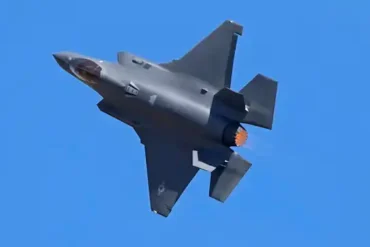
This would be a significant evolution over the F-22 or F-35, which are limited in their internal payload configurations and often require external pods or hardpoints for increased mission versatility—sacrificing stealth in the process. The J-36’s architecture points to a radical leap in design efficiency, enabling it to maintain full stealth while still dominating in firepower and endurance.
A New Arms Race: The F-47 and the Race for Sixth-Gen Supremacy
While China’s aircraft is already visible on tarmacs and in low-resolution flight footage, the United States’ sixth-generation contender—the Boeing-led F-47—remains shrouded in mystery. Despite massive investments, the U.S. has yet to produce a publicly acknowledged prototype. The Pentagon has reportedly diverted funding from the U.S. Navy’s own sixth-generation project to accelerate Air Force development, suggesting that internal urgency is high.
Yet the timeline comparison is telling. China’s J-20 took just six years from first flight to operational deployment—a remarkable pace compared to the 15-year development cycles of the F-22 and F-35. Should that precedent hold, China’s new heavy and medium sixth-generation fighters could reach Initial Operating Capability (IOC) by the early 2030s, leaving the U.S. scrambling to keep pace.
The Industrial Power Behind the Beast: Chengdu’s Role in Fighter Development
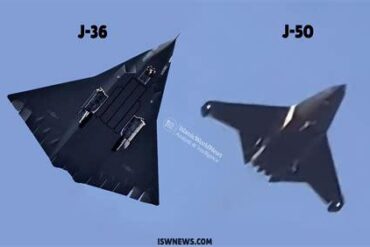
The Chengdu Aircraft Corporation, already responsible for the J-20, appears to be the primary hub for the development of China’s sixth-generation air dominance program. The J-36 has been repeatedly spotted parked next to its medium-weight sibling, the designation of which remains unknown. Both prototypes were first seen in December 2024, marking a coordinated unveiling of dual-track sixth-generation development.
Such a strategy—fielding both a heavyweight and a more agile, possibly carrier-capable platform—provides flexibility. The heavyweight J-36 would perform deep-penetration and regional dominance roles, while the medium-weight fighter could act as a theater-level multirole platform, capable of integration with both the PLA Air Force and Navy.
This dual-track effort also spreads technical risk and allows China to maximize its research investments, using shared avionics, engines, and sensor systems across both aircraft to reduce costs and logistical burdens. That shared component strategy mirrors the successful JF-17 Block III program, another indicator that Chengdu is exporting best practices across its entire fighter portfolio.
Implications for Global Power Projection
The advent of the J-36 has serious ramifications for global military balance, especially in East Asia and the Indo-Pacific. The United States has relied heavily on carrier strike groups and forward-deployed air bases to project power across the region. An aircraft with the range, stealth, and firepower of the J-36 disrupts those plans significantly.
By being able to strike or intercept assets well before they reach China’s periphery, the J-36 introduces an entirely new layer of defense-in-depth. It may also provide stand-off capabilities for missile deployment, giving China a more flexible and survivable second-strike option in the event of regional hostilities. Whether used as a frontline interceptor, a deep-strike attacker, or a flying command post, the J-36 represents a doctrinal shift toward integrated, persistent presence in contested skies.
Conclusion: A Fighter Built for a New Era of Warfare
From its oversized fuselage and extensive weapons capacity to its advanced cockpit and deep-strike capabilities, the J-36 is not merely a successor to the J-20 but a radical departure into sixth-generation design philosophy. It leverages size not for shock value but as a deliberate enabler of operational flexibility, electronic dominance, and multi-mission capability.
If current development trends continue, the J-36 may well become the first sixth-generation fighter jet to enter operational service worldwide—a development that would not only mark a watershed moment in aviation history but could reshape the geopolitical architecture of the 21st century. As images continue to surface and prototypes become more refined, the world watches closely—not only to understand what this aircraft can do, but to prepare for what it represents.