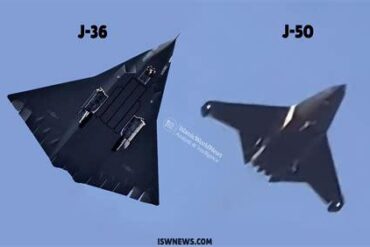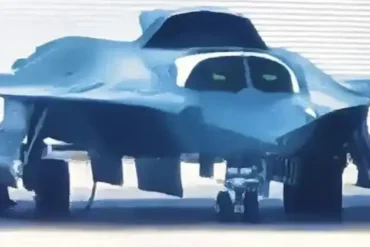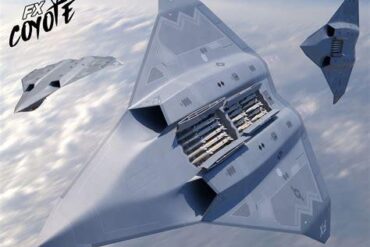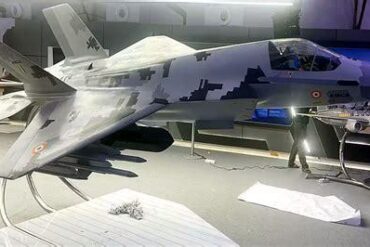
India’s defense innovation is accelerating toward an audacious milestone: the creation of a sixth-generation unmanned fighter jet. Backed by the Ghatak program and a visionary leap in aerospace engineering, this combat aircraft is projected to outclass even the F-35 and Dassault Rafale in stealth, autonomy, and lethality. The implications are staggering—not just for India’s security architecture, but for the global balance of air power.
India’s Bold Leap into Sixth-Generation Air Power
Amid intensifying regional threats and a shifting geopolitical chessboard, India’s defense establishment is redefining aerial supremacy. At the forefront stands a radical program: the development of a tail-less, unmanned, AI-enabled sixth-generation combat aircraft. Orchestrated by the Aeronautical Development Agency (ADA) and Defence Research and Development Organisation (DRDO), this initiative is rooted in the experience gained from the Tejas and AMCA projects—but takes flight far beyond conventional limits.
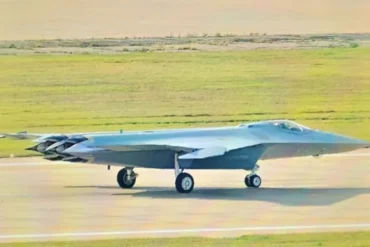
The sixth-generation jet’s “flying wing-only” design—meaning it has no vertical or horizontal stabilizers—enhances its stealth profile by dramatically reducing radar cross-section. This platform will operate without a human pilot on board, relying instead on sophisticated AI and autonomous systems.
Stealth by Design: Tail-Less Means Virtually Invisible
One of the aircraft’s defining features is its tail-less configuration, which removes both vertical fins and horizontal stabilizers. Traditionally, these elements help control pitch, yaw, and roll—but they also generate radar reflections, making aircraft more detectable.
By eliminating the tail, India’s new fighter drastically reduces its radar cross-section (RCS), rendering it almost invisible to even the most advanced enemy tracking systems. Such a low-observable profile grants unmatched survivability in high-threat, contested airspaces.
Dr. Kota Harinarayan, the chief designer of the Tejas fighter, has confirmed the technological groundwork is laid. “We are technically ready to develop an unmanned sixth-generation fighter based on a flying wing design,” he stated. His remarks signal not just preparedness, but strategic intent.
AI at the Core: Autonomous Combat Capability
Artificial Intelligence (AI) will be the command brain behind this lethal platform. The jet will be able to execute a wide array of missions—air superiority, electronic warfare, deep penetration strikes, and ISR (Intelligence, Surveillance, and Reconnaissance)—without direct human control.
Machine learning algorithms will govern everything from autonomous target recognition to real-time mission adaptation, based on battlefield dynamics. Whether it’s avoiding hostile radar zones or deploying decoys and countermeasures, the aircraft will make rapid decisions, often faster than a human pilot could process.
This AI-centric combat capability is light-years ahead of current fifth-gen fighters, which rely heavily on onboard human pilots. The move toward full autonomy signifies a tectonic shift in aerial warfare doctrine.
Unmanned Operations: Redefining Risk and Reach
Operating without a pilot offers unmatched operational flexibility. These jets can fly longer missions, take on riskier targets, and perform in high-G environments that would challenge human physiology. Losses, if any, are material—not human.
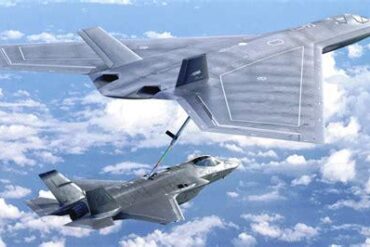
Unmanned systems also pave the way for swarm tactics, where multiple UCAVs (Unmanned Combat Aerial Vehicles) work in coordination. This sixth-gen platform is expected to coordinate with both manned fighters and autonomous drones, forming a hybrid combat ecosystem.
India’s vision is to integrate this jet with future loyal wingman programs, which pair unmanned assets with piloted aircraft. This would allow for distributed lethality, networked strikes, and greater mission adaptability in hostile airspace.
The Ghatak Program: Foundation of India’s Airpower Future
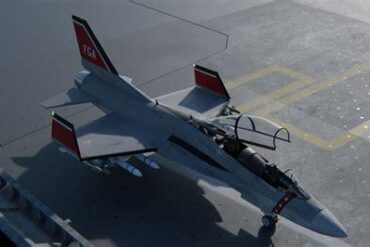
At the heart of this development lies the Ghatak program, India’s stealth UCAV initiative. While initially conceived as a demonstration project, Ghatak has evolved into a strategic technology incubator, with successful strides in aerodynamics, stealth shaping, and AI systems.
The platform is currently powered by a Kaveri dry engine, designed for low observable characteristics. However, for the sixth-generation fighter, India may either upgrade this propulsion system or integrate newer adaptive engines that offer higher thrust and fuel efficiency.
Directed Energy Weapons and Electromagnetic Dominance
India’s sixth-gen jet is being designed not just as a flying stealth machine, but as a futuristic weapons platform. Among the most anticipated features is its potential integration of directed energy weapons (DEWs)—including laser and microwave systems.
These DEWs offer unprecedented capabilities to disable enemy drones, blind missile seekers, or jam enemy sensors—all without exhausting ammunition. Combined with electronic warfare (EW) suites and cyber-attack modules, this makes the aircraft a true multi-domain operations hub.
Such technologies will place India in a rare league of nations with non-kinetic kill options, a realm still being explored even by top defense giants like the U.S.
Digital Engineering and Simulation-First Development
Unlike previous generations, where prototypes were built physically and refined over time, the sixth-gen fighter will leverage digital twin models, AI simulations, and virtual prototyping. This “design-validate-deploy” approach dramatically cuts development time and cost.
Every aerodynamic tweak, thermal signature test, or sensor integration can be run through advanced software simulations before a single bolt is machined. The result is rapid iteration, fewer design errors, and faster readiness.
India’s AMCA program already uses this method extensively, and the sixth-gen initiative will expand this practice to an industrial scale.
Beyond Rafale and F-35: A Comparative Edge
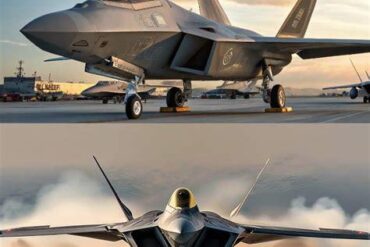
The Dassault Rafale and Lockheed Martin F-35 are benchmark aircraft in today’s combat arena. But India’s sixth-gen fighter aims to exceed both in core metrics:
- Stealth: Fewer radar signatures due to tailless body and absorbent materials.
- Autonomy: Full unmanned operations versus F-35’s human dependency.
- AI Integration: Near-total decision-making through machine learning.
- Payload Flexibility: Modular weapons bays adaptable to mission needs.
- Interoperability: Can lead and coordinate with drones and other assets.
While the F-35 boasts impressive situational awareness and the Rafale excels in multirole versatility, neither integrates all of the sixth-gen traits in a unified package.
Challenges Ahead: No Silver Bullet
The journey is not without obstacles. Key challenges include:
- Engine Development: India still relies on foreign technology for high-thrust engines.
- Sensor Fusion: Creating a seamless digital brain requires complex algorithm training.
- Industrial Ecosystem: Scaling production and maintaining supply chain security.
- Funding and Timelines: Sustained investment and political will are crucial.
Yet India’s track record—especially with Tejas Mk1A, AMCA, and Ghatak—proves its ability to iterate, absorb, and innovate.
Strategic Implications: From Regional Deterrence to Global Stature
A sixth-generation UCAV would not just bolster India’s air dominance—it would redefine South Asia’s military balance. With China developing its own stealth drones and the U.S. pivoting toward Indo-Pacific strategy, India’s advanced combat capabilities are pivotal.
The aircraft could serve both deterrent and diplomatic roles, helping India negotiate from a position of strength. Moreover, this program offers potential for defense exports, placing India among top-tier aerospace nations.
Conclusion: A Technological Renaissance in Indian Aerospace
India’s sixth-generation fighter is more than an aircraft—it’s a declaration. A declaration of strategic autonomy, technological maturity, and visionary defense policy. With AI, stealth, unmanned operations, and DEWs forming its core, this platform could place India ahead of even the most advanced military powers.
As regional tensions rise and air warfare evolves into a battle of algorithms, India’s move into sixth-gen territory might very well be the defining pivot of 21st-century defense.