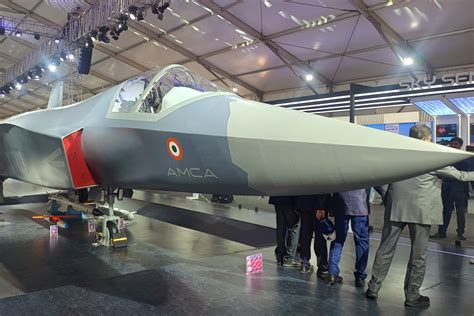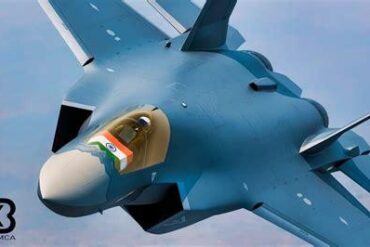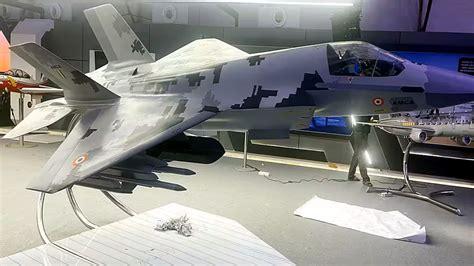
India has officially kick-started its ambitious project to develop a fifth-generation stealth fighter jet, marking a pivotal step in its efforts to bolster its air power capabilities. Spearheaded by the Aeronautical Development Agency (ADA), which operates under the Ministry of Defence, this project is set to revolutionize the Indian Air Force’s (IAF) future capabilities. This long-term, high-tech venture, named the Advanced Medium Combat Aircraft (AMCA), is a medium-weight, deep penetration fighter jet designed to carry out critical missions with cutting-edge stealth technology.
AMCA Project Overview: India’s Vision for Air Superiority
The AMCA program is India’s answer to the growing challenges in modern aerial warfare. As the world’s military landscape becomes increasingly complex, having an indigenous fifth-generation fighter jet becomes essential for strategic air dominance. The AMCA, alongside the Tejas Light Combat Aircraft, is intended to become the backbone of the IAF, offering enhanced survivability and superior operational flexibility.
India has already made significant progress in developing fighter jets like the Tejas. However, the AMCA will introduce advanced stealth features, which significantly reduce the aircraft’s radar signature, making it harder to detect and intercept by adversaries. Designed for deep penetration missions, the AMCA aims to strike at enemy territories with minimal risk, all while maintaining unmatched agility and precision.
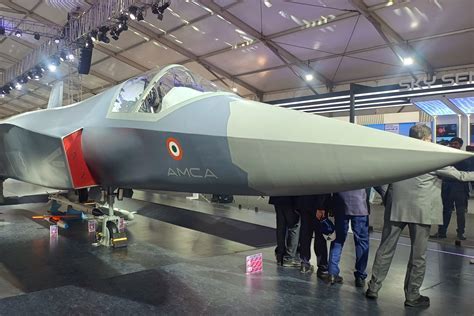
Key Features of AMCA: Pushing Technological Boundaries
The AMCA is set to incorporate an array of state-of-the-art technologies designed to elevate India’s air capabilities. These include advanced radar-absorbing materials, sophisticated avionics, and next-gen sensors. The aircraft will be equipped with supercruise capabilities, allowing it to sustain supersonic speeds without the need for afterburners, thereby enhancing fuel efficiency and operational effectiveness. Here are some key attributes:
- Stealth Capabilities: The AMCA will feature advanced stealth geometry and radar-absorbing materials, reducing its radar cross-section (RCS).
- Supercruise: The aircraft can fly at supersonic speeds without the need for afterburners, increasing fuel efficiency and range.
- Advanced Avionics: Cutting-edge electronics for radar, communications, and weapons control.
- Multirole Capability: The AMCA is designed to perform various combat roles, from air superiority to strike missions.
The Role of the Aeronautical Development Agency (ADA)
The Aeronautical Development Agency (ADA), which plays a central role in the AMCA project, is tasked with overseeing the development and production of the aircraft. The ADA, in collaboration with multiple Indian defense and aerospace companies, is spearheading the effort to design, prototype, and eventually manufacture the AMCA. With this development, India aims to achieve self-reliance in cutting-edge military aviation technology, reducing its dependency on foreign suppliers for sophisticated fighter jets.
In a recent announcement, the ADA invited Expression of Interest (EOI) from Indian companies to assist in the development of the AMCA prototypes. The invitation aims to identify potential partners capable of handling the complex task of building the first prototypes. The project is open to individual companies, joint ventures, or consortiums. Applicants must have a strong track record in the aerospace and defense sector and the technical expertise to integrate AMCA’s complex design.

A Long-Term Commitment: Timeline and Manufacturing Facilities
India has set ambitious goals for the AMCA’s timeline. The entire process from development to flight testing and certification is expected to take no more than eight years. This long time frame underscores the complexity and the cutting-edge technology involved in the project. The selected companies will not only be responsible for building the prototypes but will also be tasked with establishing manufacturing facilities for mass production once the jet is ready for operational deployment.
To facilitate a robust domestic production line, the ADA aims to collaborate with defense firms that can bring in the necessary technological expertise and infrastructure. The government’s vision is clear: India’s defense industry must evolve into a globally competitive powerhouse that can produce world-class fighter jets without relying heavily on imports.
Geopolitical Importance of the AMCA
The AMCA project comes at a time of increasing geopolitical tensions in the Indo-Pacific and the Indian Ocean region, where air superiority remains a critical factor in strategic military planning. As global defense spending continues to grow, India’s move to enhance its aerial combat capabilities through the AMCA is not only a military necessity but also a strategic deterrent against emerging threats.
The development of such a technologically advanced fighter jet is crucial in maintaining a balance of power in the region, particularly with countries like China and Pakistan, which have rapidly modernized their air forces. The AMCA, once operational, will offer India a distinct edge in regional and global air combat operations, further solidifying its status as a regional military leader.
The Road Ahead: Collaboration and Innovation
In the coming years, the development of the AMCA will serve as a benchmark for India’s indigenous defense capabilities. The project also opens doors for global collaboration, as the Indian government seeks to partner with international aerospace giants to gain access to the latest technologies in avionics, materials science, and advanced manufacturing.
Furthermore, the AMCA project could provide a significant boost to India’s defense exports, enabling the country to tap into the lucrative global defense market. If the aircraft is successful, it will not only meet India’s needs but could become an export asset, further enhancing India’s strategic influence in the global defense industry.
Conclusion: A Bold Step Towards Military Modernization
The AMCA program marks a major milestone in India’s military aviation journey. By investing heavily in cutting-edge technologies and focusing on self-reliance, India is poised to become a global leader in defense innovation. The AMCA will provide the Indian Air Force with a technological edge that is crucial for defending national interests in an increasingly volatile world. With its advanced stealth, multirole flexibility, and long-range capabilities, the AMCA promises to be a game-changer for India’s aerial defense strategy, positioning the country as a formidable force in the skies.