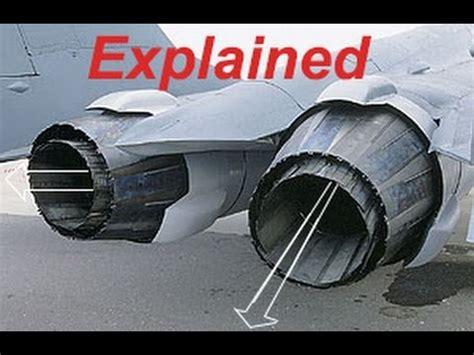
Modern air combat is no longer decided solely by speed or raw firepower. It is shaped by control, agility, and the ability to dominate the battlespace when aerodynamic limits are pushed to extremes. One of the most decisive technologies enabling this shift is thrust vectoring, a propulsion innovation that allows fighter jets to maneuver in ways that once defied the laws of flight. In the era of 5th-generation fighters, thrust vectoring is not a novelty—it is a force multiplier that redefines what aerial dominance means.
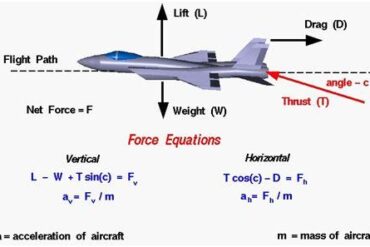
At its core, thrust vectoring changes how an aircraft moves through the air by allowing the engine’s exhaust to be redirected rather than fixed straight backward. Instead of relying exclusively on airflow over wings, elevators, and rudders, a thrust-vectoring jet can use engine power itself as a control surface. This capability becomes critical when traditional aerodynamics begin to fail, such as during high-angle-of-attack maneuvers, post-stall flight, or high-altitude engagements where air density is low.
What makes thrust vectoring so valuable for 5th-generation fighters is the environment they are designed to dominate. These aircraft are built to fight in contested airspace, evade advanced radar systems, and engage enemies across a wide range of speeds and altitudes. In that context, thrust vectoring is not simply about spectacular maneuvers—it is about maintaining control when others lose it, and about turning propulsion into an extension of the pilot’s intent.
The Physics Behind Thrust Vectoring Control
Traditional aircraft maneuver by deflecting aerodynamic surfaces, which change airflow and generate forces that rotate the aircraft around its axes. This method works exceptionally well within normal flight envelopes, but it has a fatal weakness: it depends on airflow. At very low speeds or extreme angles of attack—often above 45 to 60 degrees—the airflow over wings and control surfaces becomes turbulent or separates entirely, causing a stall.
Thrust vectoring bypasses this limitation by redirecting the jet exhaust itself. Because thrust is a force independent of airflow over the wings, it remains effective even when the aircraft is aerodynamically compromised. By angling the exhaust upward, downward, or sideways, the pilot can pitch, yaw, or roll the aircraft using pure engine power. This is why thrust-vectoring jets can maintain nose authority long after conventional fighters would lose control.
In practical terms, this means a 5th-generation fighter can point its weapons at an opponent even when flying slowly, climbing steeply, or recovering from aggressive maneuvers. The ability to decouple nose pointing from flight path is one of the most lethal advantages in close-range air combat, where fractions of a second determine who fires first.
Why 5th-Generation Fighters Need More Than Aerodynamics
Fifth-generation fighters are designed around a set of priorities that fundamentally change how they fight. Stealth, sensor fusion, and networked warfare dominate their design philosophy, but these advantages must be protected by extreme maneuverability. Thrust vectoring plays a critical role in enabling this balance.
Stealth aircraft deliberately reduce the size and number of external control surfaces to lower radar cross-section. Smaller tails, carefully angled surfaces, and internal weapon bays all contribute to survivability, but they also reduce aerodynamic authority. Thrust vectoring compensates for this by providing control without adding radar-reflective surfaces, allowing designers to preserve stealth without sacrificing agility.
At high altitude, where many 5th-generation fighters prefer to operate, thin air further reduces the effectiveness of conventional control surfaces. Thrust vectoring restores responsiveness in these conditions, enabling sustained agility during supersonic cruise and high-energy combat. The result is an aircraft that remains lethal across the entire flight envelope, not just within ideal aerodynamic conditions.
Two-Dimensional vs Three-Dimensional Thrust Vectoring
Not all thrust-vectoring systems are created equal, and the distinction between 2D and 3D thrust vectoring has major tactical implications. Two-dimensional systems deflect exhaust in a single plane, typically up and down, providing enhanced pitch control. Three-dimensional systems can redirect thrust in multiple planes, enabling both pitch and yaw control simultaneously.
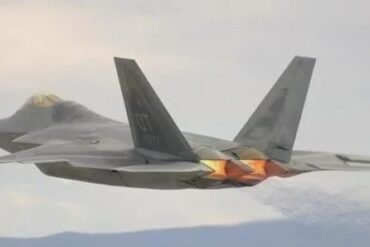
The F-22 Raptor uses a 2D thrust-vectoring system with rectangular nozzles that move vertically. This design was chosen to balance maneuverability with stealth, as the flat nozzles reduce infrared and radar signatures from the rear. While limited compared to 3D systems, the F-22’s thrust-to-weight ratio and flight control software make its 2D vectoring extraordinarily effective in combat.
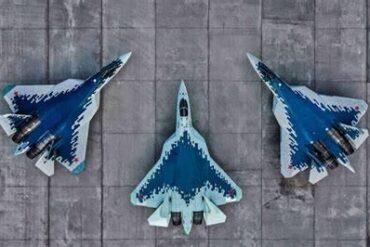
Russian fighters such as the Su-35 and Su-57 Felon employ 3D thrust-vectoring nozzles, which allow for dramatic post-stall maneuvers and extreme yaw control. These systems emphasize raw supermaneuverability, enabling aircraft to perform tight turns and rapid attitude changes at very low speeds. The trade-off often comes in the form of increased mechanical complexity and potential stealth penalties.
Thrust Vectoring as a Dogfight Weapon
Close-range air combat, despite advances in beyond-visual-range missiles, remains a reality. In these engagements, thrust vectoring provides a decisive edge. By maintaining control at slow speeds and extreme attitudes, a thrust-vectoring fighter can force opponents into overshoots, break missile locks, and rapidly reorient for a firing solution.
The psychological impact is just as important as the physical advantage. Pilots facing thrust-vectoring opponents must contend with aircraft that do not behave predictably according to classical energy-maneuverability theory. This unpredictability disrupts decision-making and shortens reaction times, which can be fatal in a dogfight.
The F-22 Raptor: Benchmark of Thrust-Vectored Superiority
The F-22 Raptor remains the most refined example of thrust vectoring integrated into a complete air dominance system. Developed by Lockheed Martin’s Skunk Works, the F-22 was the world’s first operational 5th-generation fighter and the first to combine stealth, supercruise, and thrust vectoring in a single platform.
Its Pratt & Whitney F119-PW-100 engines produce around 35,000 pounds of thrust each with afterburners, enabling sustained supersonic flight at Mach 1.8 or higher without afterburner use. The 2D thrust-vectoring nozzles enhance pitch authority during high-G maneuvers and allow the aircraft to maintain control during aggressive vertical engagements.
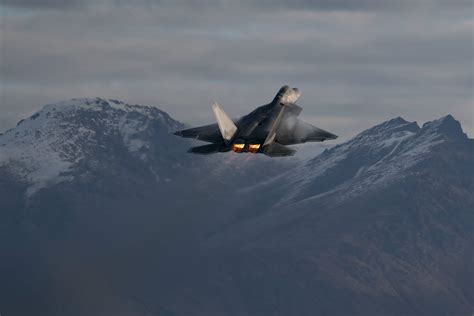
Despite being the oldest 5th-generation design, the F-22’s combination of low radar cross-section, exceptional thrust-to-weight ratio, and mature avionics keeps it at the top of the air superiority hierarchy. Its thrust vectoring is not a gimmick—it is seamlessly integrated into flight control laws that maximize lethality while preserving stealth.
Russian Approaches to Extreme Maneuverability
Russia’s design philosophy places heavy emphasis on close-range maneuverability, and thrust vectoring is central to that approach. The Su-57 Felon, powered initially by the Saturn AL-41F1 and later by the more powerful AL-51F1, uses 3D thrust vectoring to achieve extraordinary agility.
The newer AL-51F1 engine provides increased thrust and improved efficiency, allowing the Su-57 to approach Mach 2 without afterburners. However, early engine limitations delayed full operational capability and contributed to skepticism about the aircraft’s true 5th-generation status. While its thrust-vectoring performance is impressive, questions remain about stealth optimization and sensor integration compared to Western counterparts.
China’s J-20 and the Thrust Vectoring Gap
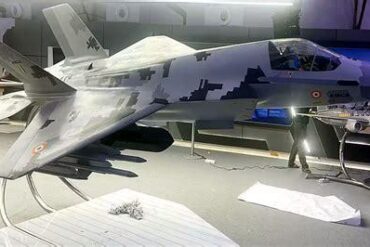
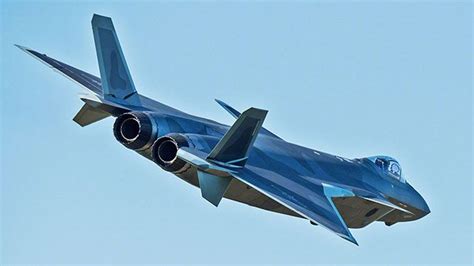
China’s Chengdu J-20 Mighty Dragon represents a different evolutionary path. Early operational variants relied on the WS-10C engine without thrust vectoring, prioritizing long-range interception and stealth over close-in maneuverability. This choice limited the aircraft’s agility compared to thrust-vectoring rivals.
That gap is expected to close with the introduction of the WS-15 engine, which has been observed in testing with thrust-vectoring nozzles. Future J-20 variants are anticipated to gain either 2D or limited 3D thrust vectoring, significantly enhancing their combat flexibility while improving speed, range, and thermal signature management.
The F-35B: Thrust Vectoring for Vertical Flight
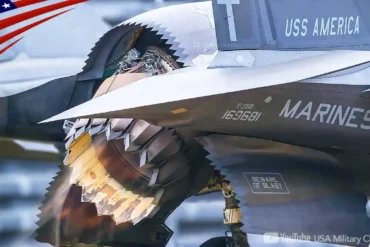
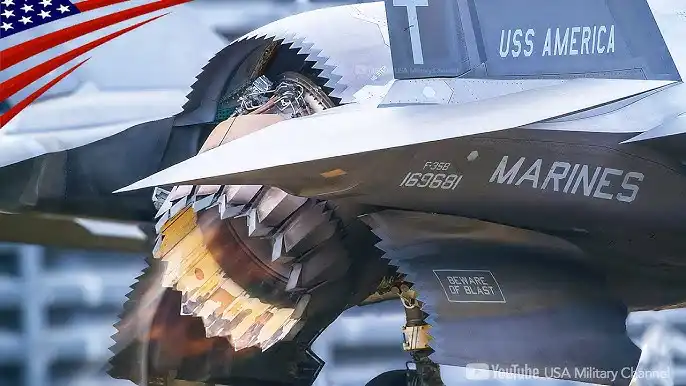
The F-35 Lightning II presents a unique case. Only the F-35B variant uses thrust vectoring, and its purpose is not aerial maneuverability but short takeoff and vertical landing. The Pratt & Whitney F135-PW-600 engine features a swiveling rear nozzle that rotates downward to provide vertical lift in conjunction with a lift fan.
While this system does not enhance dogfighting agility, it demonstrates the versatility of thrust vectoring as a concept. In the F-35B, thrust vectoring enables operational flexibility from austere bases and amphibious ships, expanding deployment options rather than combat maneuverability.
Stealth, Heat, and the Engine Nozzle Dilemma
Engine nozzles are among the most challenging components to make stealthy. Hot exhaust gases create strong infrared signatures, while complex geometries can increase radar reflections. Thrust-vectoring systems must balance mechanical movement with signature reduction.
The F-22’s rectangular nozzles are a masterclass in this compromise, flattening the exhaust plume to reduce infrared visibility while maintaining vectoring capability. Future designs are exploring fluidic thrust vectoring, which uses controlled airflow injection instead of moving parts to deflect exhaust. This approach promises reduced weight, lower maintenance, and improved stealth compatibility.
Lessons from Experimental Aircraft
The effectiveness of thrust vectoring was proven long before 5th-generation fighters entered service. The X-31 Enhanced Fighter Maneuverability program demonstrated that thrust-vectored aircraft could decisively outperform conventional fighters in mock combat. Its ability to sustain control at post-stall angles of attack rewrote tactical assumptions and directly influenced modern fighter design.
Earlier experiments, including the F-15 ACTIVE and various NASA testbeds, refined the control laws and hardware that would later be embedded in operational fighters. These programs showed that thrust vectoring is most powerful when integrated with advanced flight computers rather than treated as an isolated feature.
The Future of Thrust Vectoring in Sixth-Generation Fighters
As development shifts toward sixth-generation aircraft like the upcoming F-47 Next Generation Air Dominance platform, thrust vectoring is expected to evolve rather than disappear. Variable Cycle Engines developed under the Next Generation Adaptive Propulsion program will allow engines to dynamically reconfigure airflow for efficiency or combat power.
These engines will likely incorporate advanced thrust-vectoring techniques alongside thermal management systems for directed-energy weapons and artificial intelligence processors. In this future, thrust vectoring will be part of a broader propulsion ecosystem that blends efficiency, stealth, and extreme maneuverability.
Why Thrust Vectoring Remains Indispensable
Thrust vectoring endures because it solves problems no other system can. It preserves control when aerodynamics fail, enhances stealth by reducing reliance on external surfaces, and grants pilots unprecedented authority over their aircraft’s motion. In 5th-generation fighters, it is not about airshow theatrics—it is about survivability, lethality, and dominance.
As long as air combat demands control at the edge of physics, thrust vectoring will remain a defining feature of the world’s most capable fighter jets.