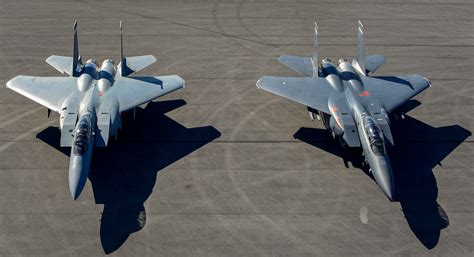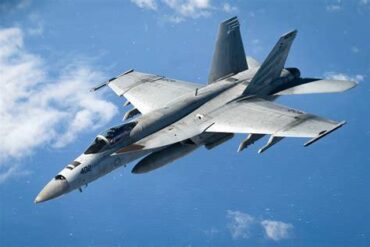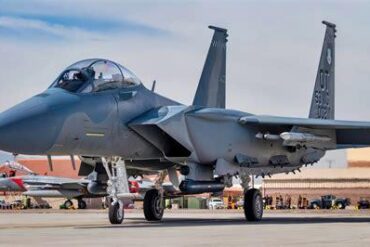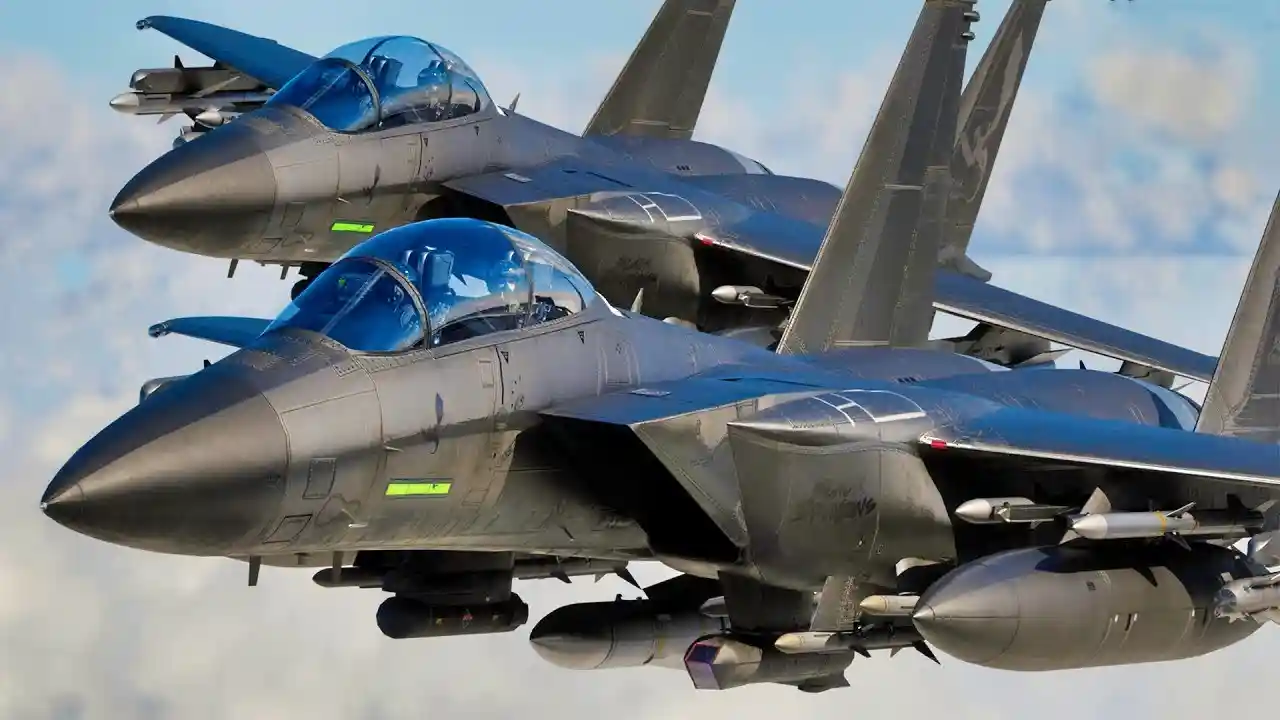
The United States Air Force is making a dramatic pivot in its fighter fleet strategy with the decision to expand the planned Boeing F-15EX Eagle II inventory from 129 to 267 aircraft in the Fiscal Year 2027 budget request. This remarkable increase—more than doubling the prior commitment—underscores a strategic recalibration, balancing cost, capability, and operational flexibility across a landscape increasingly defined by near-peer adversary threats and vast global theaters of operation. While the F-35A Lightning II continues to represent the pinnacle of stealth and sensor fusion, the F-15EX is rapidly carving out a niche as a high-capacity, heavy-payload “missile truck,” capable of sustaining prolonged operations, delivering formidable strike power, and ensuring the United States maintains robust air superiority even in the Indo-Pacific’s expansive operational environment.
The expansion of the Eagle II fleet is primarily driven by the urgent operational necessity to replace the aging F-15E Strike Eagles. With the Air Force operating roughly 215 Strike Eagles, many approaching structural limits after decades of service, the replacement path is not only practical but politically and financially defensible. The FY2027 budget explicitly plans to retire 20 of the oldest F-15Es while ramping up investment in the Eagle II. This step ensures continuity in combat capability while allowing the service to pursue a layered force architecture that integrates fourth-generation, fifth-generation, and next-generation platforms. By modernizing legacy fighters to the maximum extent allowed by fiscal realities, the Air Force is signaling that the F-15EX will remain a core component of American air power strategy well into the 2040s.
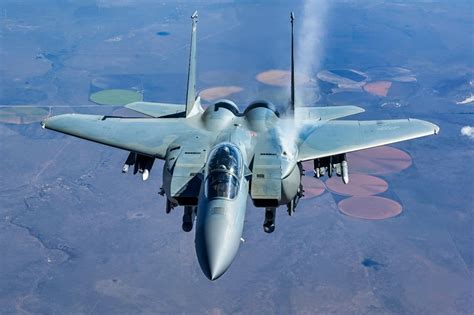
At the heart of the Eagle II’s operational appeal is its technological transformation. Critics often point to the F-15EX’s 1970s lineage as a drawback, yet Boeing has infused the airframe with cutting-edge avionics and electronic warfare systems, creating a fourth-generation fighter with a fifth-generation brain. The Advanced Display Core Processor II (ADCP II) executes 87 billion operations per second, enabling advanced sensor fusion and seamless integration into networked combat architectures. The AN/APG-82(V)1 AESA radar provides unparalleled long-range detection, while the Eagle Passive/Active Warning and Survivability System (EPAWSS), developed by BAE Systems, offers instantaneous full-spectrum electronic warfare capabilities, from radar warning and geolocation to active countermeasures. In operational terms, the F-15EX is more than a successor to the Strike Eagle; it is a tactical game-changer capable of integrating into multi-domain kill chains and serving as a force multiplier across air defense, homeland security, and high-intensity conflict theaters.
DOT&E assessments provide the most authoritative operational validation for the Eagle II. According to the National Security Journal, the aircraft demonstrated effectiveness in all tested air superiority roles, successfully detecting, tracking, and engaging simulated fifth-generation adversaries while surviving complex threat environments. The assessment underscores that the F-15EX can operate effectively in both defensive and offensive counter-air scenarios, providing assurance to planners who might otherwise view a non-stealthy fourth-generation design as inadequate against modern threats. These findings reinforce the Air Force’s strategy of leveraging legacy designs upgraded with state-of-the-art systems to maintain operational readiness without exclusively relying on more expensive, stealth-centric platforms.
The financial calculus surrounding the F-15EX has evolved significantly since program inception. Initially positioned as a cost-effective complement to an all-F-35 fleet, the Eagle II’s unit cost has risen through successive production lots—from $80.5 million in Lot 1 to roughly $94 million in Lot 4. While these figures momentarily surpassed the F-35A’s $82.5 million average flyaway cost for Lots 15–17, a broader analysis of operating costs and airframe life changes the narrative. The F-15EX has a 20,000-hour airframe life and a cost per flight hour of approximately $29,000, compared with the F-35A’s 8,000-hour limit and $30,000–$35,000 per hour operational cost. Over the life of the aircraft, this means the Air Force can achieve 2.5 times the operational flight hours per F-15EX relative to an F-35A, delivering a decisive advantage in sustained high-intensity operations where sortie generation and payload capacity are mission-critical.
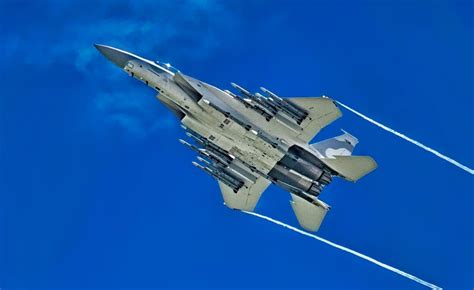
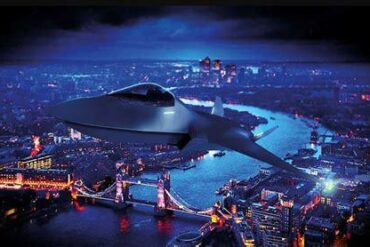
The strategic rationale for retaining and expanding fourth-generation fighters becomes even clearer when considering the Air Force’s emerging three-tier fighter structure. The F-35 serves as the stealthy, sensor-rich platform for penetrating high-threat environments, whereas the F-15EX is optimized for homeland defense, Indo-Pacific deployments, and large-scale operations where payload and range are more important than low observability. The next generation F-47, developed under the NGAD program, is positioned to execute the deepest penetration missions, effectively complementing the F-35 and Eagle II. By integrating these three layers, the Air Force ensures a flexible and resilient combat force capable of responding across the spectrum of conflict, from near-peer engagements to strategic deterrence operations.
Payload and range are central to the F-15EX’s operational calculus. The aircraft can carry up to 12 AIM-120 AMRAAM missiles and boasts a maximum external stores capacity of 29,500 pounds—the largest of any US fighter jet. In theaters like the Indo-Pacific, where distances between operational points are vast and sortie cycles are long, this combination of speed, endurance, and payload becomes a decisive force multiplier. The Eagle II’s deployments to Kadena Air Base in Japan, including plans for permanent stationing, reflect the strategic prioritization of air policing, deterrence, and integration with next-generation munitions like the AIM-260 JATM and the GBU-53/B Stormbreaker. These capabilities ensure that even without stealth, the F-15EX can perform meaningful offensive and defensive operations in contested environments, complementing stealth platforms rather than attempting to replace them.
The longevity and adaptability of the F-15 platform have historically contributed to its continued relevance. Boeing has consistently built one F-15 per month at its St. Louis facility, and plans are in place to increase production to two per month by early 2027. Workforce continuity during disruptions, such as the 2024 IAM machinists’ strike, and proposed congressional expansion of the total fleet to potentially 329 jets demonstrate that the Eagle II’s value is as much about industrial resilience and long-term affordability as it is about raw technology. The Air Force is leveraging the structural margins and upgrade potential of the F-15 airframe to deliver a fighter that remains viable alongside the stealth-centric F-35 and forthcoming F-47 well into the 2040s.
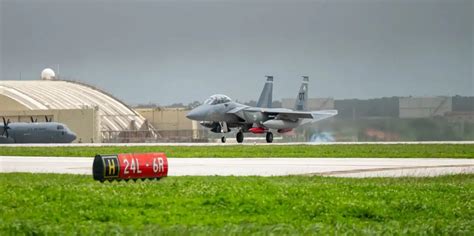
This strategic choice reflects a broader recognition within US defense planning: fourth-generation fighters are not relics of the past but essential enablers of sustained airpower. The initial assumption that the F-22 and F-35 would dominate all high-end and mid-tier combat roles has been tempered by operational experience, fiscal realities, and industrial production capacity. Modern conflicts require a mix of stealth, speed, payload, and endurance that no single aircraft type can deliver at scale. The F-15EX bridges these gaps, providing a versatile, high-capacity platform capable of absorbing attrition, maintaining sortie rates, and delivering decisive firepower over extended campaigns.
The ongoing debate over cost, technology, and capability often obscures the Eagle II’s true strategic value. While the F-15EX may not excel in low-observable penetration like the F-35, its combination of speed, payload, and service life makes it uniquely suited for missions where massed firepower and operational endurance outweigh stealth. The aircraft’s electronic warfare suite, advanced radar, and networked capabilities ensure it can still operate effectively in modern threat environments, countering both conventional and fifth-generation adversary aircraft. In essence, the F-15EX exemplifies a deliberate approach to force design: modernizing legacy platforms to deliver complementary capabilities within a layered combat air strategy.
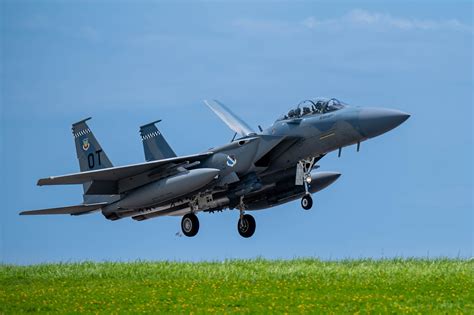
Looking toward the future, the three-tier structure of the US Air Force’s fighter fleet represents a coherent and forward-looking doctrine. The F-15EX serves as the reliable workhorse for sustained campaigns and large-scale air defense; the F-35 operates as the stealthy, networked sensor-fusion platform; and the F-47 will eventually dominate the most contested penetration missions. This architecture not only mitigates risk but allows each aircraft to operate in roles where it is most effective, ensuring that operational priorities—ranging from homeland defense to Indo-Pacific deterrence—can be met efficiently and cost-effectively.
The expansion of the F-15EX fleet is also a reflection of strategic pragmatism in procurement. The Air Force recognizes that stealth alone cannot solve the operational challenges of multi-theater, high-intensity conflict. Payload, range, endurance, and resilience in the face of attrition remain essential. The Eagle II delivers all of these attributes while also benefiting from a robust industrial base and predictable maintenance profile, which collectively enhance readiness and mission assurance. The balance between high-end stealth operations and massed fourth-generation capability represents a sophisticated understanding of air combat in the 2020s, one that values operational utility and strategic depth over technological symbolism.