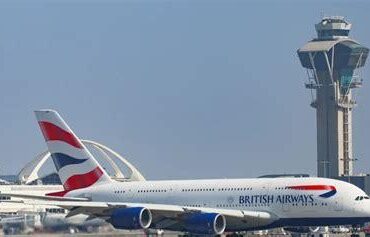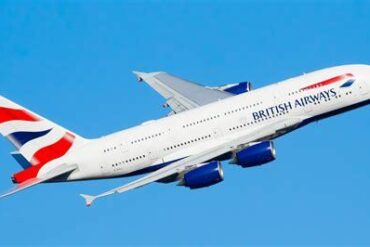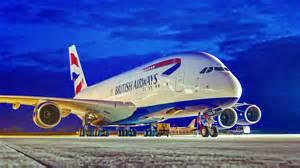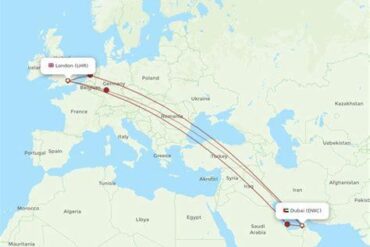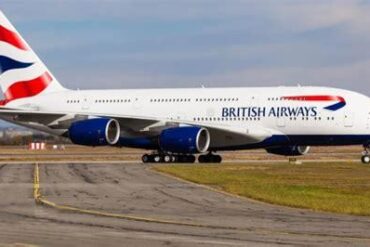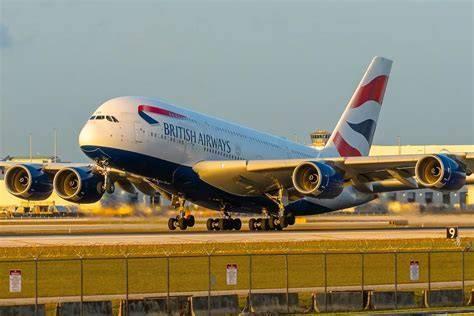
British Airways has made a significant adjustment to its Airbus A380 operations between London Heathrow Airport (LHR) and Dubai International Airport (DXB), removing the iconic superjumbo from one of its most important Middle Eastern routes. The airline had previously planned to continue operating the double-decker aircraft during the winter 2026/2027 season, following a pattern established when the A380 first entered the route in 2019.
The decision highlights a broader shift in British Airways’ long-haul fleet strategy as the carrier balances operational disruptions, aircraft availability, and a major cabin modernization program. While Dubai remains one of the strongest international markets from London, the A380 will no longer be part of BA’s planned service offering on this route.
British Airways Ends Planned A380 Service To Dubai
British Airways traditionally deploys the Airbus A380 to Dubai during the winter season because cooler temperatures allow the aircraft to operate more efficiently. Unlike some destinations where high summer temperatures can restrict aircraft performance, Dubai’s winter climate provides favorable conditions for large aircraft operations.
The airline had scheduled three daily flights between Heathrow and Dubai for the upcoming winter period. One of those flights was expected to use the 469-seat Airbus A380, while the remaining two services were planned with Boeing 787-10 aircraft. However, the latest schedule update shows that the A380 operation has been removed.
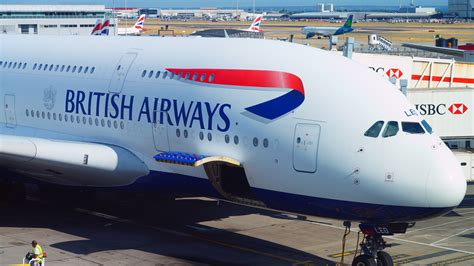
The revised plan will see British Airways operate fewer flights on the route, with generally one to two daily departures depending on the week. The Boeing 787 family will become the primary aircraft type, while the Boeing 777-200ER will also appear on some services.
The change comes after British Airways suspended its Dubai flights in early 2026 following instability in the Middle East. The airline is currently preparing to restore services as part of its winter schedule, with flights expected to resume on October 25.
Dubai Remains A Major London Aviation Market
Despite the A380 withdrawal, Dubai continues to be one of the most important destinations in British Airways’ global network. The route serves a combination of business travelers, tourists, expatriates, and connecting passengers traveling through the Gulf region.
In 2025, more than 2.1 million passengers traveled between London airports and Dubai, according to booking data. That figure demonstrates the enormous demand connecting the United Kingdom’s capital with the United Arab Emirates.
The market is also highly competitive. British Airways is not the only airline connecting London and Dubai. Gulf carriers have built enormous capacity on the route, with Emirates maintaining a particularly dominant position.
Emirates operates flights from London Heathrow, London Gatwick, and London Stansted, offering multiple daily services throughout the year. During the winter season, the airline plans 12 daily passenger flights from the London area to Dubai, with nine of those scheduled to use the Airbus A380.
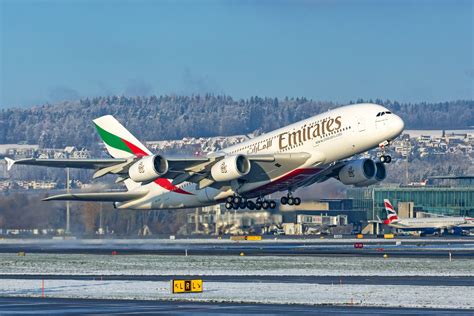
The scale of Emirates’ operation gives passengers extensive schedule flexibility and reinforces Dubai’s position as one of the world’s busiest international aviation hubs. British Airways’ decision to remove the A380 therefore comes at a time when competition on the route remains intense.
British Airways’ Airbus A380 Fleet Faces A Major Transformation
The Dubai schedule change is also connected to British Airways’ wider Airbus A380 fleet restructuring. The airline currently operates a fleet of 12 Airbus A380 aircraft, but the number of flights performed by the type is decreasing as BA updates its cabins.
During the upcoming winter period, British Airways will operate the A380 on only five daily departures. The aircraft will mainly serve routes including Miami, Johannesburg, San Francisco, and Singapore.
Compared with the previous winter season, BA’s A380 flying capacity has declined by around 28%. This reduction means British Airways will move down the ranking of the world’s largest Airbus A380 operators, falling from third place to sixth based on scheduled superjumbo flights.
The reduction is not simply a sign that British Airways is abandoning the aircraft. Instead, the airline is investing in a more premium configuration for the remaining fleet.
The updated A380 cabins will reduce total capacity from 469 seats to 421 seats. British Airways plans to remove 88 economy seats while adding more premium seating, including additional business class suites and premium economy seats.
This strategy reflects a broader industry trend. Airlines are increasingly using large aircraft not only for maximum passenger volume but also for higher-value cabins that generate stronger revenue.
Why The Boeing 787 And 777 Are Replacing The A380
The replacement of the Airbus A380 with smaller aircraft reflects changing airline economics. Although the A380 offers exceptional passenger capacity and a unique travel experience, operating costs can be challenging when demand does not consistently support very high seat numbers.
The Boeing 787-10 Dreamliner offers British Airways greater flexibility. The aircraft features modern technology, improved fuel efficiency, and a cabin designed for long-haul operations. It can also be deployed on routes where demand changes seasonally.
The Boeing 777-200ER provides additional operational flexibility, especially during periods when aircraft availability or scheduling requirements change.
For passengers, the move means fewer opportunities to experience British Airways’ double-decker aircraft on the Dubai route. However, the replacement aircraft still provide long-range capability and modern passenger amenities.
The Future Of British Airways’ A380 Operations
British Airways’ decision to remove the Airbus A380 from the Heathrow-Dubai route does not signal the immediate retirement of the aircraft. Instead, it represents a careful adjustment of where the superjumbo delivers the greatest value.
The airline will continue using the A380 on selected high-demand routes where premium traffic and passenger volumes justify its operation. Meanwhile, smaller widebody aircraft will handle routes where efficiency and flexibility are more important.
As British Airways modernizes its fleet and upgrades its cabins, the role of the A380 is changing. The aircraft remains an important symbol of international aviation, but airlines are increasingly choosing targeted deployments rather than widespread superjumbo operations.
For Dubai passengers, the change marks the end of another chapter in the Airbus A380 story. The aircraft that once represented the peak of commercial aviation will continue flying, but increasingly on fewer carefully selected routes.