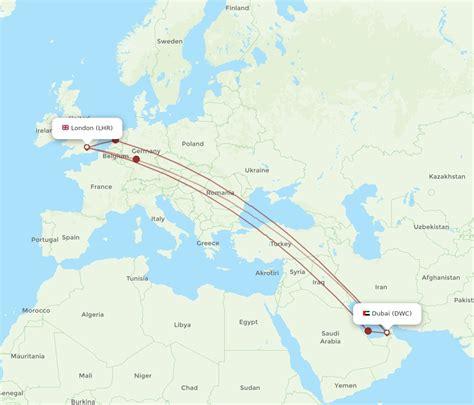
British Airways is preparing to restart its nonstop London Heathrow–Dubai route in early November 2026, restoring a strategically important link just ahead of the peak winter travel season. The airline has not operated the route since February 2026, but current schedules indicate that flights are planned to return from November 3, initially with one daily service before a second daily frequency is added later in the month. British Airways continues to sell flights to Dubai through its booking system, while its published information describes the London–Dubai journey as taking just under seven hours.
The restart is significant because Dubai is one of the largest international markets served from London. The route is supported by substantial local demand, including passengers traveling specifically between the two cities rather than using Dubai as a connecting point. That distinction matters for British Airways because point-to-point passengers can provide attractive yields while avoiding some of the complexity associated with competing primarily for connecting traffic.
The return, however, will look noticeably different from the schedule British Airways operated before the suspension. Rather than immediately restoring its previous three-daily winter operation, the airline is taking a more conservative approach. The planned schedule reduces the number of departures by around 40%, while available seats fall even more sharply because the Airbus A380 is no longer scheduled on the route. That creates a smaller but potentially more disciplined operation as the airline assesses demand and operating conditions.
British Airways London–Dubai Flights Return November 3
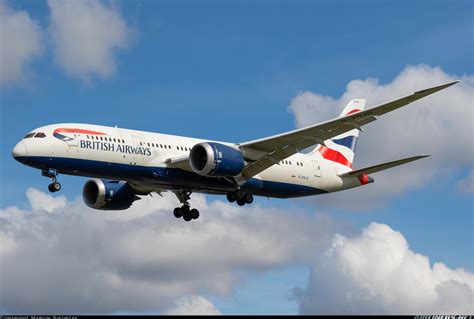
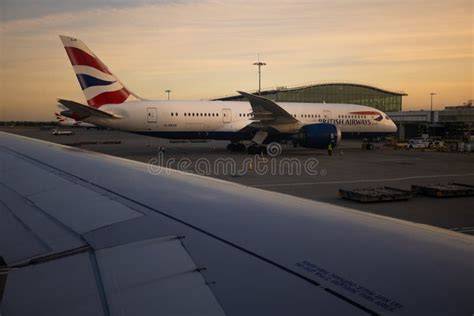
The first scheduled service is BA105, departing London Heathrow at approximately 8:40 p.m. and arriving at Dubai International Airport at 7:40 a.m. the following morning. The return service, BA104, is scheduled to leave Dubai at 10:00 a.m. and reach Heathrow at about 2:10 p.m. British Airways is expected to operate the service with a Boeing 787-10, giving passengers a modern long-haul aircraft without the enormous capacity associated with the A380.
From November 29, the schedule is planned to expand with BA107, departing Heathrow at 12:35 p.m. and arriving in Dubai at 11:45 p.m. The corresponding BA106 service is scheduled to depart Dubai at 2:15 a.m. and arrive at Heathrow at 6:25 a.m. The second rotation is expected to use several aircraft types, including the Boeing 777-200ER and Boeing 787 Dreamliner family, depending on the operating date. Independent schedule data also shows BA105 operating with the 787-10 from late October into the winter timetable.
This means passengers will have more flexibility later in November, with an evening departure from London complemented by a daytime departure. For business travelers, leisure passengers and connecting customers, that broader schedule can be valuable because it provides more choices without requiring British Airways to immediately return to its former three-flight-per-day pattern.
Why British Airways Is Dropping the Airbus A380
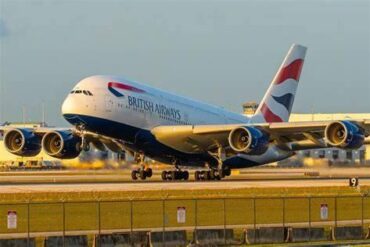
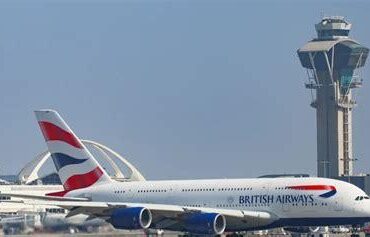
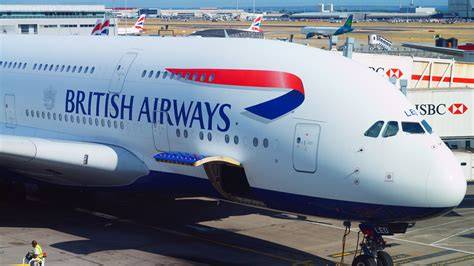
The most striking change is the disappearance of the Airbus A380 from British Airways’ planned Dubai schedule. The superjumbo previously played an important role on the route, particularly during the winter season when demand was strong enough to support its enormous capacity.
Removing the A380 has a direct impact on seat supply. The aircraft offered substantially more seats than the smaller Boeing 777 and 787 aircraft now planned for the route, meaning British Airways can reduce capacity without eliminating the connection altogether. The strategy also gives the airline greater flexibility to match aircraft size with demand rather than committing hundreds of additional seats to every departure.
The decision may also be connected to the airline’s wider A380 plans, including aircraft undergoing retrofit and cabin reconfiguration. British Airways has been investing in its long-haul fleet and premium cabins, so keeping the A380 away from the Dubai schedule can help preserve operational flexibility while those aircraft move through the modernization program.
Dubai Provides British Airways With a Strong Local Passenger Base
Dubai is especially valuable to British Airways because much of the traffic is not dependent on onward connections. Data cited for 2025 indicates that roughly 70% of British Airways’ passengers on the London–Dubai route were local travelers, meaning they flew between Heathrow and Dubai rather than continuing through one of the two airports.
That is an important commercial advantage. Connecting passengers can be highly price-sensitive because airlines compete with multiple routing combinations, while passengers traveling directly between major business and leisure markets can be more valuable. London and Dubai have strong corporate, tourism, family and financial links, creating a diversified demand base that does not depend entirely on one category of traveler.
The remaining traffic also demonstrates the importance of Heathrow as a connecting hub. Around one-quarter of passengers connected onward at London Heathrow, with popular destinations including Aberdeen, Glasgow, Manchester, Cork, New York JFK, Belfast City, Dublin, Paris Charles de Gaulle, Luxembourg and Newcastle. For these travelers, British Airways’ Dubai service can function as part of a wider one-stop journey rather than simply a London–Dubai flight.
British Airways Faces Heavy Competition From Emirates
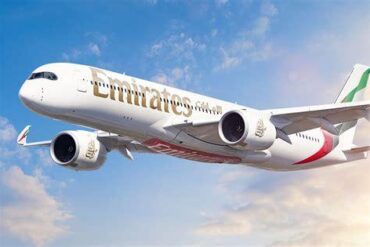
British Airways will return to a market dominated by Emirates, which remains the largest operator between London and Dubai. The upcoming winter schedule is expected to feature roughly 13 to 14 daily services between the London area and Dubai, with Emirates accounting for the overwhelming majority.
Emirates is scheduled to offer multiple daily flights from Heathrow, Gatwick and Stansted, using a mixture of Airbus A380s, Airbus A350-900s and Boeing 777-300ERs. That gives the Dubai-based carrier a major advantage in frequency and airport choice, particularly for travelers who value schedule flexibility.
British Airways therefore does not need to match Emirates flight for flight. Its smaller schedule can instead focus on the strengths of its Heathrow network, its premium cabins, its frequent-flyer base and its extensive onward connections across the United Kingdom and Europe. Heathrow’s role as British Airways’ principal hub remains central to that strategy; the airline says the airport serves more than 115 destinations from Terminal 5 and 19 from Terminal 3.
What the Dubai Restart Means for Travelers
For passengers, the November restart is good news, but expectations should be realistic. British Airways is returning to Dubai with a smaller operation, not simply restoring the exact schedule it operated before the suspension. The initial daily flight from November 3 will be followed by a second daily service from November 29, giving travelers additional options as the winter season develops.
The absence of the A380 also changes the onboard experience for passengers who previously associated the route with British Airways’ flagship aircraft. Instead, travelers can expect aircraft from the airline’s Boeing 787 and 777 fleets, depending on the flight and date. British Airways’ own Dubai information continues to promote its business-class offering, including lie-flat seating, dedicated check-in and lounge access.
The timing is equally important. Dubai is a major winter-sun destination, and British Airways’ own booking material highlights year-round demand for the market. By restoring service in November, the airline can re-enter the market before the busiest winter travel period while maintaining a capacity level that is considerably more cautious than in previous years.
A Carefully Managed Return to Dubai
British Airways’ planned return to Dubai represents more than the simple restoration of an eight-hour-class international route. It is a calculated attempt to reconnect with one of its most important Middle Eastern markets while maintaining tighter control over capacity. The airline has a strong base of local passengers, valuable premium demand and a powerful Heathrow network, but it also faces an enormous competitive presence from Emirates.
The most important dates are November 3, 2026, when the first daily BA105/BA104 operation is scheduled to return, and November 29, when the second daily rotation is planned to begin. Current schedules remain subject to change, so travelers should verify the exact aircraft, timings and operating status when booking. British Airways itself notes that its timetable can be adjusted during the year for operational reasons.
For travelers planning a London–Dubai trip this winter, the route’s return creates another nonstop option from Heathrow. And while the A380 may be missing, British Airways is betting that a smaller, more flexible schedule can still capture the highly valuable demand connecting two of the world’s most important aviation and business hubs.