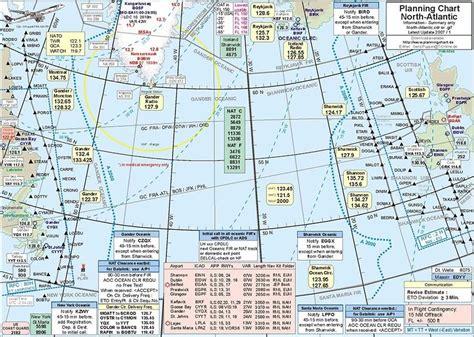
Reduced Lateral Separation Minimum, or RLatSM, introduces a new standard of 25 nautical miles for lateral separation in the North Atlantic High Level Airspace (HLA), specifically within the Minimum Navigation Performance Airspace (MNPS). This change applies to qualified aircraft flying in the Organised Track System (OTS). The idea behind RLatSM stems from advancements in aircraft technology, particularly improvements in avionics and flight management systems. These developments prompted an evaluation to see if the existing one-degree latitude separation, roughly 60 nautical miles, could be decreased. The goal is to create more route options and enhance airspace capacity at optimal flight levels. Under RLatSM, the minimum lateral separation is now set at 25 nautical miles. This is achieved by spacing adjacent tracks by one-half degree of latitude. The rollout of RLatSM is occurring in phases, with the first phase starting in late 2015. During this initial phase, one-half-degree spacing was introduced by adding a new track between the existing core tracks of the NAT OTS from flight levels 350 to 390. Future plans for Phase 2 aim to extend RLatSM throughout the entire NAT OTS. Each RLatSM track and flight level will be clearly identified in Note 3 of the REMARKS section of the OTS Track Message. Only operators and aircraft that meet specific criteria will be able to use these designated RLatSM tracks between flight levels 350 and 390. To qualify, operators must have Required Navigation Performance (RNP) 4 approval, and their aircraft must be equipped with both Controller Pilot Data Link Communications (CPDLC) and Automatic Dependent Surveillance – Contract (ADS-C). It’s important to note that the contingency procedures outlined in the North Atlantic Operations and Airspace Manual (NAT Doc 007) remain unchanged for RLatSM track spacing. Additionally, Strategic Lateral Offset Procedures (SLOP) are authorized and encouraged.