The crash of UPS Airlines Flight 2976 was, according to the family of one of its pilots, no random tragedy written off as fate. It was the foreseeable outcome of mechanical failure and corporate decisions. Now, the widow of a UPS captain who died when the carrier’s aging McDonnell Douglas MD-11 went down near Louisville International Airport in November 2025 is taking Boeing, General Electric, and VT San Antonio Aerospace to court. The lawsuit alleges wrongful death, negligence, loss of consortium, and demands punitive damages tied to what the family describes as systemic failures that culminated in an engine tearing away from the aircraft seconds after takeoff.
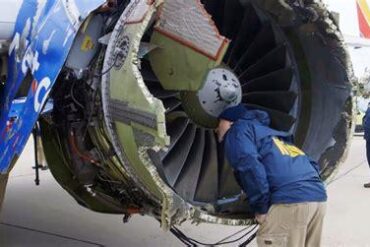
The legal action follows the release of the National Transportation Safety Board’s preliminary report, which documented a catastrophic sequence: a fire in the aircraft’s left engine during takeoff, followed by the engine’s complete separation from the wing. For the Diamond family, represented by attorney Mark Lanier, this was not an unforeseeable accident but a chain reaction rooted in engineering design, manufacturing accountability, and maintenance oversight.
“When an engine separates from a wing seconds after takeoff, that’s not an accident,” Lanier stated publicly. “That’s a failure by the companies responsible for building and maintaining that aircraft.” The statement now anchors a case that could scrutinize not only a single airframe, but decades of design decisions surrounding the MD-11 platform.
Engine Separation On Takeoff: What Happened To UPS Flight 2976
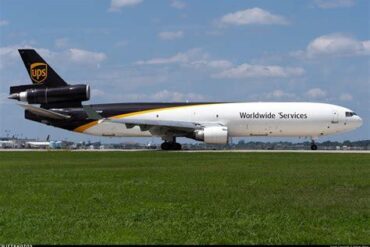
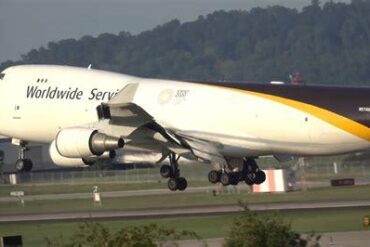
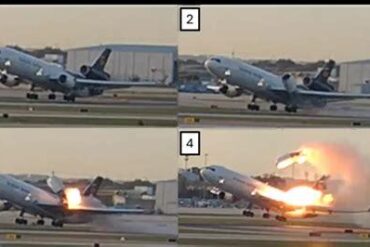
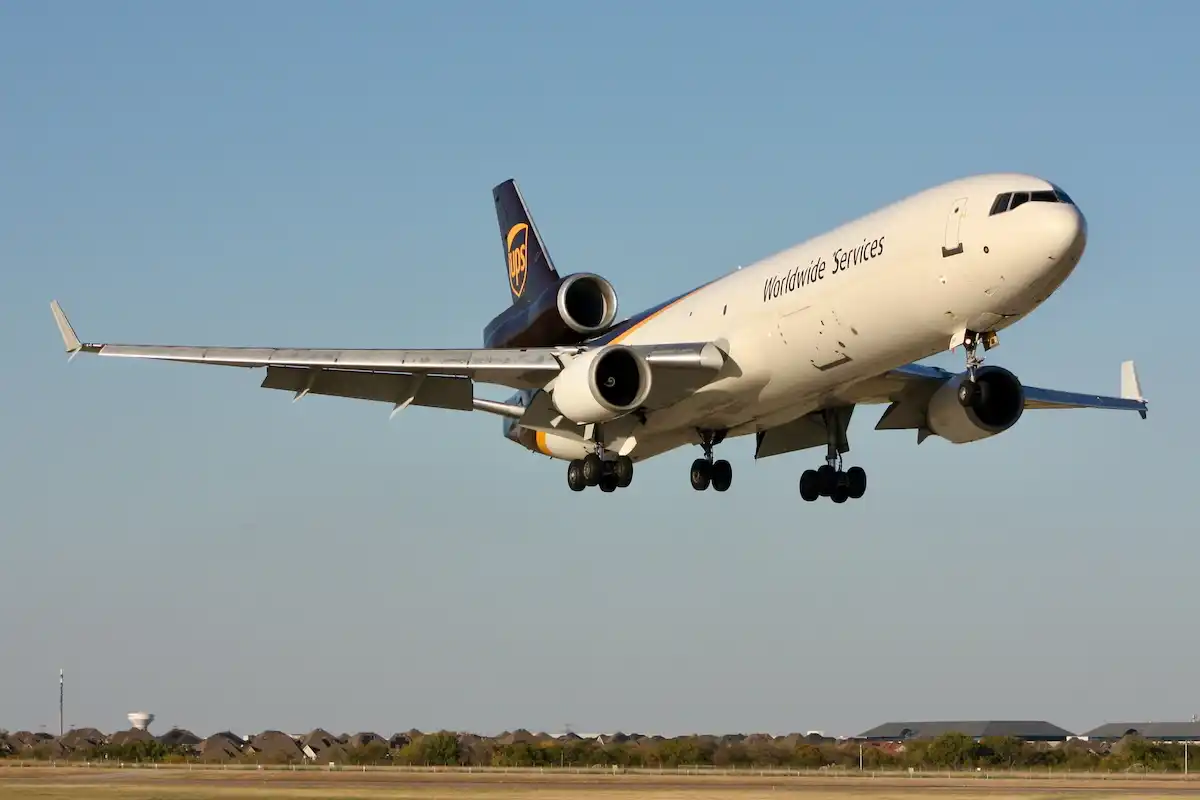
On the evening of November 4, the 34-year-old MD-11 freighter lifted off from Louisville, the primary hub for UPS Airlines. Within moments, cockpit data recorded a fire warning in the left engine that persisted for approximately 25 seconds. Almost immediately after ignition, the engine separated from the wing structure.

An aircraft losing an engine is a serious but theoretically manageable event; modern jets are certified to continue flight on one engine. However, an engine detaching entirely introduces a different physics problem. Beyond the immediate loss of thrust, the aircraft experiences a violent mass imbalance. The MD-11, already known among pilots for its precise handling characteristics, would have faced abrupt asymmetry in lift, drag, and weight distribution. That imbalance, combined with the fire and structural disruption, left little margin for recovery at low altitude.
The aircraft crashed close to airport grounds. All 15 people on board were killed, including the three flight crew members. For a cargo carrier that prides itself on operational precision, the loss reverberated across the industry.
Groundings, Retirements, And The Future Of The MD-11
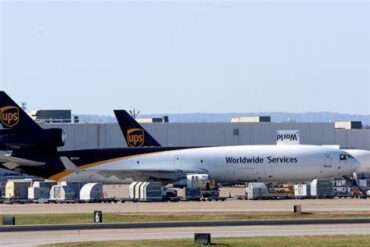
In the immediate aftermath, major MD-11 operators grounded their fleets “out of an abundance of caution.” UPS Airlines went further, announcing the retirement of its remaining MD-11 aircraft, more than two dozen tri-jets that had long served as workhorses of its cargo network.
FedEx Express, another significant MD-11 operator, opted for a different path. While temporarily grounding its fleet, the company signaled plans to return the aircraft to service. The divergence highlighted an uncomfortable reality: the MD-11 remains operationally valuable for some carriers despite its age and past performance debates.
The MD-11, originally developed by McDonnell Douglas and later absorbed into Boeing’s portfolio after the 1997 merger, has always carried a complex reputation. Its extended fuselage and distinctive tail-mounted third engine offered long-range efficiency for cargo operators. Yet pilots have historically described it as less forgiving than its predecessor, the DC-10. In cargo service, where operational economics often extend aircraft life cycles, that legacy persisted.
A Known Issue: Engine Mount Bearings Under Scrutiny
The lawsuit’s most explosive implication centers on prior knowledge. In January, the NTSB’s preliminary findings pointed to a failure in the engine mount assembly as the initiating event. Specifically, the bearings within the engine mount structure fractured, leading to separation.
This was not the first time such fractures had surfaced. In 2011, Boeing issued a service letter to MD-11 operators after discovering cracked bearings in the engine mount assemblies on three aircraft. The service letter recommended enhanced inspection intervals and introduced updated parts and a revised bearing design. However, those changes were advisory, not mandatory. At the time, Boeing stated that bearing failure would not adversely affect flight safety.
That assessment is now under intense scrutiny. Service letters differ from airworthiness directives, which are legally enforceable requirements issued by regulators. The distinction matters profoundly in court. Plaintiffs are expected to argue that known mechanical vulnerabilities were insufficiently addressed, and that recommendations without mandates leave too much discretion in a high-risk environment.
The aircraft involved in the crash had spent more than a month in San Antonio undergoing maintenance related to its fuel tank before returning to service. VT San Antonio Aerospace, which performed that maintenance, is named in the suit. Investigators are examining maintenance logs, inspection records, and compliance with recommended bearing checks to determine whether warning signs were missed.
Corporate Responsibility And Aviation Safety Culture
Commercial aviation operates on layers of redundancy: engineering design, manufacturer guidance, airline procedures, and regulatory oversight. When those layers align, air travel achieves its remarkable safety record. When gaps emerge between them, consequences can be catastrophic.
The Diamond family’s case aims to test whether those layers failed collectively. Did the engine mount design contain an inherent weakness? Were inspections frequent and rigorous enough after the 2011 findings? Did maintenance procedures adequately account for prior advisories? These are not abstract engineering questions; they are legal ones, with potential financial and reputational consequences for aerospace giants.
General Electric, as the engine manufacturer, faces scrutiny over the powerplant itself and its integration with the mount structure. Boeing, inheriting the MD-11 program, confronts questions about legacy designs and post-merger oversight. VT San Antonio Aerospace must demonstrate that maintenance work met or exceeded prescribed standards.
The Role Of The NTSB And What Comes Next
The NTSB’s final report will ultimately define the technical narrative of the crash. Preliminary findings establish direction, but final determinations can take months, even years, as metallurgical analysis, data recorder reviews, and systems simulations are completed.
For the aviation community, the outcome may influence inspection protocols for remaining MD-11 fleets worldwide. For the courtroom, it will shape arguments over foreseeability, negligence, and punitive damages.
For one family in Louisville, the stakes are more personal. The lawsuit is not merely about compensation; it is about accountability in an industry that trades on precision. When a 60,000-pound engine detaches from a wing seconds after takeoff, the line between accident and failure becomes the central question. The answer will echo far beyond a single runway in Kentucky.