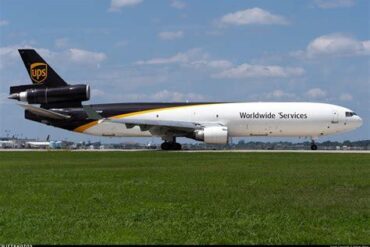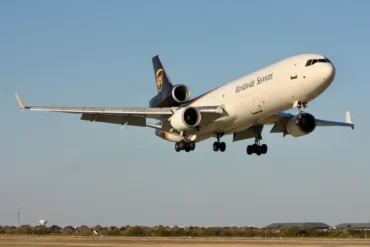
The crash of UPS Flight 2976 has emerged as one of the most technically revealing aviation accidents in recent memory, not because of a dramatic weather event or pilot error, but due to the failure of a three-inch metal component hidden deep within the aircraft’s engine mount system. New findings from the National Transportation Safety Board (NTSB) confirm that this exact failure point had been flagged by Boeing nearly 15 years earlier, raising serious questions about oversight, risk assessment, and the long tail of aging aircraft design.
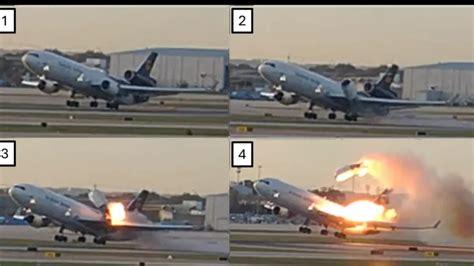
On November 4, 2025, the McDonnell Douglas MD-11F departed Louisville on what should have been a routine cargo flight. Seconds after liftoff, the aircraft’s left engine and pylon assembly separated from the wing, igniting a fireball and leading to a catastrophic loss of control. The aircraft crashed shortly after takeoff, stunning investigators with the rarity of an in-flight engine separation of this nature.
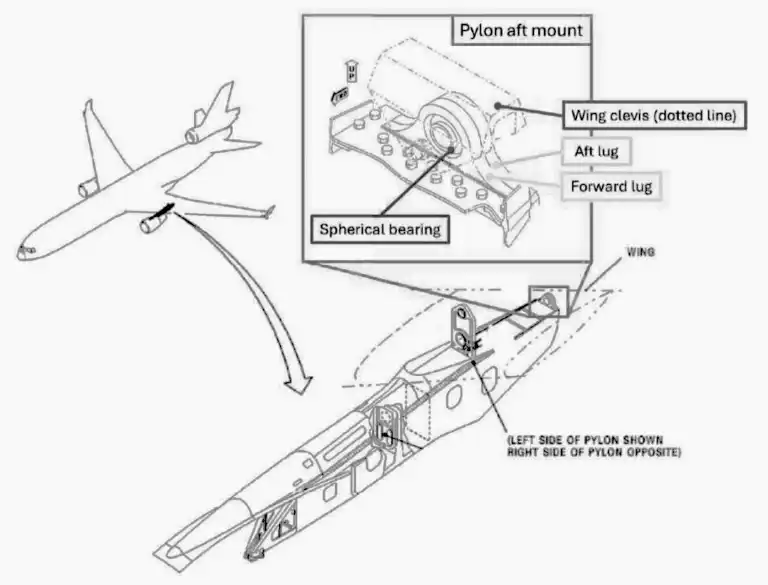
Early analysis pointed to structural failure, but it was not until January 14, 2026, that investigators were able to pinpoint the precise cause. According to the NTSB’s update, the initiating failure occurred in a three-inch spherical bearing housed within the aft engine mount lug of the number one engine pylon. That bearing, though small, was critical to maintaining alignment and load transfer between the engine and the wing.
Inside the Failed MD-11 Engine Mount Bearing
The MD-11 engine mounting system relies on two primary bearings per pylon, designed to absorb vibration, thrust, and torsional loads during all phases of flight. Investigators found that the aft mount bearing housing fractured, allowing the engine and pylon to rotate violently under load. The lugs that encase the bearing, normally bolted together, had fully fractured, while the spherical bearing race itself split into forward and aft sections.
Metallurgical examination revealed long-term fatigue cracking, a slow and progressive failure mode that develops over years rather than moments. By the time UPS Flight 2976 took off, the cracks had reached a critical threshold. Once full engine thrust was applied, the remaining structural integrity collapsed almost instantly, tearing the engine from the wing and rupturing fuel lines in the process.
The violent separation likely expelled high-energy debris, with investigators examining whether fragments may have impacted the tail-mounted number two engine, compounding the loss of control. While analysis is ongoing, the sequence of events underscores how a localized failure can cascade across an aircraft’s entire propulsion system.
Boeing’s 15-Year-Old Warning and the FAA’s Response
What makes the findings especially significant is that Boeing was already aware of pylon bearing vulnerabilities on the MD-11 as early as the late 2000s. Following four prior bearing-related incidents, Boeing coordinated with the Federal Aviation Administration (FAA) to issue a service bulletin recommending enhanced inspections every five years and replacement with an improved bearing design.
Critically, the bulletin did not mandate compliance. No Airworthiness Directive (AD) was issued, meaning operators could legally continue flying without installing the updated components. Boeing’s internal assessment at the time concluded that the issue did not present an immediate safety risk, a judgment that now faces renewed scrutiny.
The aircraft involved, N259UP, had not been retrofitted with the newer bearing design. Investigators have not yet confirmed whether UPS upgraded any other MD-11s in its fleet, but the absence of a mandate meant adoption varied widely across operators.
Maintenance Inspections and Missed Fatigue Cracks
The NTSB is now closely examining UPS Airlines’ maintenance program, particularly inspection practices related to engine pylons. Records show that the left pylon on N259UP underwent a visual inspection in 2021, which it passed. A more invasive inspection of the mount lugs was not yet due under existing maintenance schedules.
Fatigue cracks of this nature can be extremely difficult to detect without non-destructive testing methods, especially when concealed within complex assemblies. Investigators must now determine whether inspection intervals were sufficient, whether warning signs were present but overlooked, or whether existing inspection criteria were fundamentally inadequate for an aircraft well past 30 years of service.
The findings reopen a longstanding debate in aviation safety: how to balance economic aircraft longevity with the evolving understanding of age-related structural risk.
Industry Fallout and the Grounding of the MD-11 Fleet
In response to the new evidence, the FAA issued an emergency airworthiness directive grounding all U.S.-registered MD-11 aircraft pending corrective action. Because the directive did not initially specify a fix, the grounding effectively halted MD-11 operations indefinitely.
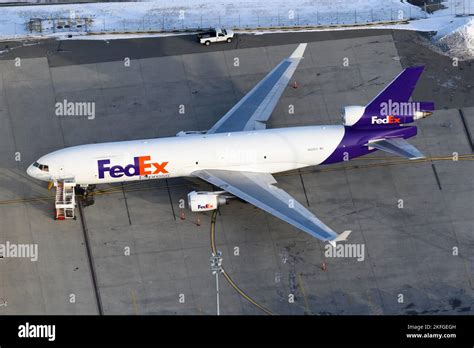
Cargo carriers, however, are not preparing to abandon the type. FedEx Express, the largest remaining MD-11 operator, has expressed confidence that the issue can be resolved through bearing replacement rather than full pylon redesign, a solution that would be comparatively fast and cost-effective. Once mandated inspections and modifications are finalized, the aircraft are expected to return to service until they naturally phase out.
A Small Part With Enormous Consequences
The UPS Flight 2976 investigation illustrates how minor components can carry disproportionate risk when embedded in critical systems. A three-inch bearing, identified years earlier and left optional to replace, ultimately proved capable of bringing down a wide-body freighter within seconds.
As the NTSB continues its work, the aviation industry is being forced to confront uncomfortable questions about legacy aircraft, voluntary compliance, and deferred risk. The answers will shape not only the future of the MD-11, but how similar warnings are treated across aging fleets worldwide.