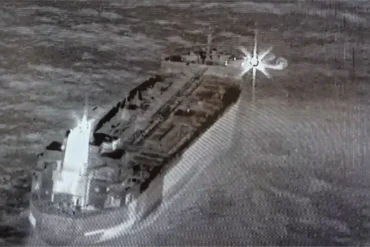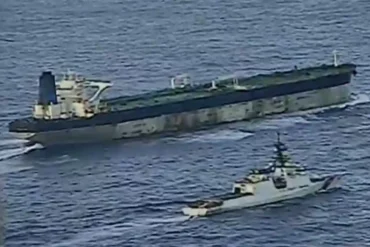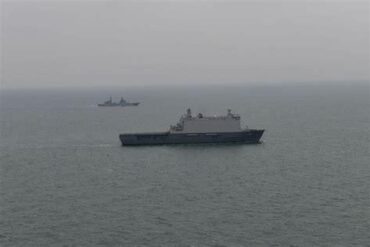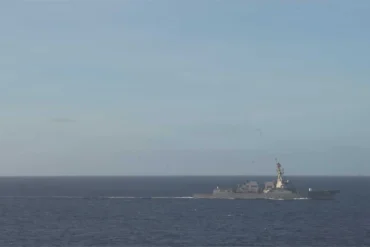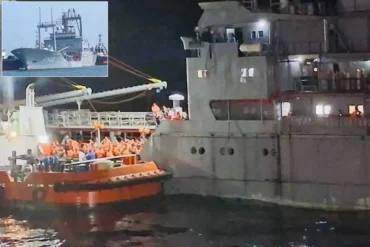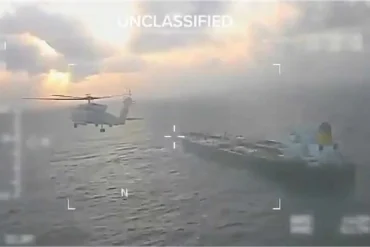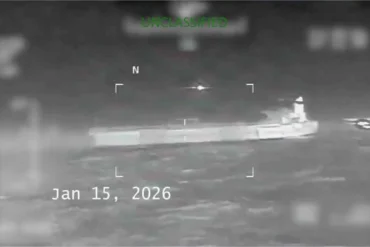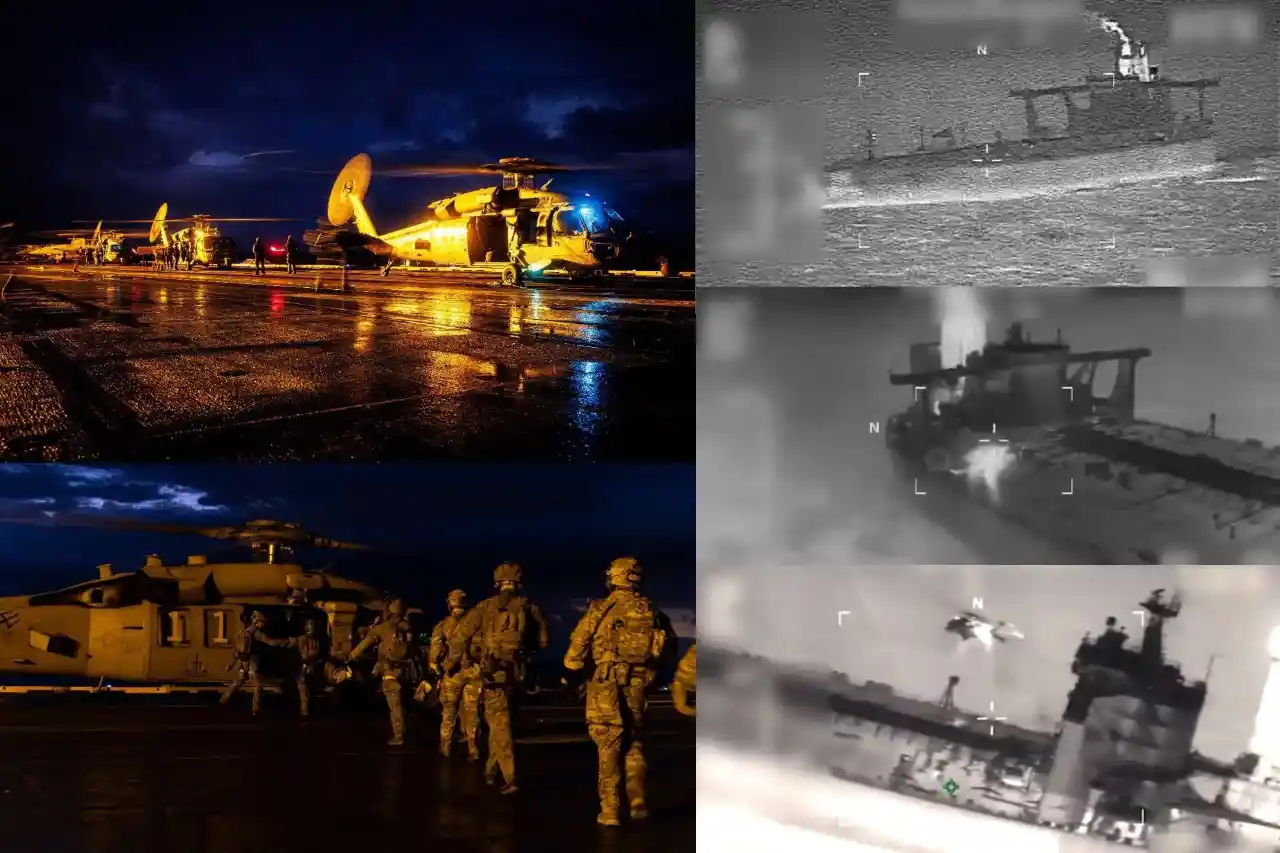
The United States has executed a bold maritime seizure operation, intercepting a Russian-flagged oil tanker in the North Atlantic Ocean. This vessel, previously known as Bella 1 and later renamed Marinera, was reportedly en route to Venezuela to load sanctioned oil when it became the subject of an aggressive international pursuit. The seizure has sparked outrage from Moscow and escalated already-tense U.S.-Russia relations, especially given the dramatic reports of Russian submarine involvement.
Operation in the Atlantic: A High-Stakes Seizure
The U.S. Department of Homeland Security, in coordination with the U.S. European Command and military personnel, seized the tanker in international waters north of the Atlantic, far from any national jurisdiction. The move was justified by a warrant from a U.S. federal court, citing sanctions violations related to Venezuelan oil exports.
The operation came shortly after the vessel had escaped an initial U.S. Coast Guard boarding attempt near the Caribbean, defying calls to surrender and instead bolting into the open ocean. As it fled, the crew painted a Russian flag on its hull and switched its registry to Russia, triggering a dramatic geopolitical spectacle.
Russia’s Response: Legal Fury and Naval Escalation
The Russian Ministry of Transport condemned the seizure as an unlawful act, citing the 1982 United Nations Convention on the Law of the Sea (UNCLOS). According to their statement, the vessel had received temporary permission to operate under the Russian flag on December 24 and was well outside any national territorial waters when intercepted.
Moscow denounced the boarding as a violation of international maritime norms and accused the United States of exercising “gunboat diplomacy” under the pretense of sanctions enforcement. In a dramatic twist, Russia allegedly deployed a submarine and several naval assets to shadow the vessel after the U.S. began its pursuit — an extraordinary escalation that signals how critical such sanctions-busting shipments have become for Moscow.
Shadow Fleet and Sanctions Evasion: A Global Cat-and-Mouse Game
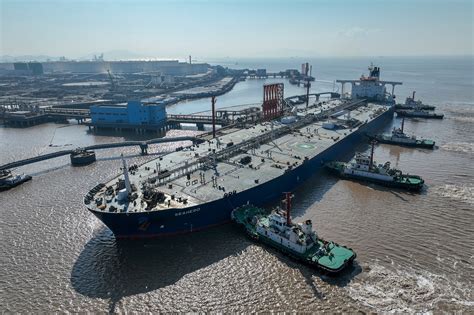
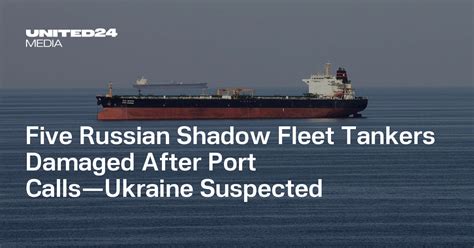
The tanker Marinera is part of a vast and elusive network known as Russia’s “shadow fleet.” This fleet comprises roughly 1,000 aging, minimally regulated oil tankers, many of which operate under dubious ownership structures and fly flags of convenience from countries outside the Western alliance. Their mission: to keep Russian and sanctioned Venezuelan oil flowing to sympathetic markets, including India and China, without touching Western financing, insurance, or shipping services.
These vessels often engage in AIS spoofing, manipulate signal transponders, and use ship-to-ship (STS) transfers in international waters to obscure their cargo’s origin and destination. The Marinera’s attempted voyage to Venezuela—already a flashpoint in U.S. foreign policy—was another act in this high-stakes chess match, where geopolitical rivals maneuver within the gray areas of international law.
American Enforcement: Beyond Price Caps and Diplomatic Warnings
The seizure is the latest in a growing list of U.S. efforts to curtail oil revenues from Russia, Iran, and Venezuela, all under heavy sanctions. Since late 2022, the United States has spearheaded a global coalition to enforce a $60-per-barrel price cap on Russian crude.
This policy, however, has yielded mixed results. While it temporarily disrupted Russian revenue, it also incentivized the creation of shadow transport channels outside G7 oversight. In response, the U.S. Treasury’s Office of Foreign Assets Control (OFAC) has sanctioned:
- 183 oil tankers involved in evading sanctions
- Major Russian oil producers such as Gazprom Neft, Surgutneftegas, Rosneft, and Lukoil
- Dozens of opaque middlemen, insurers (notably Ingosstrakh and Alfastrakhovanie), and shell companies
The October 2025 sanctions against Rosneft and Lukoil were particularly impactful, freezing key assets and threatening secondary sanctions for any global buyers—including banks and shipping firms—willing to engage with Russian crude.
Venezuela’s Role and the U.S. Global Blockade Strategy
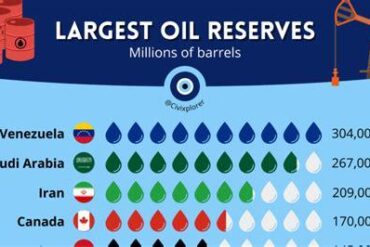
The U.S. embargo against Venezuelan oil has remained stringent since the Trump administration resumed “maximum pressure” tactics in late 2024. President Donald Trump, frustrated by stalled Ukraine peace talks and Venezuela’s continued alignment with Russia, reasserted full enforcement of the blockade, stating that “no oil flows freely to or from Caracas under our watch.”
This has led to renewed scrutiny of tankers suspected of breaching the embargo. The Marinera, reportedly en route to load Venezuelan crude in December 2025, fell into this category. After escaping the Caribbean, it sailed northward, remaining empty but under U.S. and NATO surveillance as it approached Iceland’s exclusive economic zone.
Its audacious move to repaint and reflag under Russia, combined with Russia’s formal complaints and military escort, transformed what might have been a routine maritime interdiction into a full-scale diplomatic and naval flashpoint.
Submarine Deployment: Moscow’s Strategic Signal
While details remain classified, U.S. intelligence suggests that Russia dispatched a submarine and two naval support vessels to accompany the Marinera once it was repainted and reflagged. This was not merely an act of protection but a deliberate deterrence signal aimed at Washington.
The presence of a Russian submarine in the Atlantic, not far from U.S. naval and Coast Guard assets, was an unprecedented escalation in the ongoing economic conflict. It marked a new stage in Russia’s hybrid strategy, blending conventional military posturing with economic survival mechanisms.
Energy Wars: Global Trade Realignments
Despite unprecedented U.S. pressure, Russia’s energy trade continues, albeit at a discount. China imported a record 109 million tonnes of Russian crude in 2025, while India followed closely with 88 million tonnes. These volumes underscore the enduring appeal of discounted Russian energy, especially as both nations seek strategic autonomy.
But the impact of U.S. actions is beginning to show. Urals crude, Russia’s benchmark export grade, dropped to $34–49 per barrel in December 2025 — a historic low attributed to tighter shipping restrictions, enforcement on maritime services, and market fears over compliance.
Meanwhile, Venezuela—long ostracized from global oil markets—has become a crucial partner in the shadow fleet’s logistics chain. Caracas provides port access, oil blends for mixing, and crew support for tankers needing low-profile resupply.
Future Implications: Sanctions, Sovereignty, and Naval Power
The seizure of the Marinera sets a potent precedent for the United States’ willingness to enforce extraterritorial sanctions on the high seas. While U.S. officials cite national security and global legal frameworks to justify the action, critics argue it veers dangerously close to violating freedom of navigation principles, potentially creating flashpoints with countries like Russia and China.
This event could trigger retaliatory measures. Moscow has already warned of “unpredictable consequences” if civilian ships under Russian jurisdiction continue to be harassed in international waters. With the deployment of military hardware—including submarines—in support of economic assets, the line between commerce and combat becomes increasingly blurred.
Conclusion: The New Battlefield of Global Oil Trade
The seizure of the Russian-flagged Marinera is more than an isolated maritime incident. It is a flashpoint in a broader confrontation over energy dominance, international law, and economic warfare. As oil tankers become geopolitical pawns, escorted by submarines and hunted by coast guards, the rules of engagement on the world’s oceans are being rewritten in real time.
In an era where oil is as strategic as missiles, and where tankers navigate not just oceans but sanctions regimes, the U.S. and its adversaries are now locked in a global chess match—played out not just in boardrooms, but in the murky, turbulent waters of the high seas.