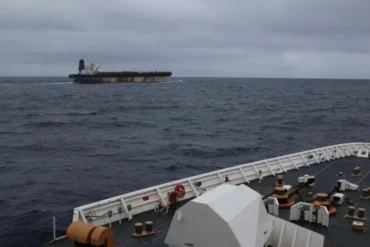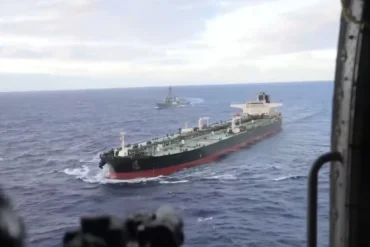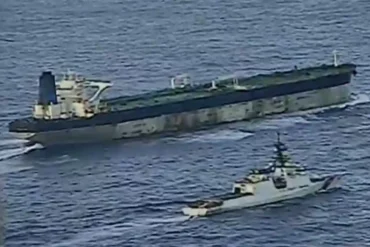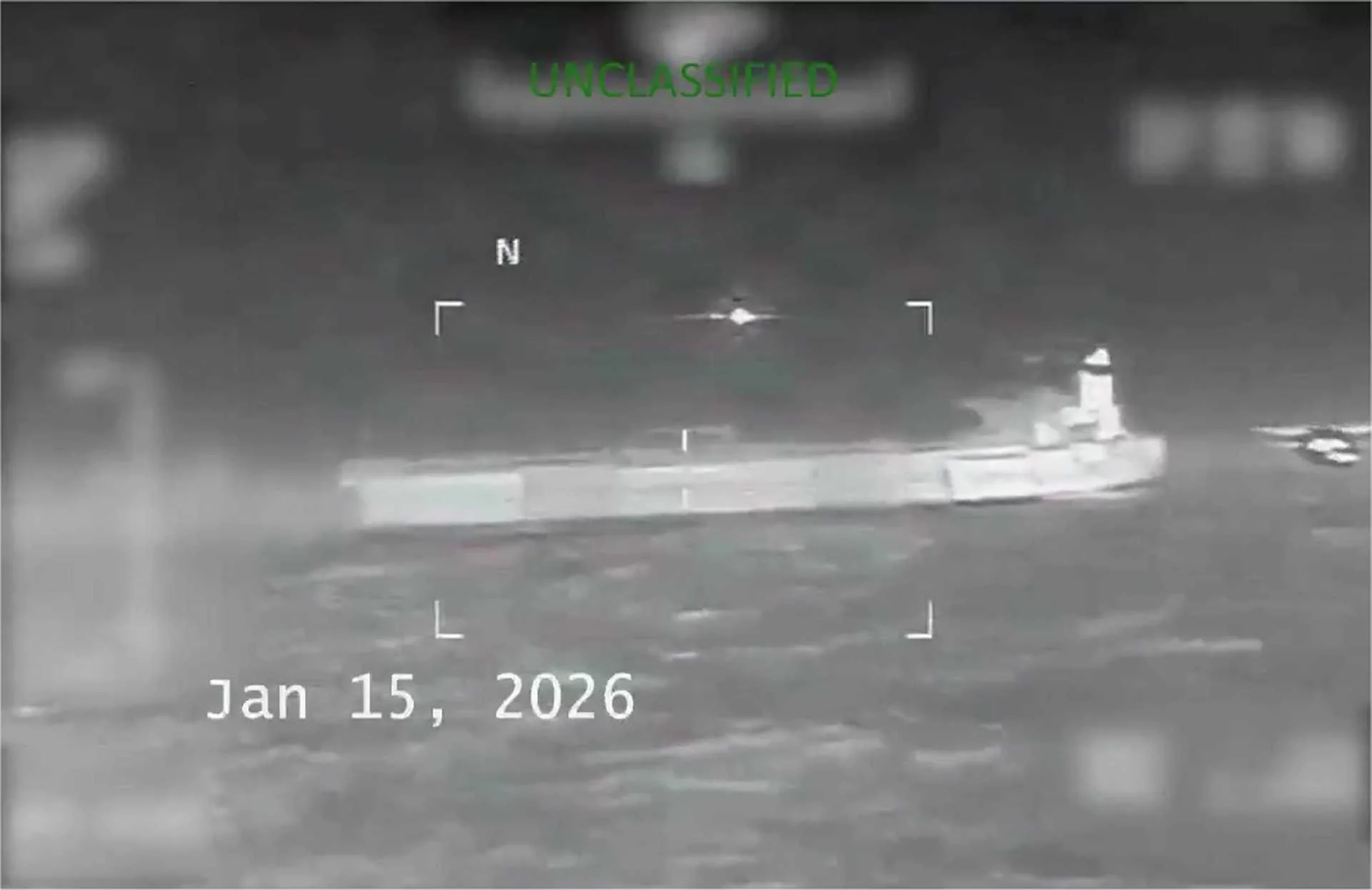
The seizure of the crude oil tanker Veronica marks a decisive escalation in Washington’s campaign to choke off sanctioned Venezuelan oil exports at sea, transforming policy declarations into visible force across one of the world’s most strategically sensitive maritime corridors. Conducted in international waters of the Caribbean Sea, the operation underscores how tanker interdiction has become the centerpiece of U.S. enforcement strategy against so-called shadow fleets that sustain sanctioned energy flows. With this latest action, the United States has now taken control of six Venezuela-linked tankers in a matter of weeks, signaling a sustained maritime crackdown rather than an isolated show of power.
At its core, the seizure of Veronica reflects a shift from indirect financial pressure to direct physical control of oil logistics. Venezuela’s dependence on seaborne exports leaves it acutely vulnerable to maritime enforcement, and U.S. authorities have moved to exploit that vulnerability with precision. By targeting vessels rather than intermediaries, Washington is dismantling the operational backbone of illicit oil trade, one tanker at a time, while sending a warning to shipowners, insurers, and flag registries worldwide.
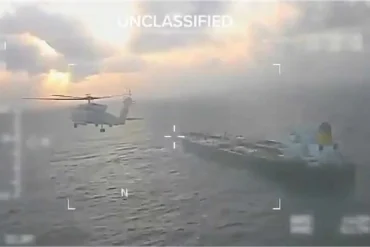
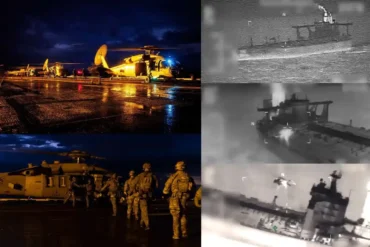
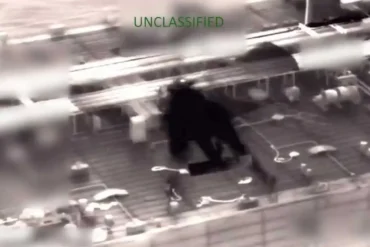
The operation unfolded in the early hours of January 15, 2026, when a U.S. Coast Guard tactical boarding team descended onto the tanker from a helicopter in a pre-dawn assault that met no reported resistance. Announced publicly by Secretary of Homeland Security Kristi Noem, the seizure was framed as a law-enforcement action rather than a naval engagement, even as it relied on extensive military support. Marines, sailors, and aviation assets worked alongside the Coast Guard, reinforcing the message that the blockade is backed by credible force.
The Veronica itself embodies the characteristics that have come to define the modern shadow fleet. Measuring roughly 249 meters in length with a beam of about 44 meters, the tanker falls within the Aframax to Suezmax class, capable of carrying more than 115,000 tons of crude oil in a single voyage. Its size makes it economically efficient for long-haul exports, particularly to Asian markets, while its operational history reveals a pattern of deliberate obfuscation. Over the years, the vessel has cycled through multiple flags and registries, including Iranian, Russian, Liberian, Dutch, and most recently Guyanese listings, a practice widely associated with sanction-affected shipping.
Tracking data and historical voyage records indicate that Veronica has been deeply embedded in sanctioned trade networks since at least 2020. During that period, the tanker conducted multiple direct exports of Iranian crude, completing ten voyages without intermediary transfers, and participated in at-sea ship-to-ship operations designed to disguise cargo origin. Similar techniques were later applied to Venezuelan oil movements, with at least two documented ship-to-ship transfers involving Venezuelan crude. Such practices are central to how shadow fleets operate, exploiting gaps in maritime oversight while manipulating tracking signals and documentation.
U.S. officials have emphasized that the seizure was conducted in international waters, a detail intended to reinforce the legal framing of the operation. By asserting that the tanker was operating in violation of a declared maritime blockade targeting sanctioned shipping, Washington positioned the action within a law-enforcement paradigm rather than an act of war. This distinction is crucial, allowing the United States to expand interdictions without triggering the diplomatic consequences associated with traditional naval blockades under international law.
The Veronica seizure follows a rapid series of interdictions that together illustrate the scope of the campaign. Among the most notable was the capture of the tanker Marinera, formerly known as Bella-1, after a pursuit lasting more than two weeks across the North Atlantic. That vessel, sailing under a Russian flag at the time, was reportedly nearing protection by a Russian submarine when it was taken under U.S. control. Additional seizures in Caribbean waters, including the tankers Olina and Sophia, revealed consistent patterns of opaque ownership, frequent renaming, and repeated involvement in sanctioned oil transport.
Collectively, these actions have reshaped tanker behavior across the region. Since the declaration of the blockade in December 2025, vessels linked to Venezuelan crude have altered routes, reversed course after loading, or remained anchored near ports to avoid interdiction. Automatic Identification System data show a sharp decline in outbound tanker traffic from Venezuelan terminals, reflecting the immediate deterrent effect of visible enforcement. For shipowners and operators, the risk calculus has changed dramatically, with seizure now a tangible and immediate threat.
Beyond enforcement, the campaign is also about control of revenue flows. Following the capture of former Venezuelan president Nicolás Maduro in early January 2026, U.S. policy has shifted toward direct oversight of the country’s oil exports during a fragile political transition. Officials have stated that seized cargoes may be sold or otherwise managed under U.S. supervision, preventing unauthorized shipments from reaching global markets. In effect, tanker interdictions have become a mechanism for regulating which Venezuelan oil can be sold, to whom, and under what conditions.
This approach represents a departure from earlier sanction regimes that relied primarily on financial isolation and designation lists. By physically removing tankers from circulation, the United States is constraining export capacity at the most fundamental level. Venezuela’s oil sector, already strained by years of underinvestment and infrastructure decay, faces an additional choke point that cannot be bypassed through paperwork or shell companies. The result has been a contraction in unauthorized exports that financial measures alone failed to achieve.
The implications extend far beyond Venezuela. Shadow fleets moving Iranian and Russian oil operate using similar methods, and the success of tanker seizures in the Caribbean is being closely watched in other theaters. U.S. officials have made clear that the tactics employed against Venezuelan shipping could be replicated wherever sanctioned oil flows depend on maritime transport. This prospect has introduced a new level of uncertainty into global energy logistics, particularly for buyers accustomed to discounted crude delivered through opaque channels.
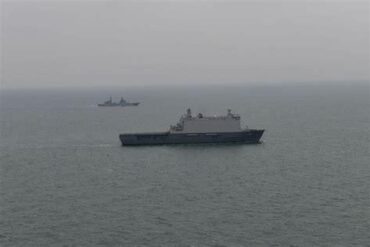
International partners are beginning to align with this more assertive posture. In the United Kingdom, preparations are underway to authorize the military seizure of shadow fleet tankers suspected of evading sanctions tied to Russian, Iranian, and Venezuelan oil exports. British ministers have identified legal grounds under the Sanctions and Anti-Money Laundering Act 2018 to board and detain vessels that are unflagged, falsely flagged, or otherwise operating outside legitimate registration frameworks. While no Royal Navy boarding has yet occurred, planning has advanced to the point where surface combatants, surveillance aircraft, and specialized boarding teams could be deployed with political approval.
Such developments point toward a broader normalization of maritime interdiction as a sanctions tool. If adopted by multiple Western navies, this model could significantly disrupt the shadow fleet ecosystem, raising costs and risks for operators while narrowing the channels through which sanctioned oil reaches global markets. For shipping insurers, classification societies, and port authorities, the message is equally clear: association with opaque tanker operations carries escalating legal and operational consequences.
For now, the seizure of Veronica stands as a symbol of this evolving strategy. It demonstrates that the United States is prepared to enforce its maritime red lines not just through declarations, but through sustained action backed by force. As tanker crews, shipowners, and energy traders reassess their exposure, the Caribbean has become a proving ground for a new era of sanctions enforcement—one in which control of the sea lanes is as decisive as control of the balance sheets.