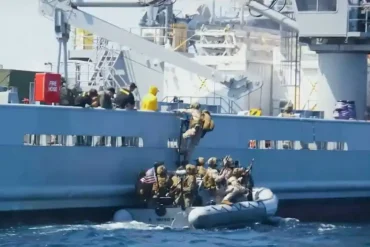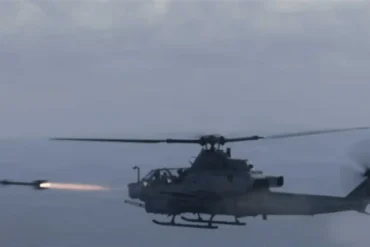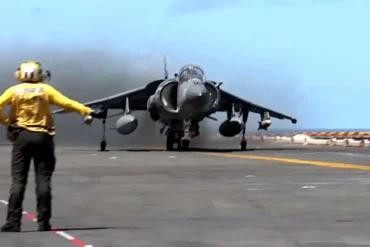
On January 9, 2026, a bold pre-dawn operation by U.S. Marines launched from the USS Gerald R. Ford led to the seizure of the oil tanker Olina in the Caribbean Sea, escalating Washington’s campaign against illicit fuel shipments linked to Venezuela and Russia. This high-stakes military maneuver is the fifth maritime interdiction under Operation Southern Spear, a coordinated U.S. effort aimed at strangling black-market energy flows that fuel autocratic regimes and undermine international sanctions.
Unmasking a Sanctions Evasion Network in the Caribbean
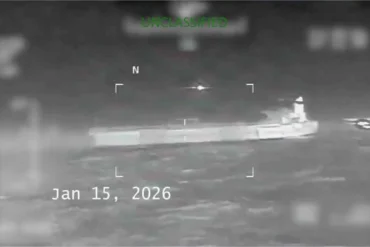
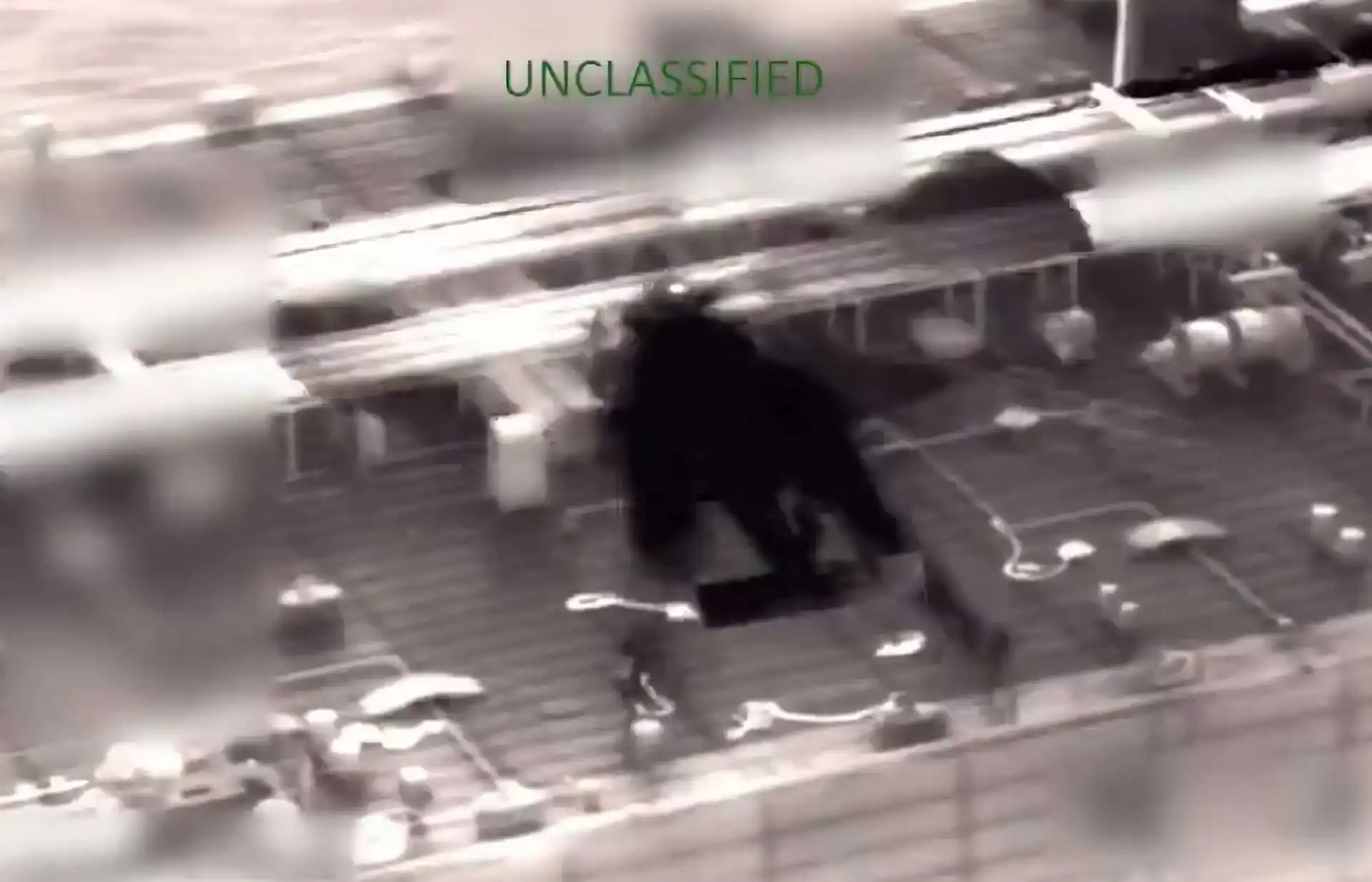
The operation began before dawn, as Special Forces assigned to Joint Task Force Southern Spear fast-roped from Black Hawk helicopters onto the deck of the Olina. Surveillance drones and reconnaissance aircraft provided overwatch while signals intelligence pinpointed the tanker’s location. The mission was executed flawlessly — no resistance was encountered, and the ship was quickly brought under control by Marine boarding teams.
Defense officials confirmed that the Olina was carrying a large volume of petroleum products believed to have originated from a sanctioned Venezuelan refinery, operated under a front company with ties to transnational criminal networks. Early forensic inspection of ship logs and cargo documents revealed signs of falsified manifests and a disguised ownership structure, hallmarks of the evasion tactics long associated with Venezuela’s shadow oil trade.
From Caracas to Moscow: A Growing Alliance of Evasion
The significance of the operation reaches far beyond the tactical victory. The seizure represents the growing urgency with which U.S. authorities are addressing the dual threat posed by Venezuelan and Russian energy smuggling networks. Over the past year, intelligence officials have traced an increasing number of shipments that blend Russian-origin oil with Venezuelan or third-party fuel, masking their origin through shell companies and altered bills of lading.
These hybrid cargos are typically routed through Caribbean transshipment hubs, where oversight is weaker and port officials can be coerced or corrupted. According to internal assessments, some vessels now operate with decoy transponders and flags of convenience, making them difficult to track and even harder to interdict.
Operation Southern Spear: Shifting From Disruption to Denial
Launched in early 2024, Operation Southern Spear is a multi-agency initiative combining U.S. military capabilities with interagency legal and intelligence support. Its core mission: dismantle the logistics networks that enable sanctions violations, particularly in maritime corridors.
The Olina is now the fifth vessel seized under this campaign, following earlier interdictions of:
- Sanrelli
- Elma Star
- Navi Sun
- Meridian Crown
In each case, tankers were caught transporting blended or misdeclared oil, much of it suspected to originate from restricted zones. The pattern confirms that the Caribbean has become the central artery in a sprawling sanctions evasion web stretching from the Orinoco Basin to the Baltic Sea.
Strategic Implications: Tankers as Geopolitical Weapons
While the seizures are tactical in nature, they are strategic in consequence. According to Pentagon analysts, every interdicted shipment represents a choked revenue stream for regimes that rely on covert fuel sales to fund domestic repression, pay foreign mercenaries, and prop up regional allies.
Venezuela’s Role
Under Nicolás Maduro, Venezuela has continued to operate a parallel oil economy, exporting crude via ghost tankers, often under the radar of international enforcement. These revenues have proven essential to maintaining Maduro’s grip on power.
Russia’s Expansion
With Western sanctions tightening, Russia has increasingly turned to the Western Hemisphere, leveraging its growing influence in Latin America to obfuscate oil origins and circumvent the G7-imposed oil price cap. U.S. officials now see a clear strategic partnership between Caracas and Moscow — not just in ideology, but in logistics.
The Role of USS Gerald R. Ford and Joint Forces
The USS Gerald R. Ford, the Navy’s newest and most advanced aircraft carrier, played a pivotal role in the operation. With its ability to deploy Special Operations teams, conduct long-range ISR (intelligence, surveillance, reconnaissance), and coordinate multi-domain targeting, the Ford embodies the modernization of U.S. maritime power.
Alongside it, the USS Iwo Jima Amphibious Readiness Group — including the USS San Antonio and USS Fort Lauderdale — has been integrated into the region to provide rapid-response capabilities, enhance regional deterrence, and serve as a flexible platform for ongoing interdiction missions.
These deployments, combined with diplomatic pressure on Caribbean nations suspected of turning a blind eye, are creating a formidable enforcement architecture designed to intercept tankers before they can offload or blend their cargo with legitimate shipments.
Caribbean Geopolitics and Legal Ambiguity
The Caribbean, long perceived as a tranquil backwater in global energy trade, is now emerging as a contested geopolitical space. The legal ambiguity surrounding maritime law in regional waters, compounded by weak enforcement from some coastal states, provides ample opportunity for sanctions evaders.
U.S. officials stress that more bilateral security agreements are needed with Caribbean states to allow for real-time action and to streamline jurisdictional complexities. Without such frameworks, even confirmed violators risk slipping through legal loopholes.
Financial Impact and Disruption of Criminal Ecosystems
Beyond state-level implications, the interdictions are also disrupting criminal networks that act as intermediaries in the oil smuggling trade. These include non-state brokers, logistics firms, and money launderers who exploit the opacity of maritime commerce.
With each interdiction, U.S. authorities collect electronic evidence, shipping logs, and communications intercepts that feed broader investigations into money laundering, weapons proliferation, and even narcotics trafficking, all of which are often tied to the same actors facilitating illegal fuel transport.
Economic Strain on Hostile Regimes
The compounded effect of these seizures is mounting economic strain on Caracas and Moscow. With less access to hard currency, regimes are being forced to scale back overseas activities, reduce payments to affiliates, and face internal unrest driven by lack of funding.
Future Outlook: Scaling the Maritime Crackdown
Operation Southern Spear is now entering what officials describe as a more aggressive and sustained phase. U.S. assets will remain in the region for the foreseeable future, backed by persistent surveillance coverage, enhanced partnerships with regional allies, and the legal authority to act swiftly when violations are detected.
The seizure of the Olina is not merely a headline-grabbing success. It sends an unmistakable signal to adversarial regimes: the U.S. is no longer content with passive enforcement. It is willing to interdict, board, and seize any vessel that dares to violate the global sanctions regime.
As the geopolitical stakes rise in the Americas, maritime enforcement is now a front-line instrument of national security. Tankers have become strategic assets — not just for the oil they carry, but for the ideologies and regimes they empower. With each seizure, the United States is not only protecting global market integrity but also defending democratic values and regional stability in a rapidly shifting international order.