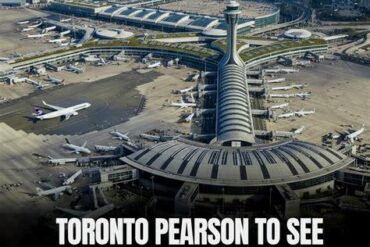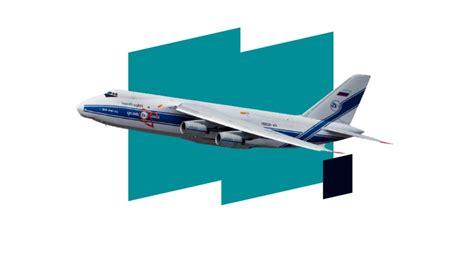
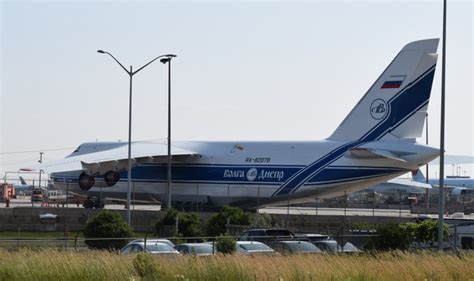
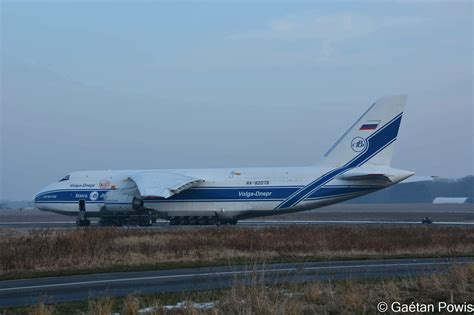
In a bold legal maneuver that deepens the global consequences of Russia’s war in Ukraine, Canada has intensified efforts to permanently seize the Antonov An-124, a colossal Russian cargo aircraft marooned at Toronto Pearson International Airport since early 2022. The aircraft, which belongs to Russia’s Volga-Dnepr Airlines, is among the largest of its kind and has become a potent symbol of geopolitical fallout and the changing tides of international law.
The Antonov An-124, with its massive frame and unmatched cargo capacity, was caught in bureaucratic limbo when Canada shut its airspace to Russian aircraft following the full-scale invasion of Ukraine. At the time of its stranding, the aircraft was in Toronto delivering COVID-19 test kits—ironically serving a humanitarian purpose when grounded by the very nation now contesting its ownership.
Legal Proceedings Escalate in Ontario’s Superior Court
On March 18, 2025, Canada’s Attorney General initiated forfeiture proceedings in Ontario’s Superior Court, pushing forward a legal agenda that seeks to legitimize the permanent seizure and eventual transfer of the aircraft to Kyiv. According to a spokesperson for Global Affairs Canada, this move follows earlier actions from June 2023, when Canada formally announced it had seized the aircraft.
The legal argument hinges on the sanctions regime introduced in response to Russia’s aggression against Ukraine. Volga-Dnepr Airlines, however, has mounted a fierce legal resistance. In addition to contesting the validity of the sanctions themselves, the company has filed a $100 million claim against the Canadian government, arguing that the seizure represents a breach of international commercial law and amounts to an unjust expropriation.
A Symbol of Russian Aviation and Global Tensions
The Antonov An-124, valued at approximately $300 million, is not merely an aircraft—it is a masterpiece of Cold War engineering and strategic airlift capability. With only 26 units ever built, the An-124 is often deployed to transport heavy and outsized cargo that no other aircraft can manage. Its ability to carry payloads exceeding 150 metric tons across intercontinental distances has made it a vital tool in both military and humanitarian missions.
In its heyday, the An-124 was a linchpin of Soviet and later Russian aerospace prowess. Its presence in Toronto, grounded and subject to legal wrangling, evokes a stark metaphor for Russia’s diminished global standing.
Canada’s Legal and Diplomatic Justification
Canada’s rationale for the seizure lies within its broader strategy of economic and symbolic pressure against Russia. By targeting high-value Russian assets, Ottawa hopes to reinforce its support for Ukraine while showcasing the practical enforcement of sanctions. The eventual transfer of the plane to Ukraine is being framed as a form of reparative justice—one that transforms a symbol of Russian industrial might into a tangible aid contribution for a war-torn ally.
Furthermore, Canada’s actions align with efforts by other Western nations to isolate Russia economically and politically. The decision also sends a strong message that the consequences of state aggression will extend into the commercial sphere.
Russia’s Fierce Rebuttal and International Implications
Unsurprisingly, Moscow has decried the move in the strongest terms. The Russian Foreign Ministry labeled the attempted forfeiture as “cynical and shameless theft,” further intensifying diplomatic strains. This rhetoric mirrors a broader pattern of Russian responses to international sanctions—disputing their legality while framing them as acts of Western hostility and provocation.
Russia’s legal challenge rests not only on contesting Canadian jurisdiction but also on questioning the legality of the sanctions regime itself. In its view, the aircraft is a sovereign commercial asset, protected under various international aviation and commercial treaties. Legal scholars, however, note that wartime measures and sanctions can override certain protections when national security and international peace are at stake.
The Aircraft’s Fate: Strategic Asset or Political Pawn?
The fate of the Antonov An-124 is not merely a legal matter; it has become an intensely politicized and symbolic battleground. Should Canada succeed in transferring the aircraft to Ukraine, the move would be rich with irony and strategic value. Ukraine, home to the Antonov Design Bureau and the now-destroyed An-225 Mriya, the An-124’s larger cousin, would be reclaiming a part of its aerospace legacy—albeit one previously under Russian operation.
Given Ukraine’s urgent need for logistics support in its defense against Russia’s invasion, the addition of an operational An-124 would offer both practical military value and nationalistic morale. Analysts speculate that the aircraft could be used for transporting humanitarian aid, heavy weaponry, or even be retrofitted for direct military logistics missions.
Global Legal Precedent and Diplomatic Ramifications
The legal implications of this case could ripple across international borders. If Canada’s courts uphold the seizure and transfer, it could set a precedent for the confiscation of state-affiliated commercial assets in times of conflict. Such a ruling would challenge long-standing norms around sovereign immunity and commercial neutrality.
Legal experts warn that while symbolic, this approach could open the door to retaliatory measures against Western assets in countries allied with Russia or other authoritarian states. It also raises important questions about how wartime sanctions intersect with international commerce, aviation law, and diplomatic immunity.
Maintenance, Deterioration, and Operational Concerns
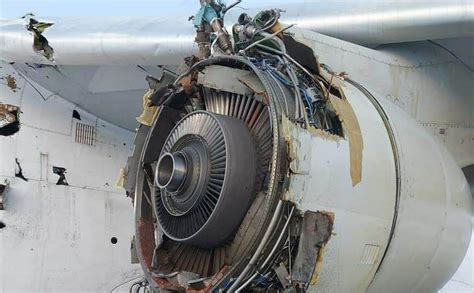
Though the An-124 remains physically intact at Toronto Pearson International Airport, questions about its maintenance and airworthiness continue to mount. Grounded since early 2022, the aircraft has likely suffered from environmental exposure, limited technical upkeep, and the logistical challenges of servicing a unique aircraft without support from its original operators.
Aviation experts suggest that restoring the An-124 to flight-ready condition would require significant investment, specialized technicians, and possibly parts that are difficult to procure due to existing sanctions. However, should Ukraine take possession, Ukrainian aerospace engineers familiar with Antonov platforms may be able to undertake the restoration with support from allied nations.
Future Possibilities and Strategic Narratives
The Antonov An-124’s saga embodies the complex interplay between war, diplomacy, commerce, and symbolism. What was once a flying behemoth serving global logistics needs has now become a static monument to interrupted flight and international contention.
If Canada completes the transfer to Ukraine, the An-124 may yet soar again—not merely across skies, but as a flying declaration of Ukraine’s resilience and Canada’s unwavering support. Conversely, if Russian legal challenges succeed, the decision could embolden future resistance to sanctions enforcement and mark a setback in the broader international effort to pressure the Kremlin.
As the Ontario court proceedings continue, the aircraft’s future hangs in the balance. But one thing is certain: this rusting giant in Toronto has already taken on far more weight than its cargo bay could ever hold—bearing the burdens of law, war, justice, and memory.