Air Canada has quietly introduced a rare expansion on one of its most demanding long-haul routes, temporarily doubling nonstop flights between Toronto Pearson International Airport and Delhi’s Indira Gandhi International Airport. The move pushes the corridor into record territory, with the route now seeing two daily Air Canada services and briefly reaching four daily flights overall between the two cities when combined with Air India’s operations.
The development reflects both the extraordinary scale of the Canada–India travel market and the unusual circumstances affecting global aviation routes in 2026. With geopolitical disruptions reshaping flight paths and restricting certain airspaces, airlines have been forced to rethink schedules, fleet deployment, and capacity. For Air Canada, the response was clear: increase lift on a route that already ranks among the airline’s longest and most strategically important.
Operating at up to 16 hours and 35 minutes in March, the Toronto–Delhi service currently holds the title of Air Canada’s longest flight by scheduled duration, narrowly surpassing the airline’s Vancouver–Singapore route. The flight time is influenced not only by the immense geographic distance between Canada and northern India, but also by a necessary detour around Russian airspace, which remains off limits to many Western carriers.
Why Air Canada Added a Second Daily Toronto–Delhi Flight
Between March 7 and March 21, Air Canada has scheduled an additional daily rotation between the two cities. The expansion is designed as a temporary measure, although the airline could extend it depending on market demand.
The timing of the move reveals the underlying cause. Travel demand between North America and parts of the Middle East and South Asia has been disrupted by regional instability and temporary airspace restrictions, limiting available connections through several key hubs. At the same time, passenger demand—particularly among the large Indian diaspora in Canada—has continued to grow.
Several Middle Eastern airlines that normally provide connecting options between Canada and South Asia were forced to pause or delay services earlier in the year. Emirates and Etihad only resumed Toronto flights on March 5, while Qatar Airways has yet to restart Canadian operations due to airspace limitations. Air Canada itself has not yet resumed flights to Dubai, leaving fewer options for travelers trying to reach India through traditional transit hubs.
The result has been a backlog of passengers seeking seats on the Toronto–Delhi corridor. Adding another nonstop flight was the fastest way for Air Canada to absorb that demand.
Boeing 777-200LR: Built for 17-Hour Missions
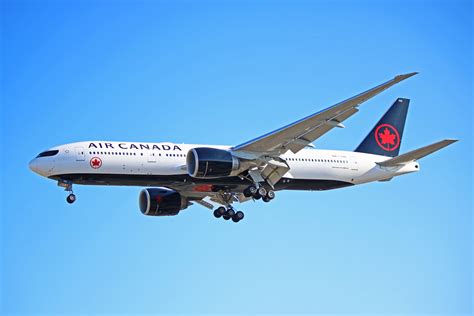
Both daily flights are operated by the Boeing 777-200LR, an aircraft specifically engineered for ultra-long-range operations. With seating for roughly 300 passengers, the aircraft combines extended fuel capacity with efficient twin-engine performance, making it ideal for routes approaching the limits of commercial aviation endurance.
Air Canada’s temporary schedule includes two evening departures from Toronto, designed to arrive in Delhi the following night. Turnaround times in India are remarkably tight—around 90 minutes—allowing the aircraft to quickly return to Canada.
The schedule currently operates as follows:
- AC48: Toronto 7:55 pm → Delhi 8:10 pm (+1 day)
- AC49: Delhi 9:45 pm → Toronto 5:00 am (+1 day)
- AC42 (additional service): Toronto 9:30 pm → Delhi 10:00 pm (+1 day)
- AC43 (additional service): Delhi 11:30 pm → Toronto 6:35 am (+1 day)
The additional rotation dramatically increases available seat capacity during the short operating window.
Toronto–Delhi: North America’s Largest India Market
The reason airlines pay such close attention to this route lies in its extraordinary passenger numbers. According to 2025 booking data, approximately 660,000 round-trip passengers traveled between Toronto and Delhi, equating to more than 1,800 travelers per day.
This makes it the largest air travel market between North America and India.
Not all of those passengers fly nonstop. A significant portion travels through connecting hubs scattered across Europe, the Middle East, and Africa. The most common transfer points include:
- London Heathrow
- Dubai
- Abu Dhabi
- Addis Ababa
- Warsaw
Some of these hubs may surprise observers. Addis Ababa, for example, has developed a niche among price-sensitive travelers because Ethiopian Airlines often offers lower fares than competitors.
Four Daily Flights Between Toronto and Delhi
For a brief period in mid-March, the combined schedules of Air Canada and Air India will push the Toronto–Delhi corridor to four flights per day, surpassing the previous record of three.
Air India continues to operate its Boeing 777-300ER services on both direct and Vienna-stop routes. When paired with Air Canada’s expanded schedule, the corridor becomes one of the most heavily served long-haul routes connecting North America and South Asia.
This surge in frequency is unlikely to remain permanent, but it illustrates how rapidly airlines can adjust capacity when demand spikes.
A Major Connector for Air Canada’s Network
Even though Toronto and Delhi form a massive origin-and-destination market, nearly half of Air Canada’s passengers on the route are connecting travelers. Many arrive in Toronto from other North American cities before boarding the ultra-long-haul flight to India.
Booking data indicates that around 195 passengers per day connect onto the Delhi flight from elsewhere in Air Canada’s network. The largest feeder cities include Winnipeg, Edmonton, Calgary, Vancouver, Halifax, Regina, Montreal, Saskatoon, Phoenix, and Ottawa.
Interestingly, only one U.S. city appears in the top ten. This highlights the strength of Air Canada’s domestic network and the growing number of Indian immigrants settling across Canadian provinces.

The Future of Ultra-Long-Haul Travel Between Canada and India
Air Canada’s temporary capacity increase underscores the strategic importance of ultra-long-haul aviation in connecting global diaspora communities. Routes like Toronto–Delhi are not simply long flights—they function as economic and cultural bridges linking continents.
As aircraft technology improves and airlines refine ultra-long-range operations, these routes are likely to become even more common. New-generation aircraft such as the Airbus A350-1000 and Boeing 777-9 promise greater efficiency and range, potentially opening additional nonstop connections between North America and India.
For now, Air Canada’s short-term expansion offers a snapshot of a travel corridor operating at full intensity—17 hours across half the planet, carrying thousands of passengers between two of the world’s most dynamic aviation markets.