The landscape of US-Canada cross-border air travel is once again being reshaped, as Air Canada confirms the suspension of its direct winter service between Toronto Pearson International Airport and Jacksonville International Airport, starting November 2025. This development underscores intensifying disruptions in the transborder aviation sector, driven by declining demand, rising operational costs, and simmering political and trade disputes between the two North American allies.
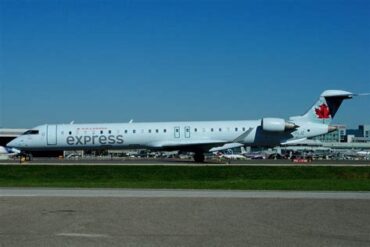
For years, the direct flight operated by Air Canada’s regional partner Jazz Aviation, utilizing a 76-seat Bombardier CRJ 900, served as the only nonstop connection between Toronto, Canada’s busiest aviation hub, and Jacksonville, a key city in Northeast Florida. Its cancellation is more than a temporary route adjustment; it reflects deepening uncertainties in travel patterns and signals how airlines are strategically repositioning themselves in response to both market realities and geopolitical undercurrents.
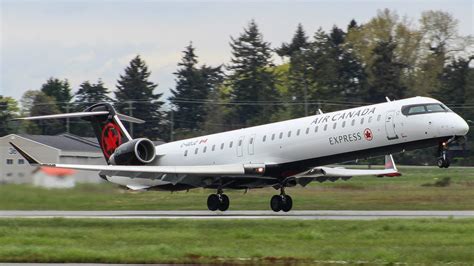
Air Canada’s Route Suspension: Strategic Response to Market Headwinds
Air Canada’s decision to pause the Toronto-Jacksonville route follows a meticulous review of evolving travel demand, profitability forecasts, and broader macroeconomic conditions. As executives within the airline admit, winter leisure travel between Canada and secondary US destinations such as Jacksonville has been on a downward trajectory, exacerbated by diplomatic rifts and economic turbulence.
In contrast to Florida’s flagship cities like Miami and Orlando, which continue to attract robust Canadian traffic, Jacksonville’s recovery has lagged. Analysts cite a combination of tepid leisure demand, heightened political uncertainty, and shifting economic sentiment as key reasons behind this trend.
The carrier emphasized that this is not a permanent cancellation but a seasonal suspension, with plans to resume operations by March 2026. Yet, the move marks part of a broader recalibration within Air Canada’s network, where underperforming routes are being “derisked” to optimize fleet utilization and enhance profitability during traditionally sluggish periods.
Rising Political Tensions Cloud Cross-Border Travel
Trade tensions between the United States and Canada have played a pivotal role in shaping current travel dynamics. The recent fallout over Canada’s proposed digital service tax on major US technology firms has left a lasting imprint on bilateral relations. Though Ottawa ultimately shelved the measure, the diplomatic damage was done.
Former US President Donald Trump’s sharp condemnation of Canada’s tax proposal, coupled with threats of retaliatory tariffs, ignited a broader climate of mistrust. The deterioration in political discourse has extended beyond policy halls, seeping into traveler behavior and business decisions.
Industry experts suggest that uncertainty over immigration rules, economic cooperation, and tariffs has had a chilling effect on Canadian travel to the US, particularly to destinations beyond the major tourist corridors. The Toronto-Jacksonville connection has become an unintended casualty of this diplomatic fallout.
Data Reveals a Shift in Travel Behavior
Official figures highlight the shifting sands of cross-border movement. In 2024, nearly 39 million trips were made from Canada to the United States, accounting for almost 75% of all Canadian outbound travel. Yet beneath these impressive figures lies an undercurrent of decline.
During the initial months of Trump’s second term, year-over-year Canadian visits to the US plummeted by 14% in April and a staggering 24% in May. These drops, while varied by destination, reveal a broad cooling of enthusiasm for US travel among Canadians amid political upheaval.
The southern US, long a winter haven for Canadian snowbirds, remains attractive, but demand fluctuations are increasingly evident. While American carriers like United Airlines and Alaska Airlines have ramped up their Canadian operations—United increasing flights by 3.5% and Alaska reporting a 14% surge—their Canadian counterparts, including Air Canada and WestJet, have adopted a more cautious approach.
This divergence suggests asymmetrical perceptions of market resilience, with American airlines tapping into transborder business traffic and US-based Canadian communities, while Canadian airlines grapple with seasonal volatility and geopolitical sensitivities.
A Broader Pattern of Route Rationalization
The Toronto-Jacksonville winter suspension is not an isolated decision. Earlier in 2025, Air Canada scaled back service on several US-bound routes from Vancouver International Airport, affecting flights to major American cities like Miami, Houston, and Washington, D.C.
Similarly, WestJet reduced transborder flights from both Vancouver and Edmonton, reflecting a nationwide trend of Canadian airlines consolidating operations around higher-yield markets. These adjustments aim to safeguard profitability, mitigate exposure to geopolitical risk, and adapt to evolving traveler behavior.
Aircraft type also factors heavily into this strategy. The Bombardier CRJ 900, while well-suited for regional routes, faces mounting scrutiny over its efficiency on marginal routes with inconsistent demand. Airlines are under pressure to ensure every seat contributes meaningfully to revenue, particularly as fuel prices, labor costs, and inflation erode margins.
By redeploying aircraft like the CRJ 900 to more lucrative routes, Air Canada is seeking to maximize asset utilization and preserve network stability during a volatile economic cycle.
Spring 2026 Resumption: Opportunity or Uncertainty?
Air Canada’s commitment to reinstating the Toronto-Jacksonville route in March 2026 reflects cautious optimism. Spring and summer typically bring a rebound in leisure travel, family vacations, and educational trips, making Florida an enduringly attractive destination for Canadians.
Yet, the long-term viability of the route hinges on several external factors:
- Stabilization of US-Canada trade and political relations
- Recovery of Canadian consumer confidence toward US travel
- Management of currency fluctuations, fuel prices, and inflation
- Assessment of route profitability and passenger yields post-resumption
If these variables align favorably, the Toronto-Jacksonville connection could regain its foothold as a viable seasonal offering. However, persistent volatility could see the route face further disruptions or restructuring.
Competitive Pressures Escalate Across North American Skies
The broader North American airline industry is undergoing seismic shifts. As American carriers deepen their Canadian footprint, leveraging code-share agreements and strategic partnerships, Canadian airlines face intensifying competition both at home and abroad.
To counter these pressures, carriers like Air Canada are reevaluating alliances, optimizing fleet compositions, and focusing on core markets with proven resilience. This agile approach is essential in an environment where traveler sentiment, geopolitical developments, and economic headwinds remain unpredictable.

A Harbinger of Broader Cross-Border Disruptions?
The temporary suspension of Air Canada’s Toronto-Jacksonville winter route may appear routine, yet it encapsulates a wider recalibration of transborder air travel. Airlines are increasingly deploying data-driven, profit-centered route planning, where historical seasonal trends alone no longer dictate decisions.
The growing complexity of US-Canada relations, encompassing tariffs, digital taxation debates, and political posturing, now directly impacts the aviation sector. As airlines pivot to navigate these uncharted skies, the traditional patterns that once defined North American travel corridors are being rewritten.
Travelers, meanwhile, face a new reality—where route availability fluctuates in tandem with global headlines and bilateral negotiations. The coming years will reveal whether this era of cautious route management fosters stronger, more resilient cross-border connectivity or entrenches a fragmented aviation landscape vulnerable to the whims of politics and economics.
As the aviation industry awaits clearer skies, one certainty remains: the decisions made today by carriers like Air Canada will shape the trajectory of US-Canada travel for years to come.