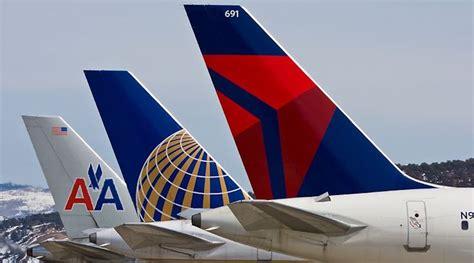
The U.S. airline industry is grappling with significant financial turbulence as major carriers—Southwest, American, Delta, and United Airlines—report steep stock declines amid an unstable economic backdrop. A convergence of rising inflation, lingering Trump-era tariffs, and intensifying competition from budget airlines has destabilized the legacy airline market, with earnings forecasts slashed, investor confidence shaken, and cost pressures mounting.
Stock Performance Unravels Under Economic Pressure
The second quarter of 2025 has delivered a hard blow to traditional U.S. carriers, as each airline navigates a landscape riddled with uncertainty. Southwest Airlines (LUV), traditionally resilient, saw its shares plummet by over 12% following a discouraging Q2 earnings release. Once the darling of budget-conscious domestic travelers, Southwest is now struggling against headwinds largely driven by inflation and the ongoing ramifications of Trump-era tariffs. CFO Tom Doxey pointed to macroeconomic variables—including a softening in consumer confidence—as primary culprits in the company’s downward trajectory.
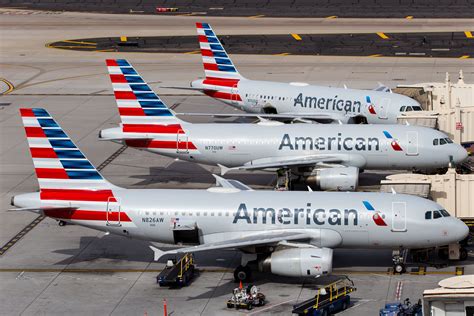
Meanwhile, American Airlines (AAL) faces its own woes. With over two-thirds of its passenger revenue tied to domestic routes, the airline is particularly vulnerable to the ongoing slump in corporate and leisure travel within the U.S. Following its Q2 report, American downgraded its 2025 earnings outlook, issuing a range that includes the possibility of a net loss. The airline has cited storm-related disruptions and tariff-driven cost escalations as exacerbating factors.
Delta and United Show Resilience, But Not Immunity
While Delta Air Lines (DAL) managed to beat expectations with a $1.37 billion net income, its stock still dipped by 2.3%, a reflection of investor apprehension over disappointing metrics in cargo revenue and a mild slump in international bookings. Delta’s Q2 operating income dropped by 10% year-over-year, highlighting how even strong financial reporting can be overshadowed by sector-wide uncertainty. Despite reaffirming full-year EPS guidance and increasing its dividend payout by 25%, Delta struggles to inspire confidence.
United Airlines (UAL), though showing relatively stable adjusted earnings per share of $3.87, was not spared market skepticism. With only a 0.8% decline in share value post-earnings, United’s conservative Q3 profit forecast raised eyebrows. The airline’s exposure to Asia and Europe—markets that are gradually recovering—could prove to be an advantage, but fuel cost volatility and a fragile demand outlook remain critical concerns.
JetBlue Faces Mounting Investor Anxiety Ahead of Q2 Earnings
JetBlue Airways (JBLU) adds to the disquiet, registering a 5.9% decline in its stock ahead of its Q2 earnings report. Expectations for a year-over-year drop in revenue—especially in the international and transcontinental segments—have unnerved investors. JetBlue’s pivot toward premium services is being tested by unrelenting operational costs and the shrinking loyalty of budget-sensitive consumers, many of whom are defecting to ultra-low-cost carriers (ULCCs) that continue to undercut fares across key routes.
The Economic Minefield Airlines Must Navigate
At the heart of this crisis is inflation, which has driven fuel prices and labor costs to decade-high levels. Jet fuel, the second-highest operating expense for airlines, has surged in cost by over 20% year-on-year, forcing airlines to reconsider pricing models and route viability. In parallel, a surge in wage demands—exacerbated by pilot shortages and union negotiations—has inflated labor-related costs.
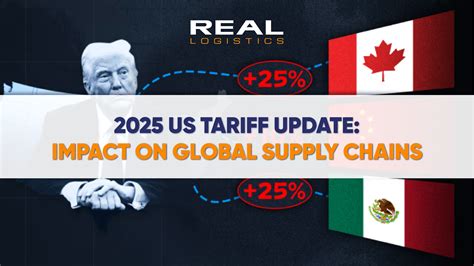
Compounding these challenges are Trump-era tariffs, particularly on aviation parts, semiconductors, and consumer goods. These policies have strained maintenance and supply chain operations, slowing aircraft turnaround times and inflating the cost of fleet modernization.
The broader macroeconomic climate, marred by consumer belt-tightening and global instability, is altering travel patterns. Discretionary air travel is declining, especially in the domestic leisure market. Corporate travel, once a high-margin breadwinner, remains sluggish, with many businesses adopting hybrid meeting strategies post-pandemic.
The Rise of Budget Airlines Tightens the Noose
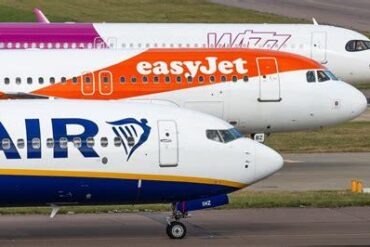
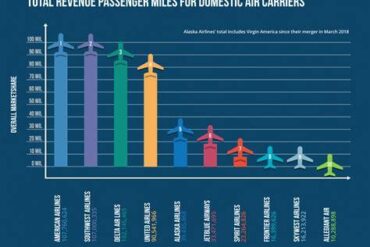
Low-cost carriers such as Spirit, Frontier, and Allegiant are surging in influence, taking advantage of the legacy carriers’ struggles. Their lean operational models, aggressive fare structures, and quick adaptation to market shifts have allowed them to expand market share across domestic and short-haul international routes.
Budget-conscious travelers, dealing with inflation in other aspects of life—from groceries to housing—are increasingly opting for bare-bones ticketing options. While traditional airlines attempt to compete with basic economy offerings, their higher overhead and legacy cost structures leave little room to maneuver.

Strategic Shifts: How Airlines Are Attempting to Rebound
To combat the mounting pressures, major U.S. airlines are deploying a mix of tactical and strategic responses:
- Southwest is exploring international expansion, diversifying away from its historically domestic-heavy footprint.
- American Airlines is prioritizing premium cabin enhancements and re-engagement with corporate clients.
- Delta is doubling down on international partnerships and cargo logistics, attempting to fill the gap left by waning domestic demand.
- United is optimizing its transatlantic and transpacific networks, banking on the sustained return of global travel.
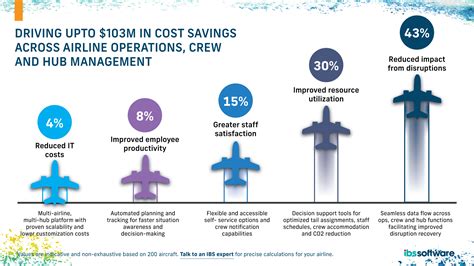
All carriers are investing in digital transformation, from AI-based route planning to dynamic pricing models, to enhance resilience and profitability in an unpredictable environment.
Tariff Aftershocks: Trump’s Legacy Lingers
One of the more opaque variables clouding the industry’s outlook is the long-tail impact of Trump’s trade policies. In particular, the “Liberation Day” tariff package, introduced earlier in 2025, affected a broad swath of goods, including aircraft maintenance components and in-flight service commodities. Airlines have found themselves caught between increased import costs and supply chain delays, exacerbating their financial headaches.
Additionally, travel-related tariffs and consumer goods levies have triggered a perceptible dip in international leisure travel, especially from Asian markets impacted by retaliatory tariffs.
Investor Sentiment Remains Pessimistic
Despite isolated positive earnings beats, investor sentiment toward the airline sector is souring. Wall Street analysts are revising sector forecasts downward, citing fragile consumer confidence, uncertain geopolitical trends, and volatile fuel pricing. The sector’s underperformance is particularly striking when compared to tech and energy stocks, many of which have rebounded more effectively in Q2.
Airline ETFs, such as JETS, have recorded double-digit declines in 2025, a reflection of the market’s lack of faith in a near-term turnaround.
Navigating Toward Recovery: Outlook for the Rest of 2025
With the summer travel season entering its final phase, the rest of 2025 promises to be a test of resilience and adaptability. Legacy carriers must simultaneously manage costs, retain market share, and invest in innovation to stay afloat. Opportunities do exist: international travel corridors are slowly opening, and premium offerings are seeing higher yields despite overall volume stagnation.
But the road ahead is strewn with challenges. Consumer preferences are shifting, geopolitical risks persist, and fuel prices show no sign of stabilizing. Airlines that can successfully align cost discipline, technological innovation, and market adaptability will have the best chance of weathering this economic storm.
As the U.S. economic machine lurches into an uncertain second half of the year, airlines serve as a barometer of broader market sentiment. Their struggles underscore how deeply interconnected aviation is with national and global economic health. In this context, every canceled route, delayed aircraft order, or downgraded forecast tells a story far bigger than airline earnings—it’s a narrative of a world recalibrating to a new financial reality.